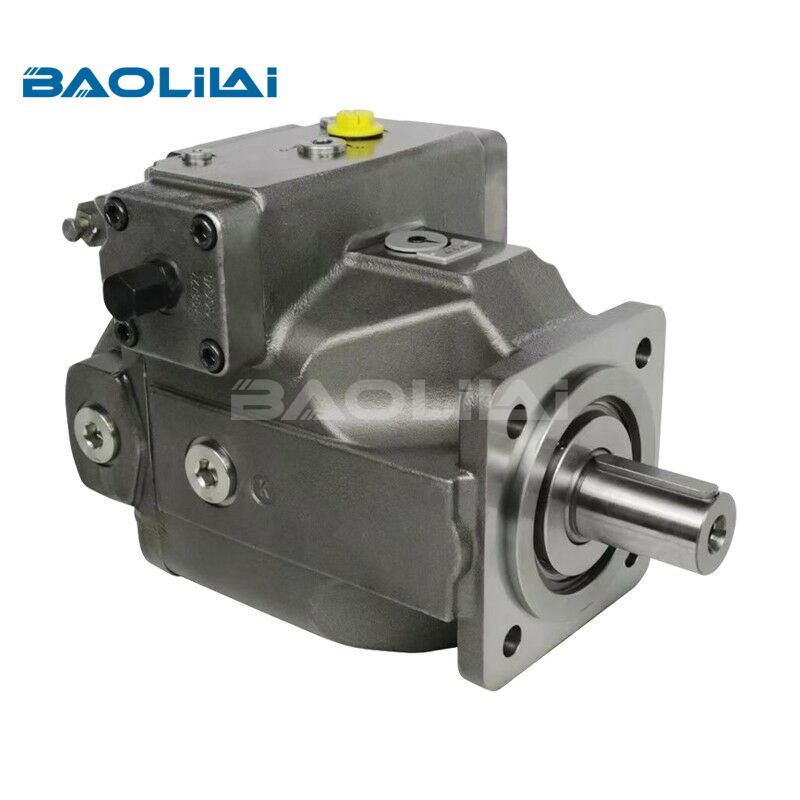
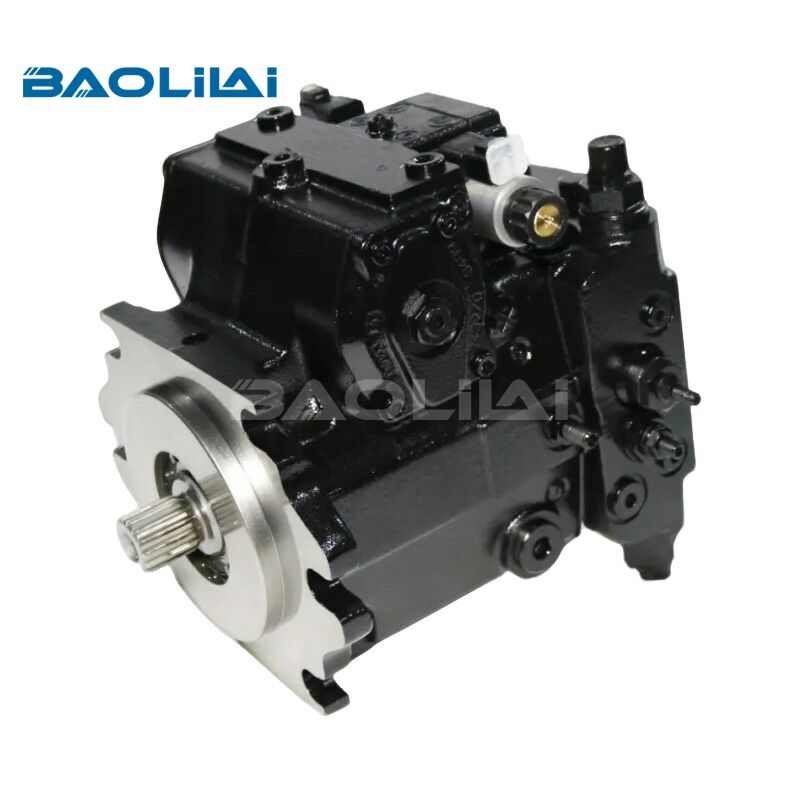
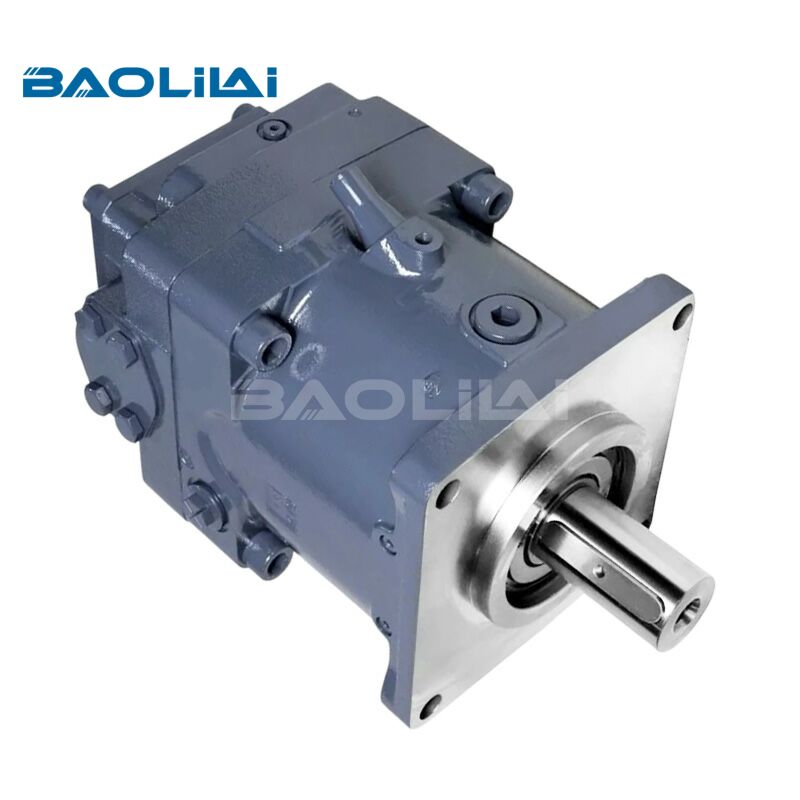
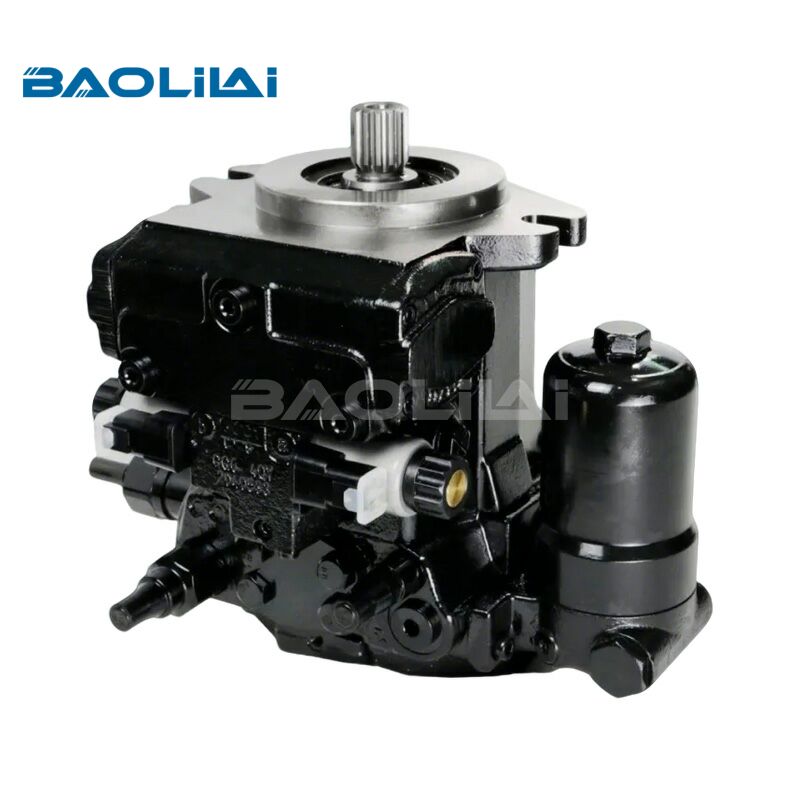
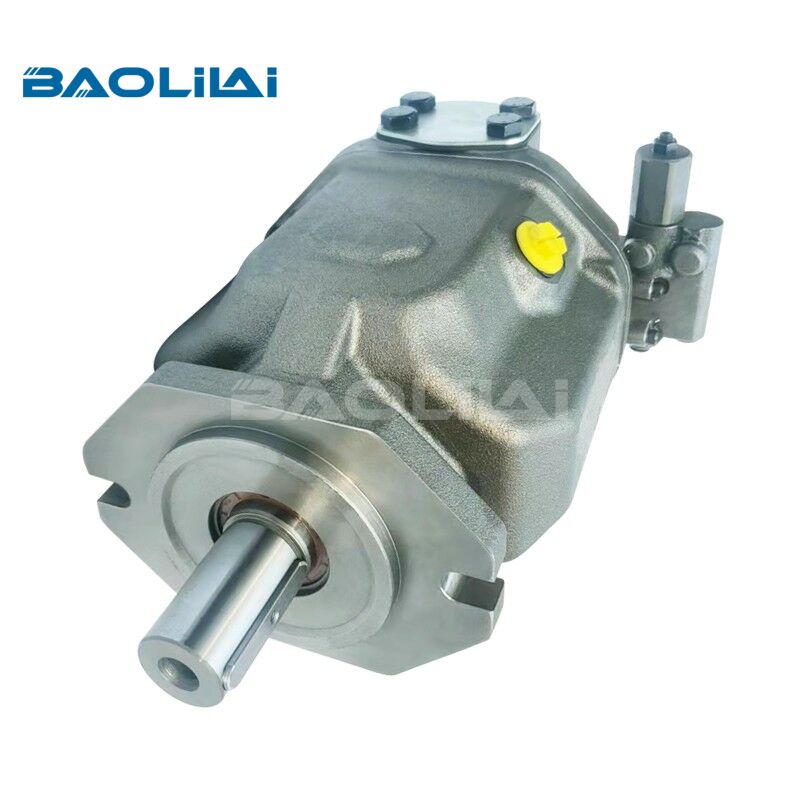
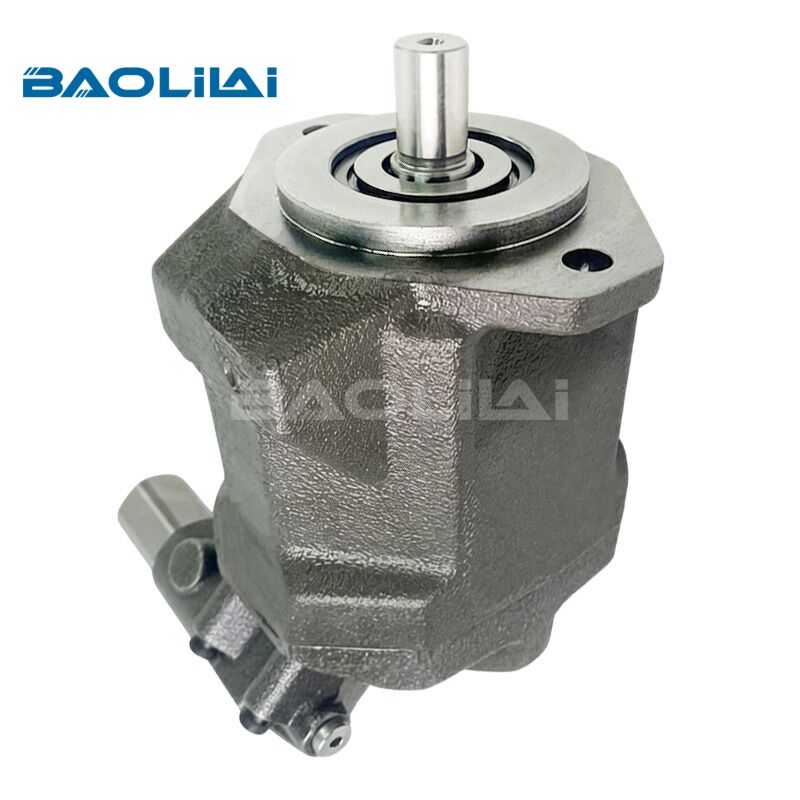
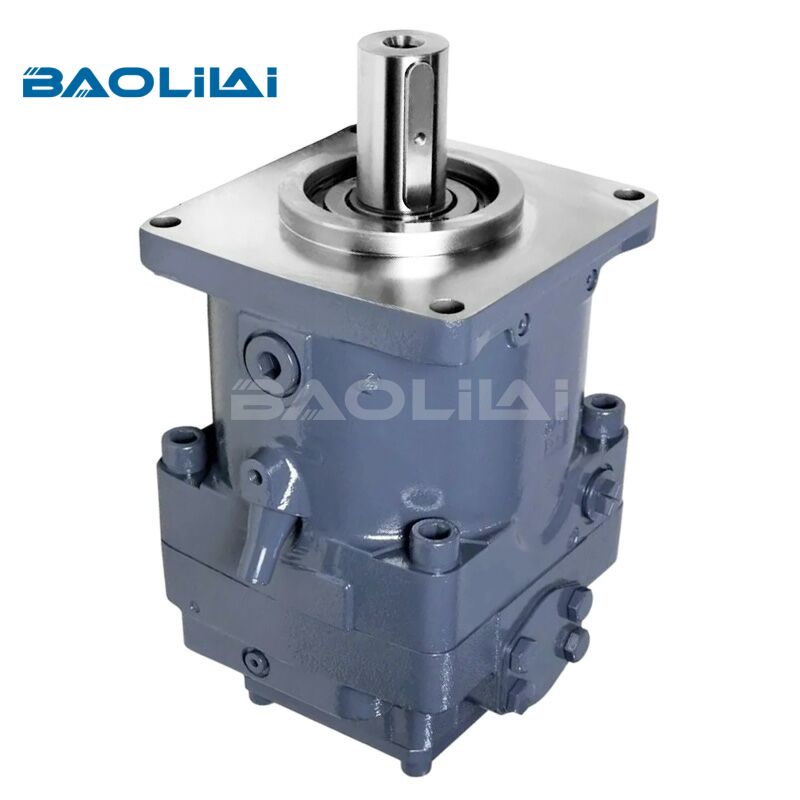
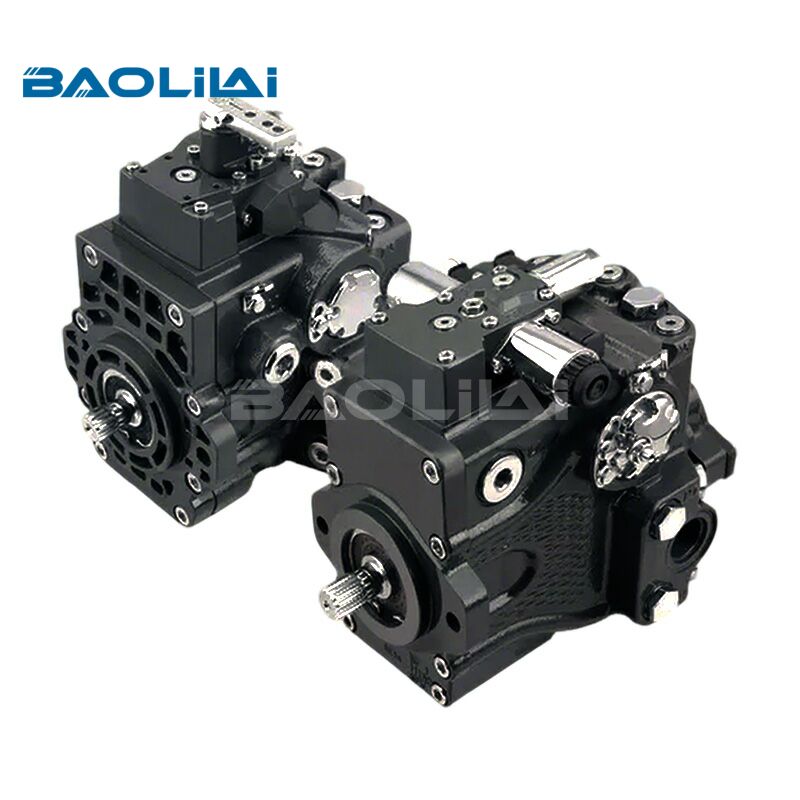
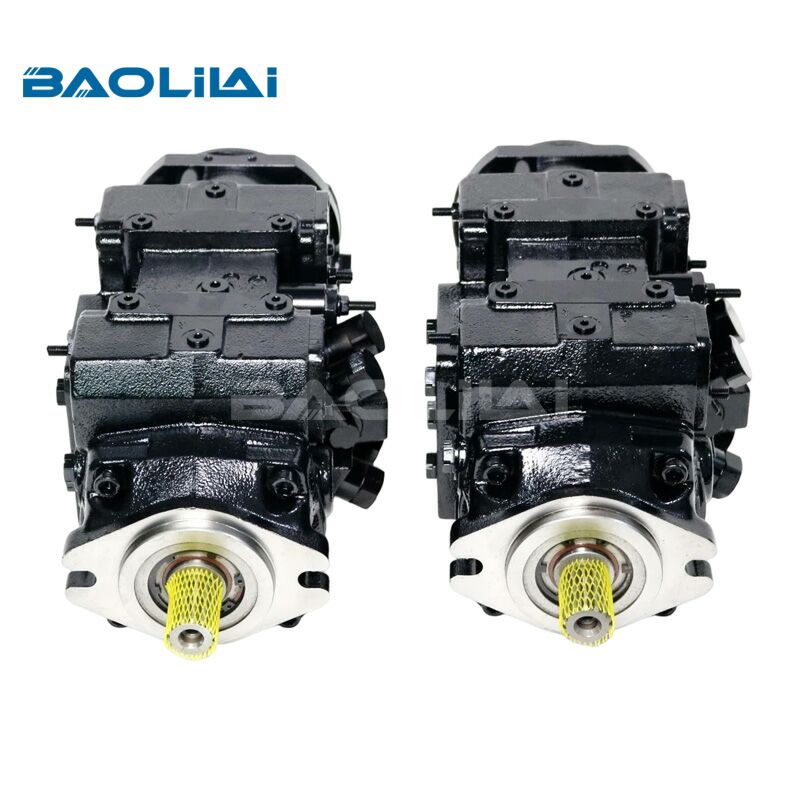
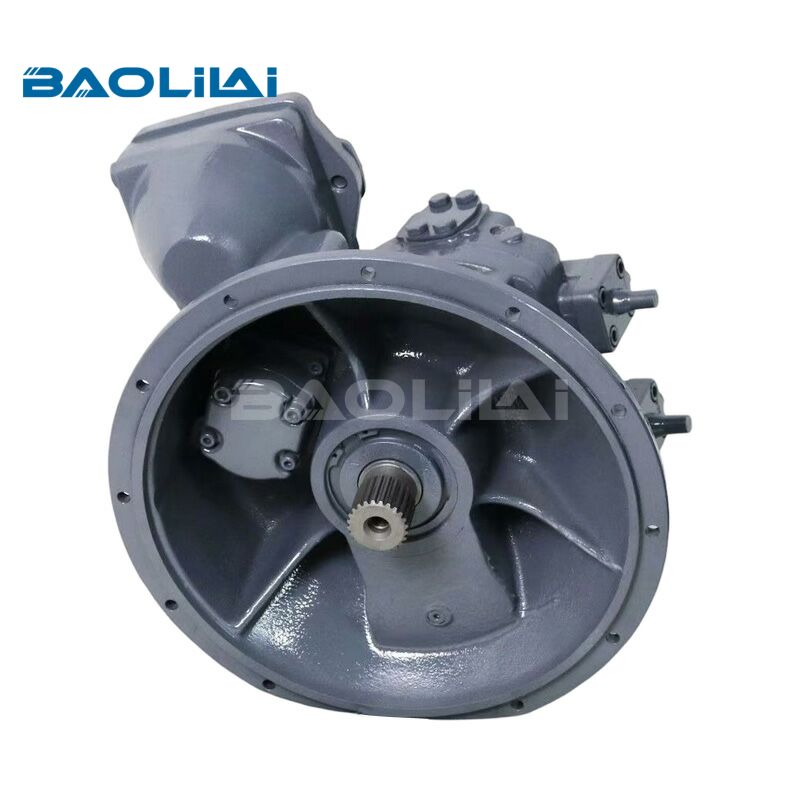
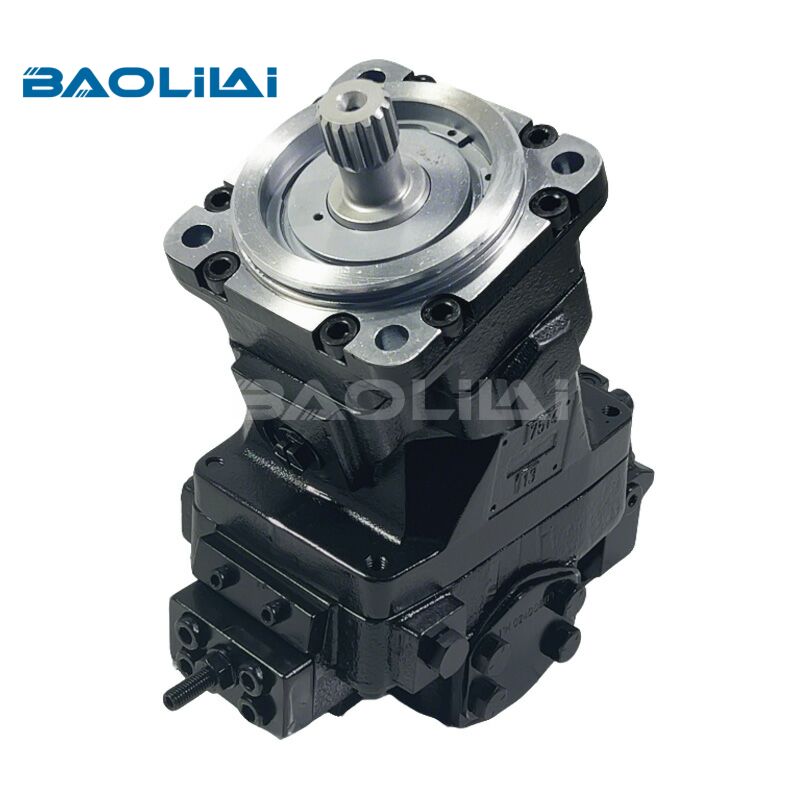
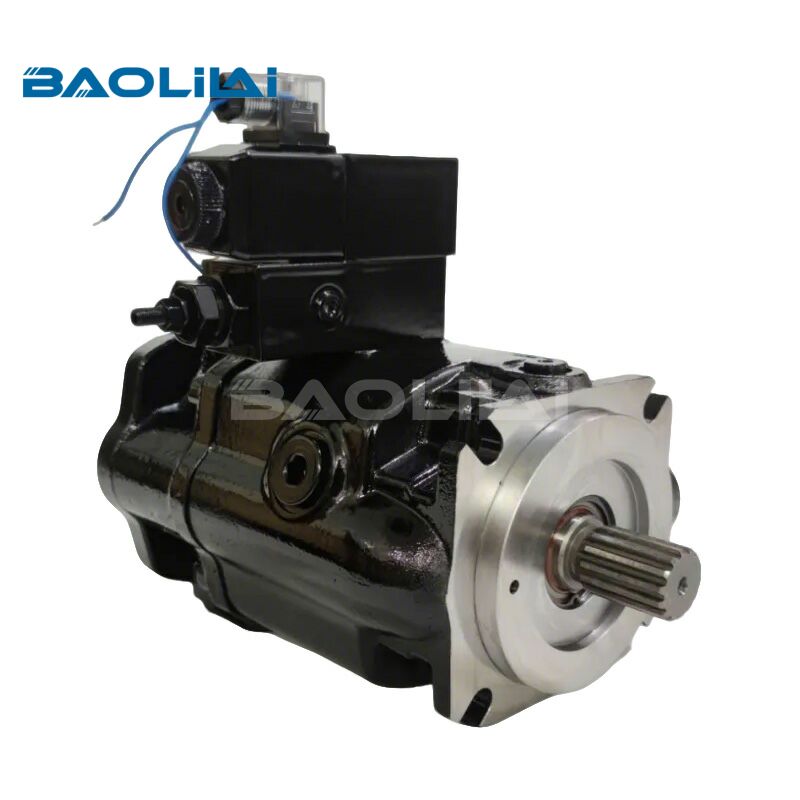
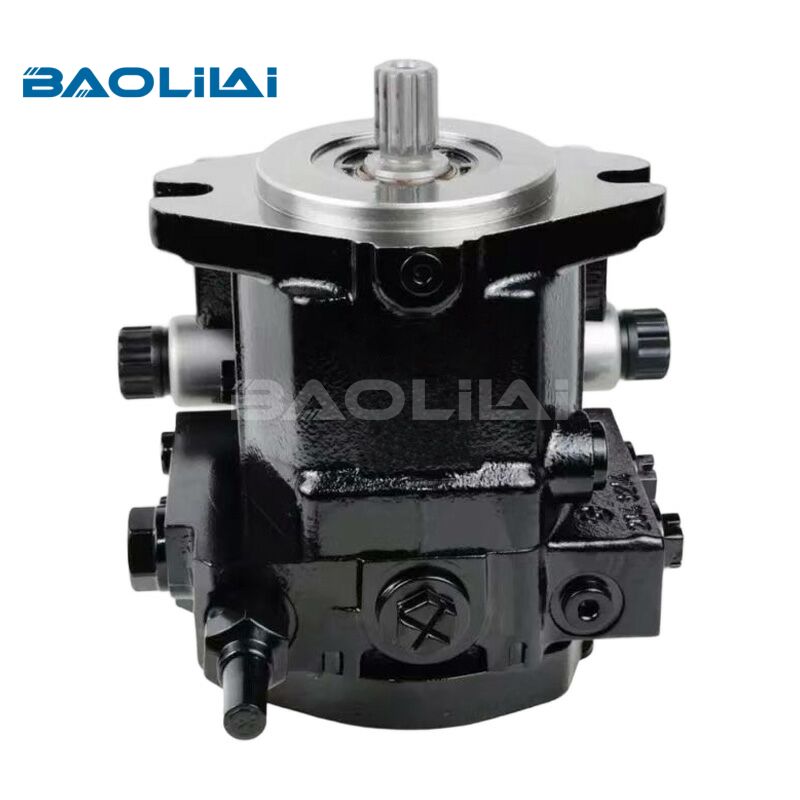
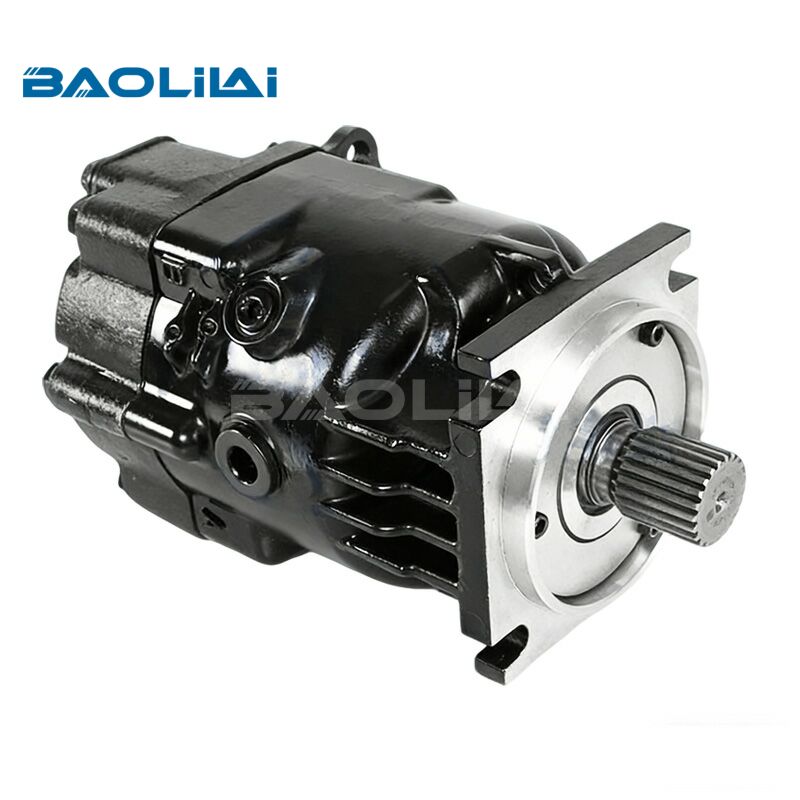
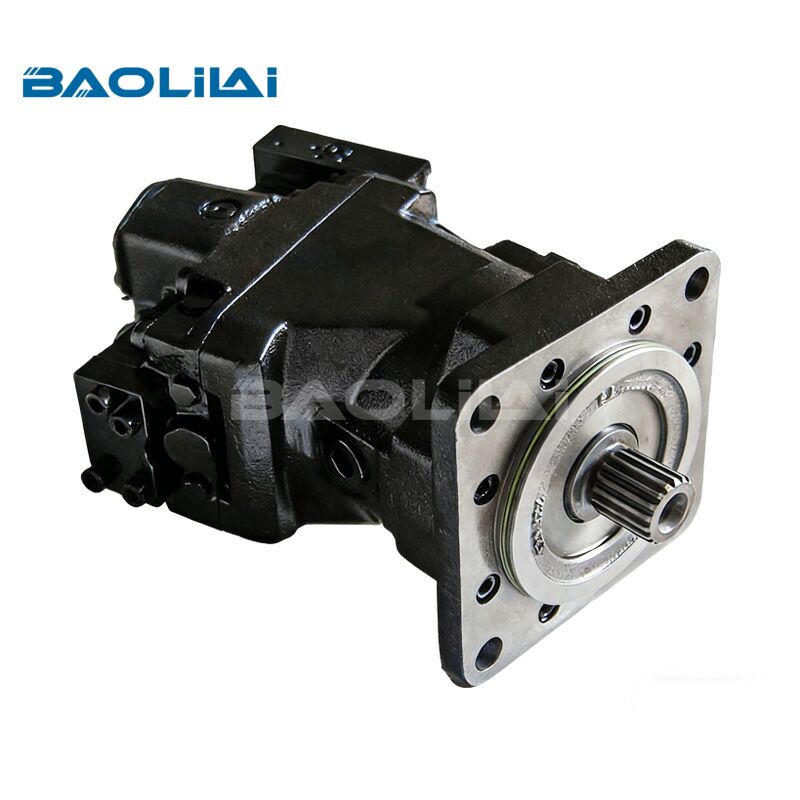
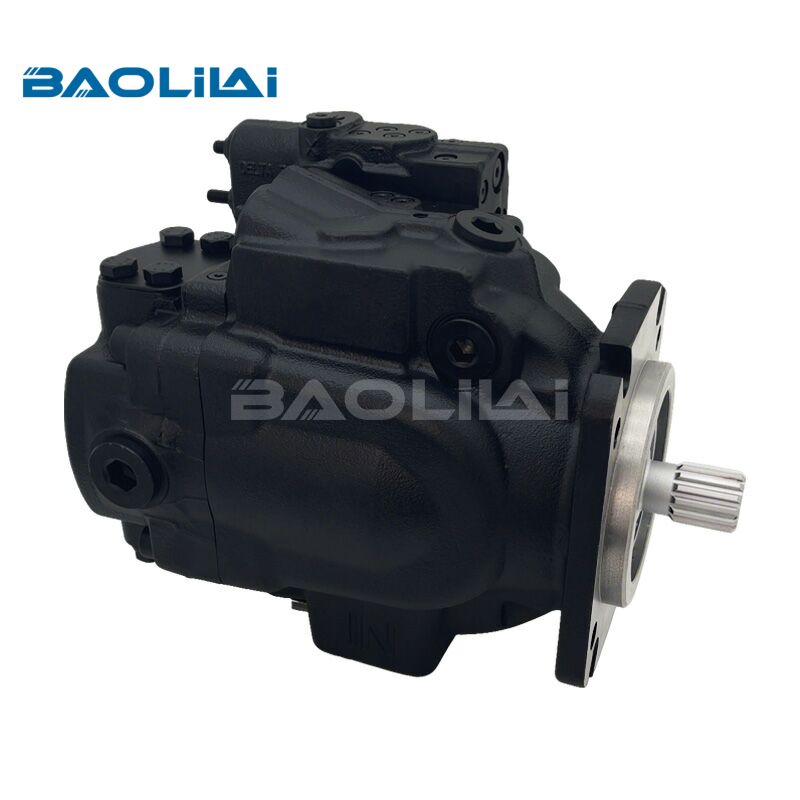
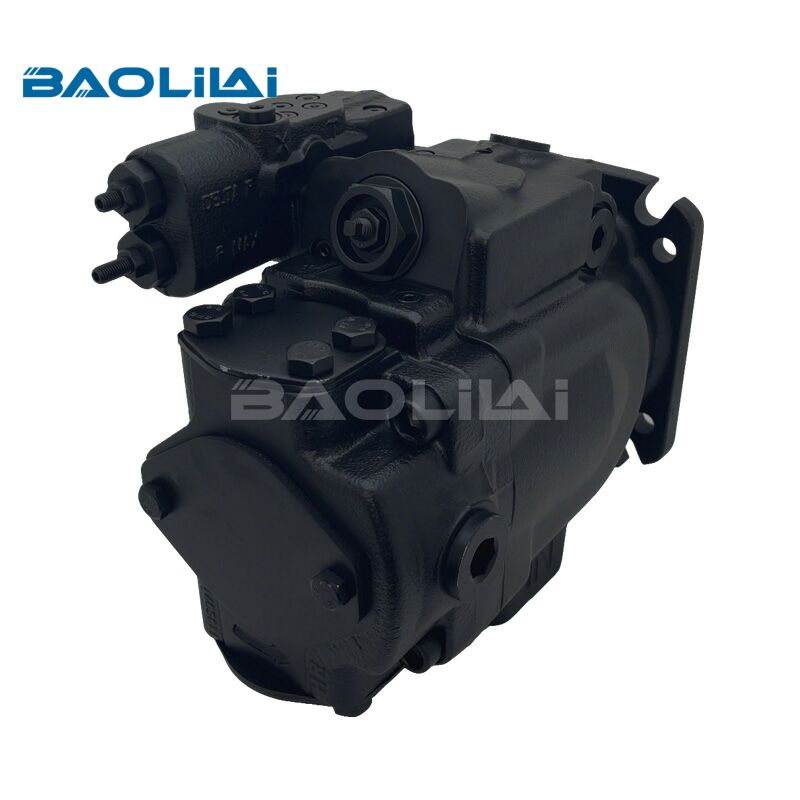
Parker P3075 axial piston variable hydraulic pump
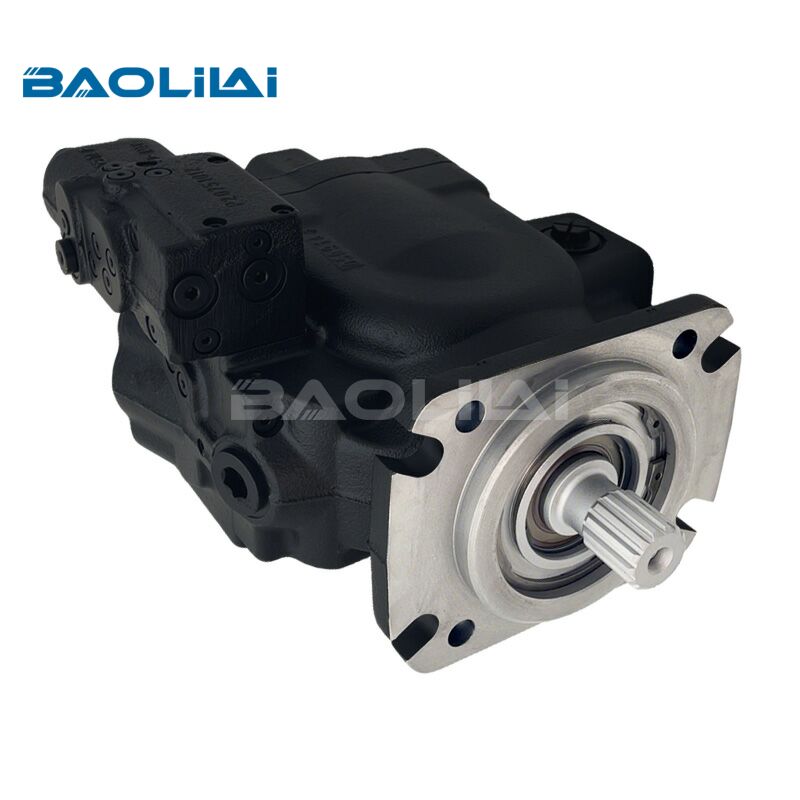
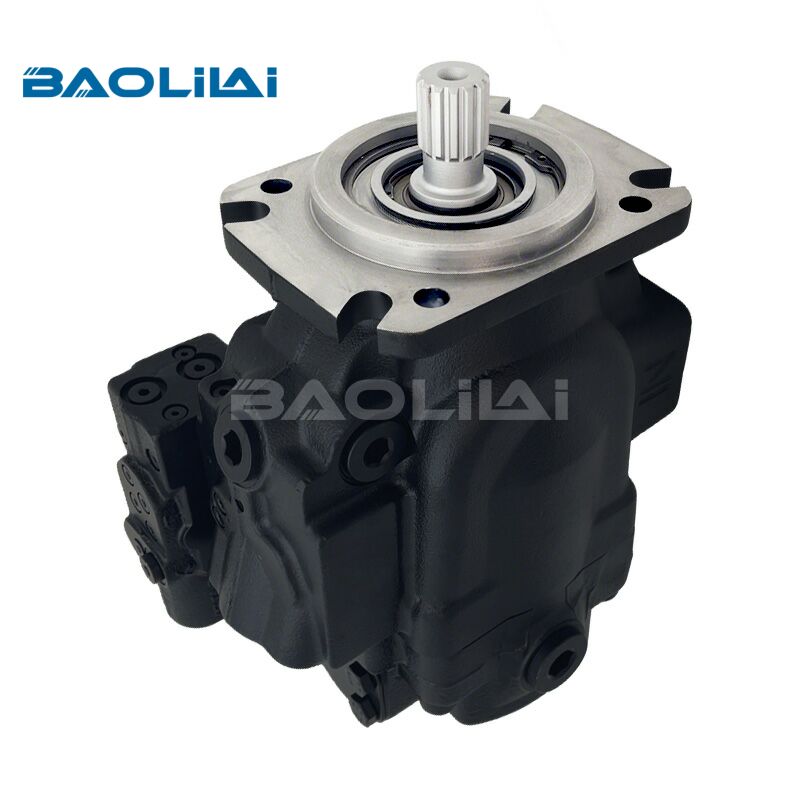
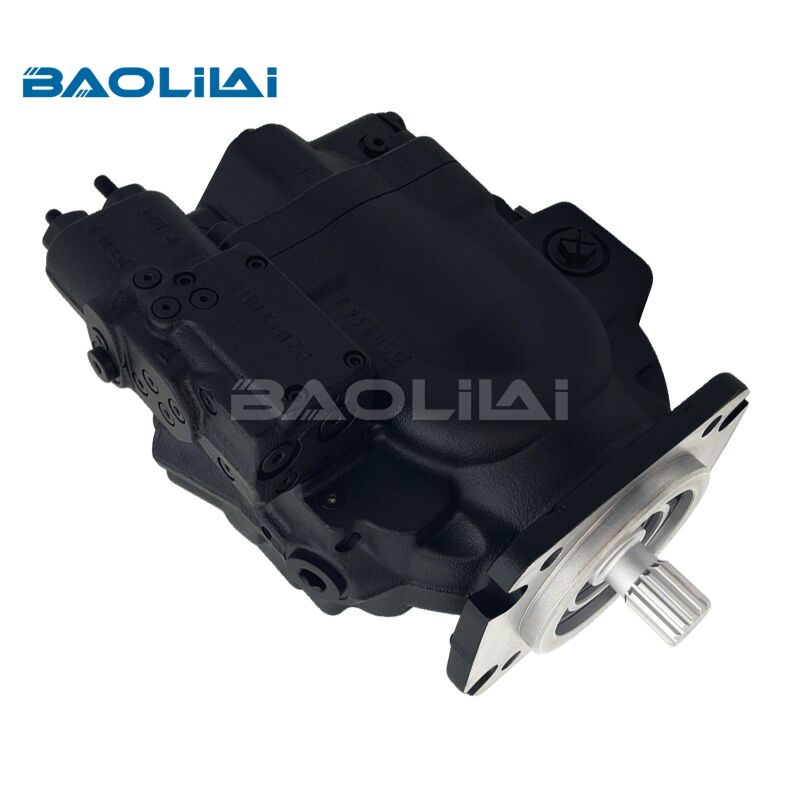

- Product Details
- Product Model
- FAQ
The P3075 is a variable-displacement, swashplate-type axial piston pump from Parker Hannifin's P2/P3 series, built for open-circuit mobile hydraulic systems. It shares its core architecture — cylinder block, pistons, swashplate, and control valve family — with the P2075, but adds an integral supercharge (boost) pump on the inlet side. That single addition is what defines the "P3" designation across the whole family (P3075, P3105, P3145): standard displacement and pressure capability, but a pressurized inlet that lets the pump run faster and pull fluid from more difficult inlet conditions than an unboosted P2 pump can tolerate.
Core Design and How It Works
An axial piston pump generates flow by driving a cylinder block full of reciprocating pistons against an angled swashplate. As the shaft rotates, each piston travels through an intake and discharge stroke, and the angle of the swashplate determines how far each piston travels — which in turn determines displacement (and therefore flow) per revolution. Because the swashplate angle is variable, the pump can deliver anywhere from zero flow to full rated flow at a constant shaft speed, without throttling losses.
The Supercharge Pump: What Actually Makes It a "P3"
The defining feature of the P3075 is its integral gear-type charge pump mounted on the inlet side. This boost pump raises inlet pressure above atmospheric before fluid ever reaches the main piston pack. That matters for three practical reasons:
1. Higher shaft speeds become usable. Standard piston pumps are speed-limited by how fast they can self-prime; boosting the inlet removes much of that ceiling.
2. Cavitation risk drops. Piston pumps are notoriously sensitive to inlet starvation — even brief cavitation pits the pistons and cylinder bores. A pressurized inlet gives real margin.
3. Restrictive inlet plumbing becomes tolerable. Long suction lines, elevated reservoirs relative to the pump, or tight packaging that forces sharp inlet bends are far less risky with a supercharged inlet.
Variable Displacement Control Options
Like the rest of the P2/P3 line, the P3075 is available with several control strategies, and choosing the right one is arguably more important than the displacement rating itself:
Pressure compensator control (PA) — Destrokes the pump automatically as system pressure approaches a set maximum, protecting the circuit from overpressure while minimizing wasted flow.
Load-sensing control (LA/LB) — Matches pump output to actual downstream demand by sensing load pressure, cutting heat generation and fuel/power consumption compared to fixed or simple pressure-compensated pumps.
Torque-limiting control (TA/TB/TC/TD) — Caps the input torque the pump can draw from the prime mover, which is essential when engine or motor power is the limiting factor rather than hydraulic demand.
Remote pressure control (RA) — Allows the pressure setting to be adjusted from a remote relief valve rather than a fixed internal spring setting.
Where the P3075 Is Actually Used
This isn't a pump you'll find in a stationary industrial press or a fixed factory power unit — its supercharged design and mobile-oriented envelope point squarely at applications where the pump has to work at higher speeds, tighter packaging, and less-than-ideal inlet conditions.
Example 1: Mobile Cranes and Material Handling
Reachstackers, heavy-lift trucks, and mobile cranes run their hydraulic pumps directly off the engine's power take-off, often at variable and sometimes high engine speeds. The P3075's boosted inlet lets it keep up with those speed swings without starving, while load-sensing control keeps fuel burn down during idle or light-duty cycles.
Example 2: Construction and Earthmoving Equipment
Wheel loaders and similar machines demand a pump that can deliver full flow for digging and lifting, then rapidly destroke when the operator eases off — protecting the engine from being overloaded. A torque-limiting control option on the P3075 caps hydraulic power draw so it never exceeds what the engine can spare.
Example 3: Drilling Rigs and Forestry Equipment
Water-well drill rigs, forwarders, and harvesters often mount pumps in tight engine bays with unfavorable inlet line routing. The supercharge feature is a direct answer to that packaging constraint — it tolerates suction-side compromises that would cavitate a standard piston pump.
Installation and Sizing Considerations
A few practical points that matter more in the field than in the datasheet:
Match the control type to the system, not just the pump. A load-sensing P3075 paired with a fixed-displacement downstream system won't deliver its efficiency benefits — the control strategy has to align with how the rest of the circuit is designed.
Respect the torque control setting if power is limited. If your prime mover's available torque is capped, use the TA/TB/TC/TD control and set the limit correctly; skipping this is a common cause of stalled engines under hydraulic load.
Even a supercharged pump has fluid cleanliness limits. The boost pump reduces cavitation risk, not contamination sensitivity. Stick to the recommended ISO 4406 filtration class — piston pumps are unforgiving of dirty oil regardless of inlet pressure.
Check radial and axial load limits on the shaft. Units under radial load typically require an outboard bearing; axial loading generally isn't permitted at all. Confirm this against the specific shaft and mounting configuration ordered.
Verify seal material against fluid and temperature range. NBR, FPM, and combination seal options each have different temperature and chemical compatibility windows — get this wrong, and you'll see leaks long before the pump itself wears out.
For more information on the P3075 hydraulic pump, please visit https://www.baolilaihydraulic.com/product/.
Specifications
| P2 Series | P3 Series | ||||||
| Framesize | P2060 | P2075 | P2105 | P2145 | P3105 | P3145 | |
| Max. displacement | [cm³/rev] | 60 | 75 | 105 | 145 | 105 | 145 |
| Self-priming speed at 1 bar absolute inlet pressure | [rpm] | 2800 | 2500 | 2300 | 2200 | 2600 | 2500 |
| Max. continuous pressure | [bar] | 320 | 320 | 320 | 320 | 320 | 320 |
| Peak pressure | [bar] | 370 | 370 | 370 | 370 | 370 | 370 |
| Min. inlet pressure absolute at max. speed | [in Hg vacuum] | 0.8 | 0.8 | 0.8 | 0.8 | 0.8 | 0.8 |
| Max. inlet pressure | [bar] | 10 | 10 | 10 | 10 | 15 | 15 |
| Max. case drain pressure | [bar] | 0.5 | 0.5 | 0.5 | 0.5 | 1 | 1 |
| Noise level at full flow at 1800 rpm and 250 bar | [dBA] | 74 | 74 | 76 | 80 | 62 | 80 |
| Weight with load sense control | [kg] | 37 | 46 | 63 | 78 | 62 | 76 |
| Mass moment of inertia (at axis of shaft) | [kg·m²] | 0.0061 | 0.0101 | 0.0168 | 0.0241 | 0.0177 | 0.0264 |
Selection Table
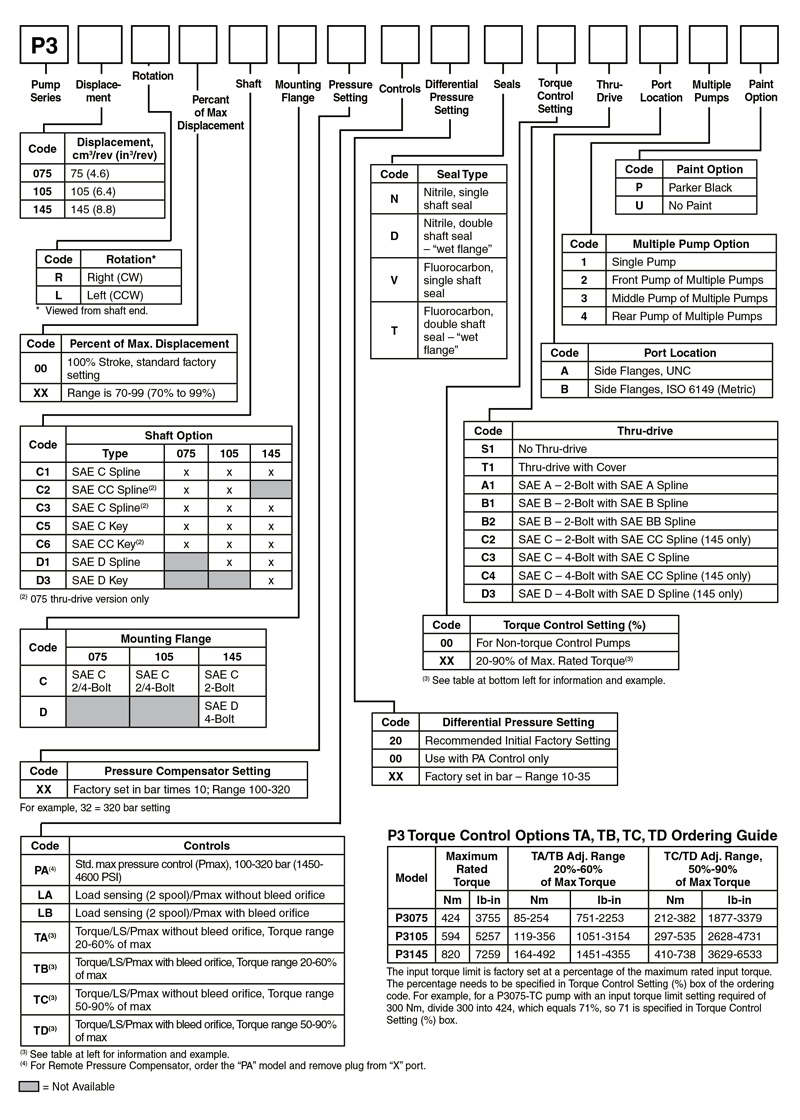
| P3075 hydraulic pump |
| Model Code |
| P3075L00B1B14LA20N00S1G1U |
| P3075L00C1C10LA2 |
| P3075L00C1C10PA0 |
| P3075L00C1C15LB2 |
| P3075L00C1C16PA0 |
| P3075L00C1C20PA0 |
| P3075L00C1C21LB2 |
| P3075L00C1C21PA0 |
| P3075L00C1C22LA2 |
| P3075L00C1C23LA2 |
| P3075L00C1C23PA0 |
| P3075L00C1C25LA2 |
| P3075L00C1C25TA1 |
| P3075L00C5C21LA2 |
| P3075L00C5C30TC2 |
| P3075L80C1C31TE2 |
| P3075R00B2B14LB20N00B2A1P |
| P3075R00B2B18LA20N00S1G1P |
| P3075R00B2B21LA20D00S1G1P |
| P3075R00B2B21LB10N00S1A1P |
| P3075R00B2B21RA20N00A1A1U |
| P3075R00B2B23LB20N00S1A1P |
| P3075R00B2B25LA20N00T1A1P |
| P3075R00C1C10LA2 |
| P3075R00C1C14LB2 |
| P3075R00C1C15LB2 |
| P3075R00C1C16PA0 |
| P3075R00C1C17TA2 |
| P3075R00C1C20LB2 |
| P3075R00C1C20PA0 |
| P3075R00C1C21LA2 |
| P3075R00C1C21LA20N00B1A4U |
| P3075R00C1C21LA20N00B2A1U |
| P3075R00C1C21LA21N00B1A1P |
| P3075R00C1C21LB20N00B2A1U |
| P3075R00C1C21PA0 |
| P3075R00C1C21TA2 |
| P3075R00C1C24LA20N00A1B1P |
| P3075R00C1C24LB1 |
| P3075R00C1C24LB2 |
| P3075R00C1C24PA0 |
| P3075R00C1C25LB2 |
| P3075R00C1C25PA0 |
| P3075R00C1C25TA2 |
| P3075R00C1C25TA20D20S1B1U |
| P3075R00C1C26LA2 |
| P3075R00C1C26LB2 |
| P3075R00C1C26PA0 |
| P3075R00C1C26RA2 |
| P3075R00C1C27LA2 |
| P3075R00C1C28LA2 |
| P3075R00C1C28TA2 |
| P3075R00C1C28TC3 |
| P3075R00C1C30LB2 |
| P3075R00C1C31LA2 |
| P3075R00C1C31LB2 |
| P3075R00C1C31TC2 |
| P3075R00C1C32LA2 |
| P3075R00C1C32LB2 |
| P3075R00C1C32PA0 |
| P3075R00C1C32TC3 |
| P3075R00C1C32TD1 |
| P3075R00C1C32TD2 |
| P3075R00C2C21PA0 |
| P3075R00C2C24LA2 |
| P3075R00C2C25LA2 |
| P3075R00C2C32TD2 |
| P3075R00C3C14LB2 |
| P3075R00C3C21LA2 |
| P3075R00C3C24LA2 |
| P3075R00C3C32LA2 |
| P3075R00C5C17TA2 |
| P3075R00C5C18LA20N00S1A1P |
| P3075R00C5C18TC2 |
| P3075R00C5C20TA2 |
| P3075R00C5C21TA2 |
| P3075R00C5C21TC2 |
| P3075R00C5C25LB20N00S1G1U |
| P3075R00C5C31LA2 |
| P3075R00C6C14RA2 |
| P3075R00C6C27PA00N00B1A1H |
| P3075R00C6C32PA0 |
| P3075R00D1D25TA20N55D3B2E |
| P3075R80C1C24TE2 |
| P3075R83C1C30LA2 |
| P3075R95C3C25PA0 |
Q1: What control options are available on the P3075?
A1: Depending on the ordering code, the P3075 can be specified with pressure compensator control, load-sensing control (with or without bleed-off orifice), torque-limiting control, or remote pressure control — each suited to different system architectures and power constraints.
Q2: What applications is the P3075 best suited for?
A2: Mobile, open-circuit hydraulic systems where inlet conditions are demanding — mobile cranes, material handling equipment, wheel loaders, drill rigs, and forestry machinery are typical fits. It's generally not the right choice for stationary industrial power units where a standard P2-series or fixed-displacement pump would suffice.
Q3: What is the price and delivery time of the P3075 hydraulic pump?
A3: The specific price and delivery time will be provided based on the specific model you provide.
Q4:How to purchase a P3075 hydraulic pump?
A4:You can visit https://www.baolilaihydraulic.com/contact/ to contact us and purchase our products through various methods.