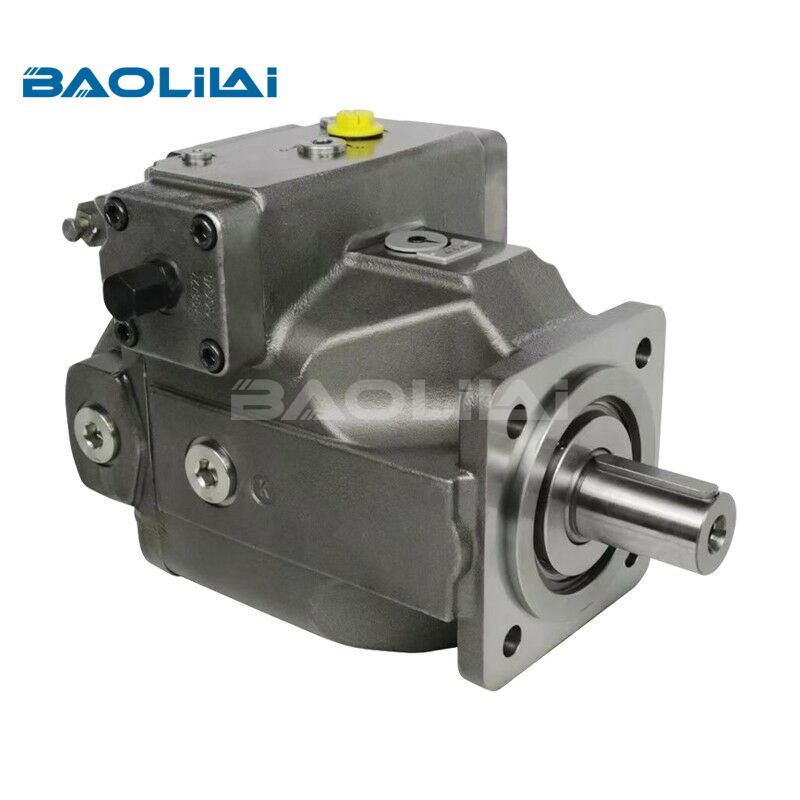
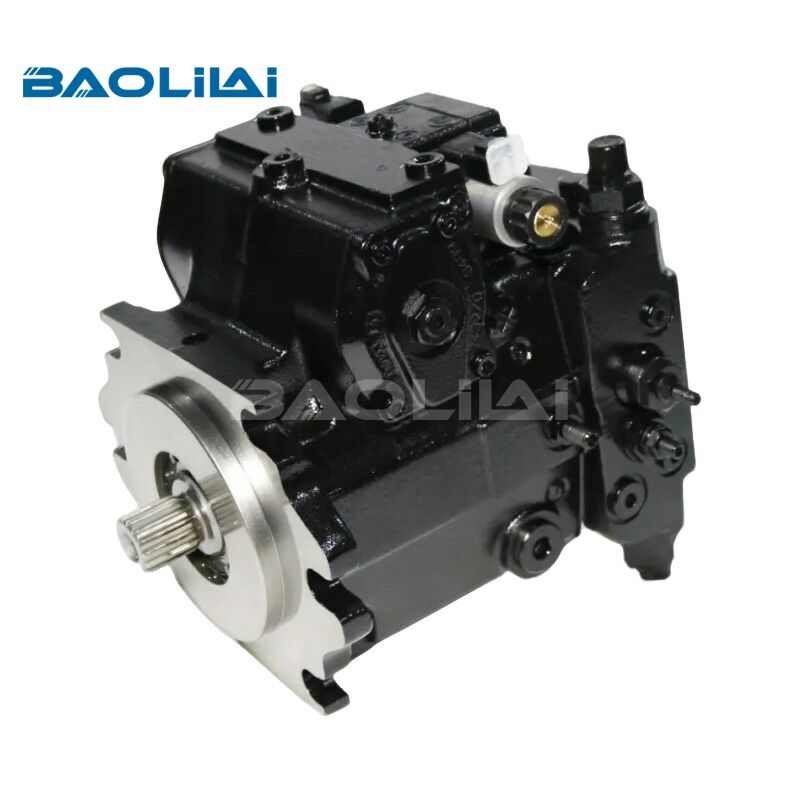
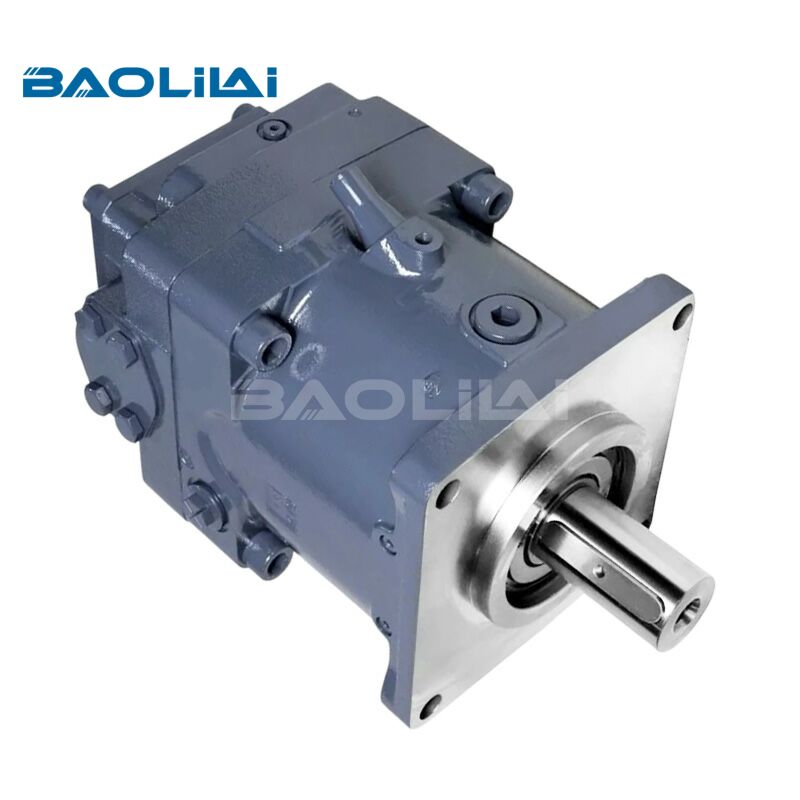
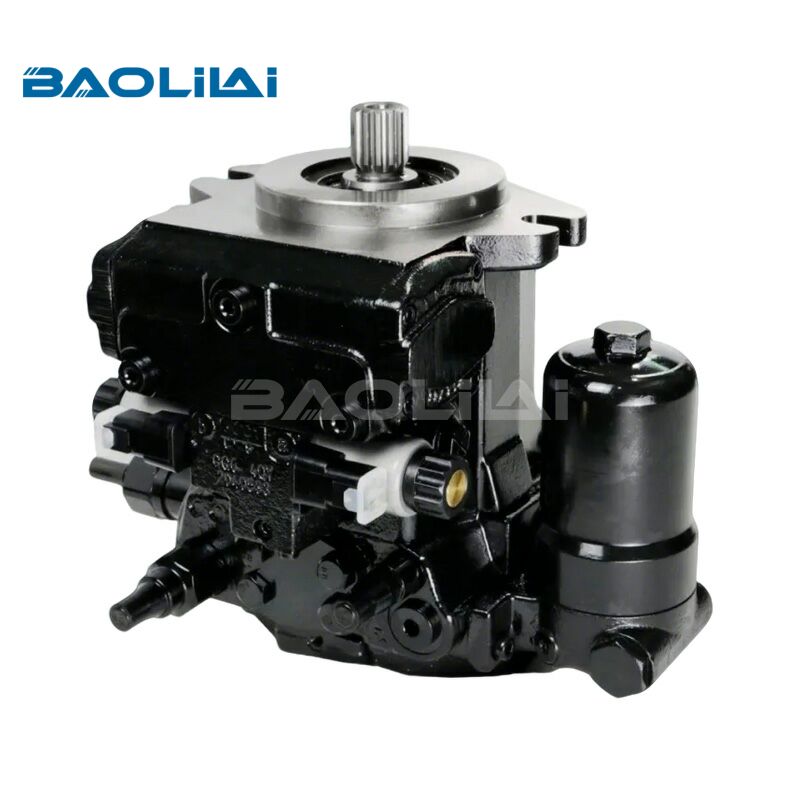
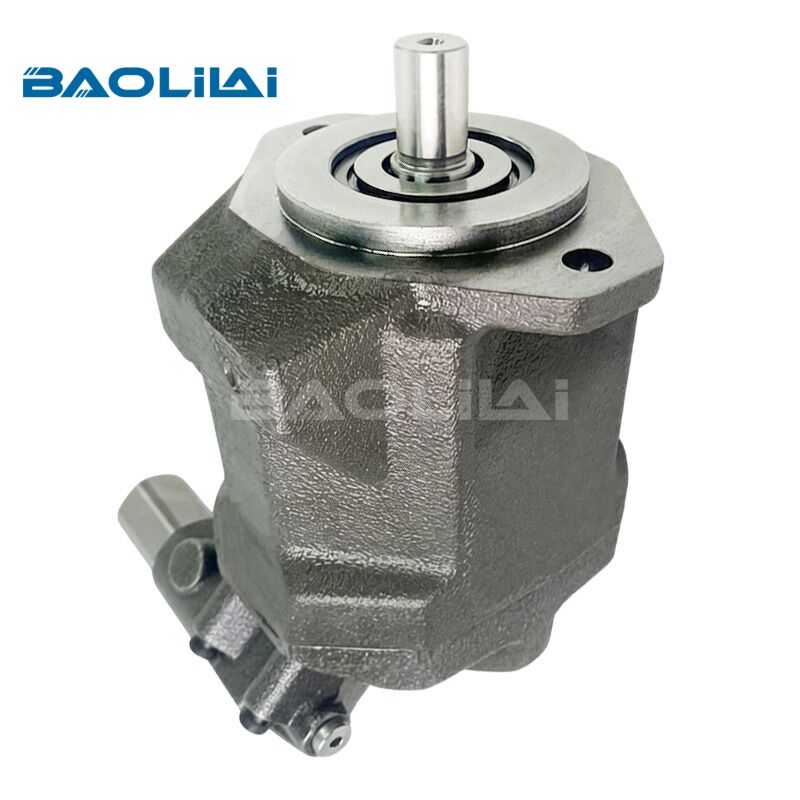
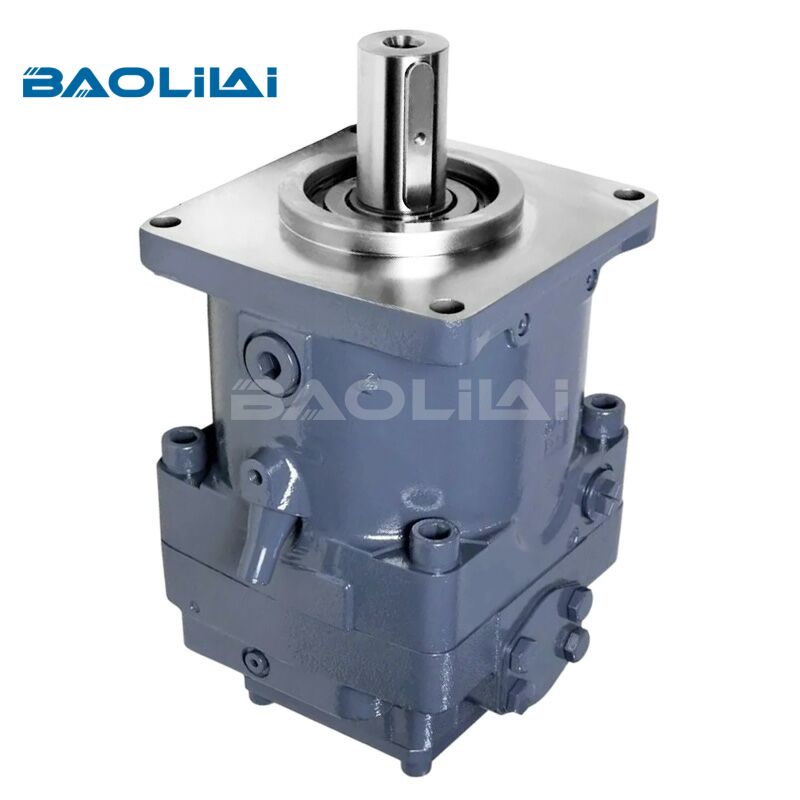
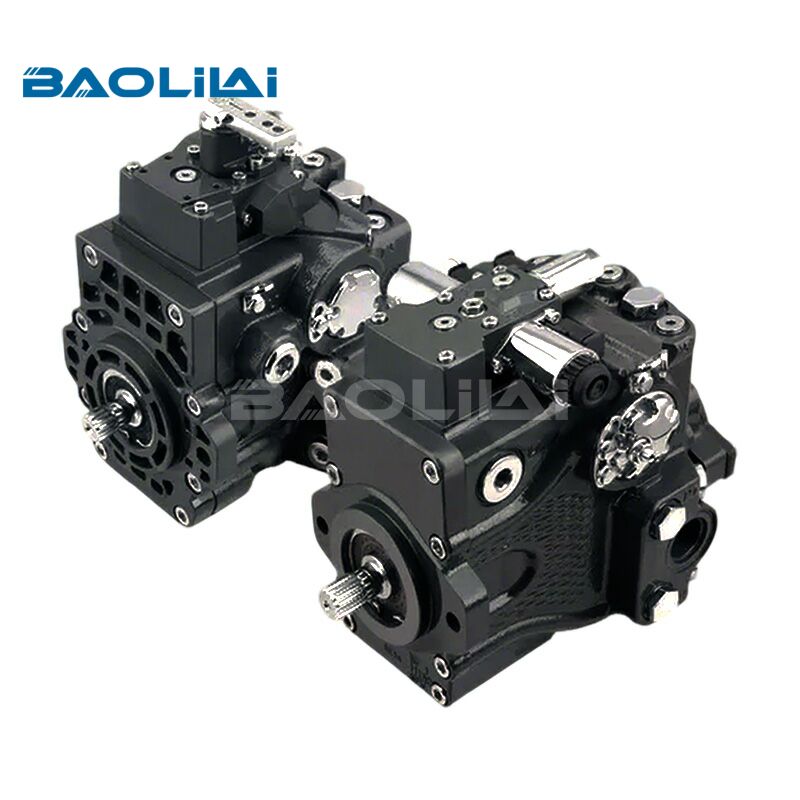
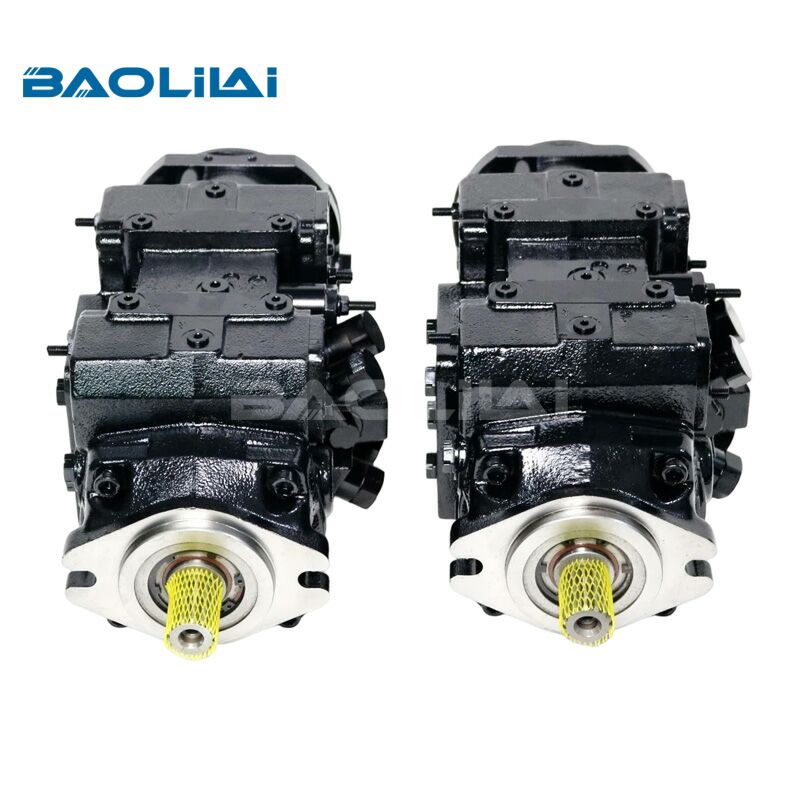
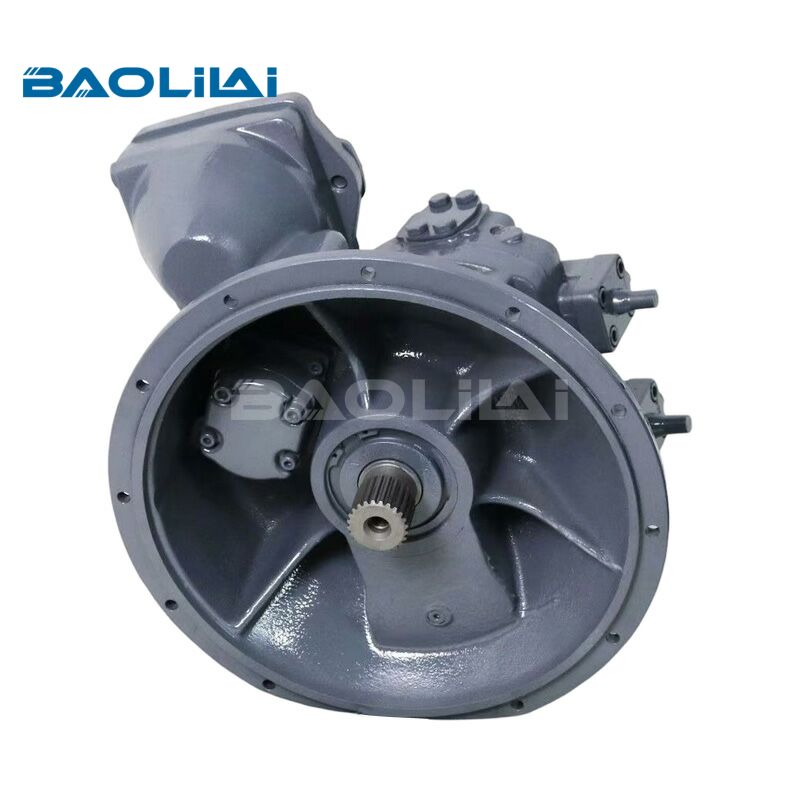
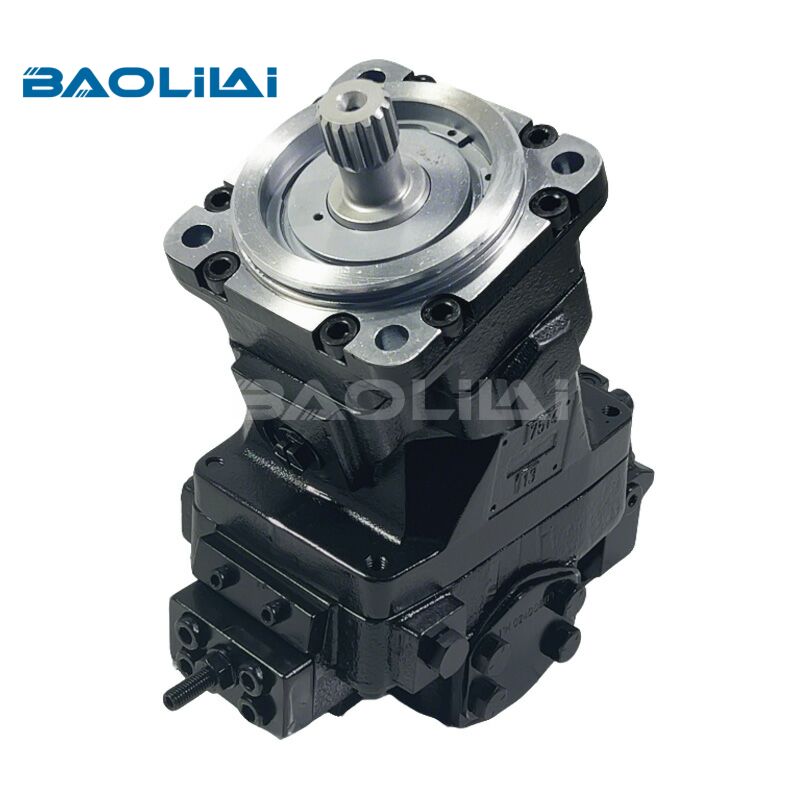
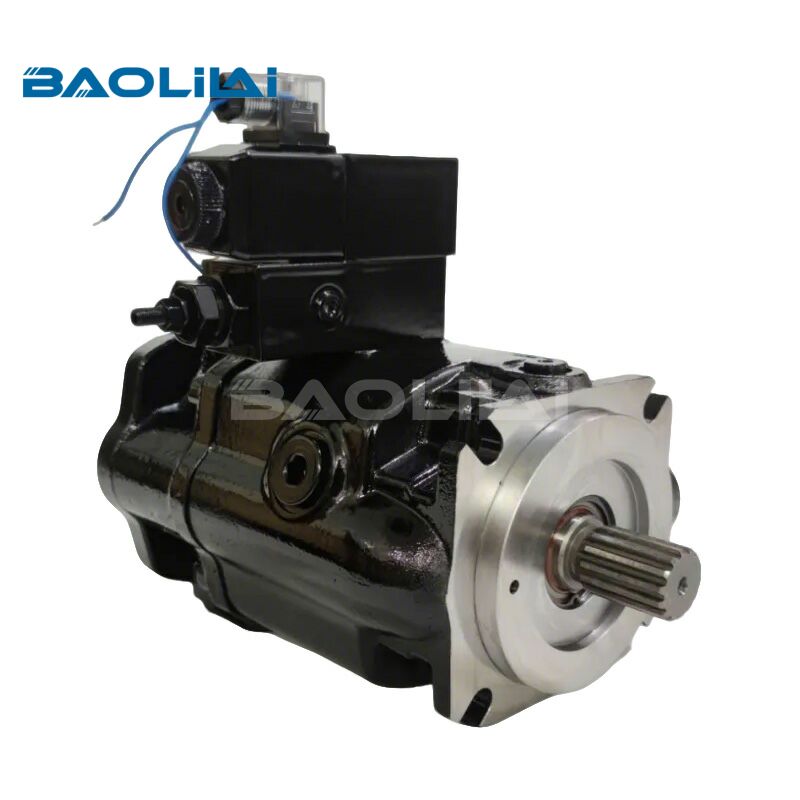
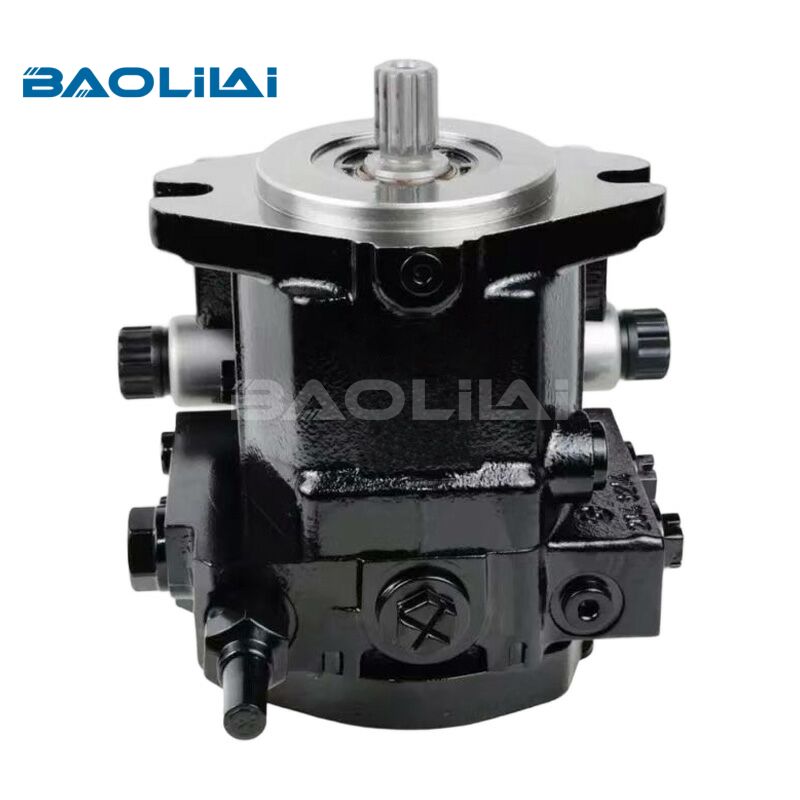
Rexroth P2V7 P3V7 fixed displacement hydraulic vane pump
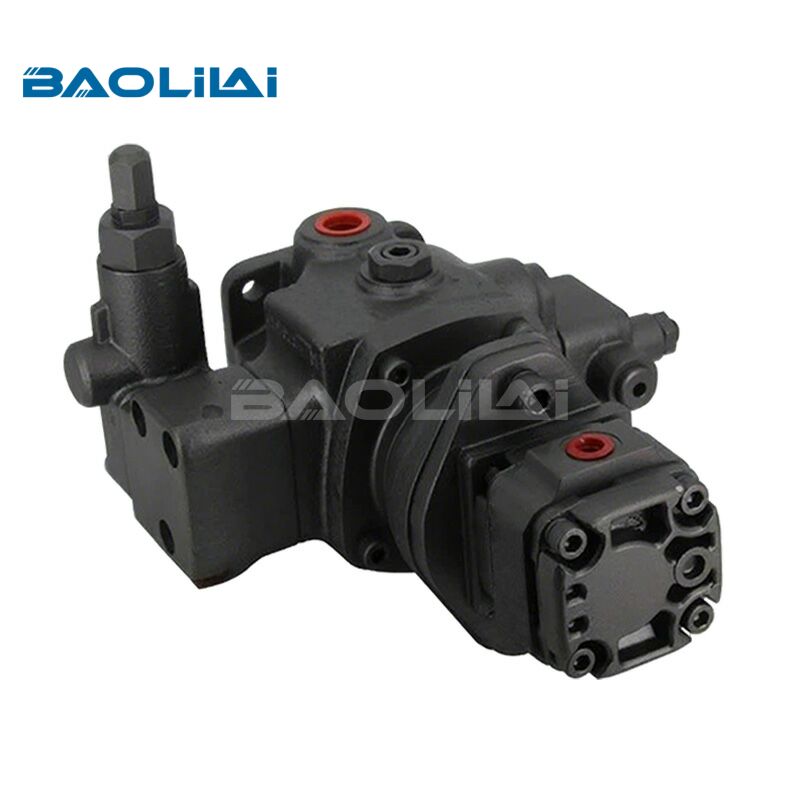
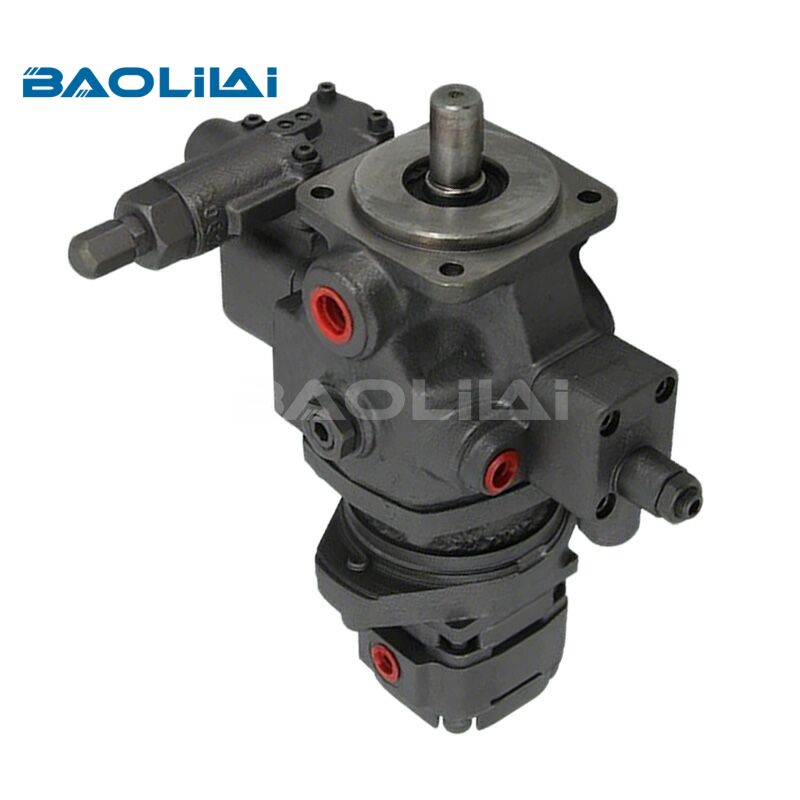
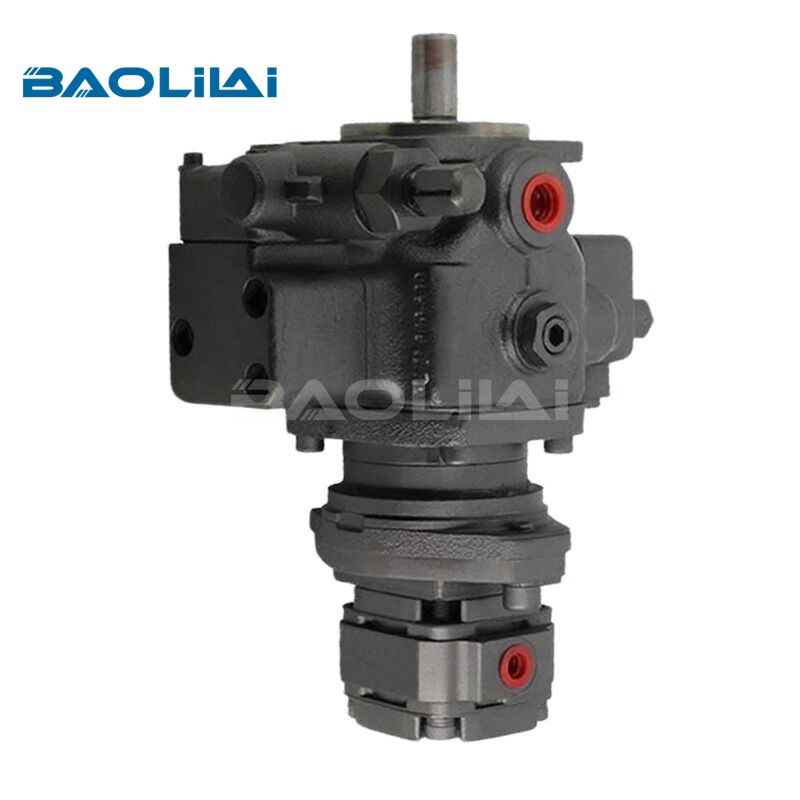

- Product Details
- Product Model
- FAQ
Bosch Rexroth's PV7 series is a line of vane pumps built for industrial (as opposed to mobile) hydraulic applications — think machine tools, plastics machinery, presses, and general factory automation rather than excavators or wheel loaders. The series covers:
Single pumps (variable or fixed displacement)
Double pump combinations, coded with a "P2" prefix (e.g., P2V7)
Triple pump combinations, coded with a "P3" prefix (e.g., P3V7)
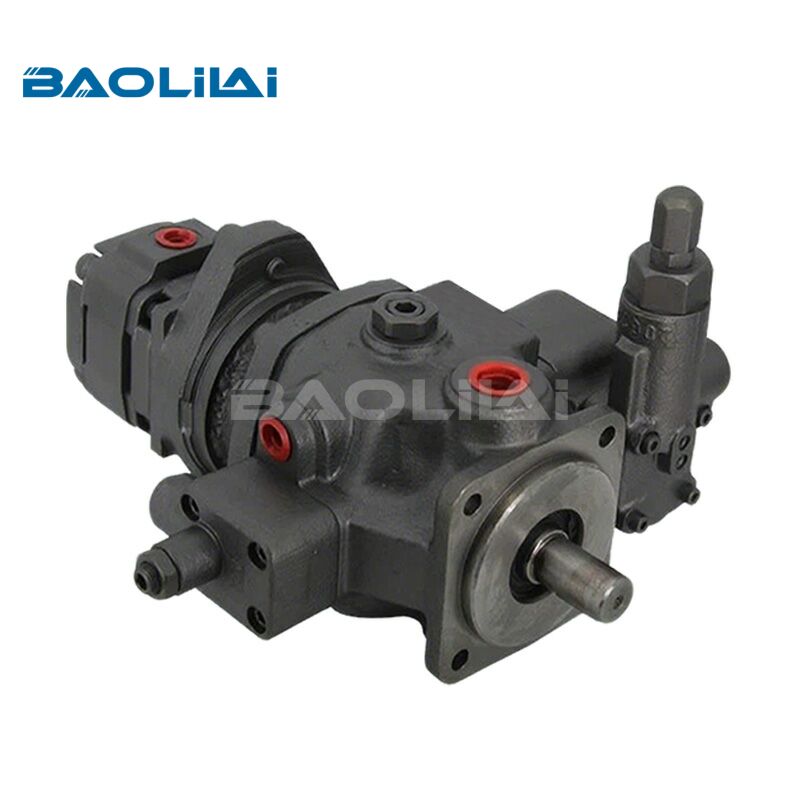
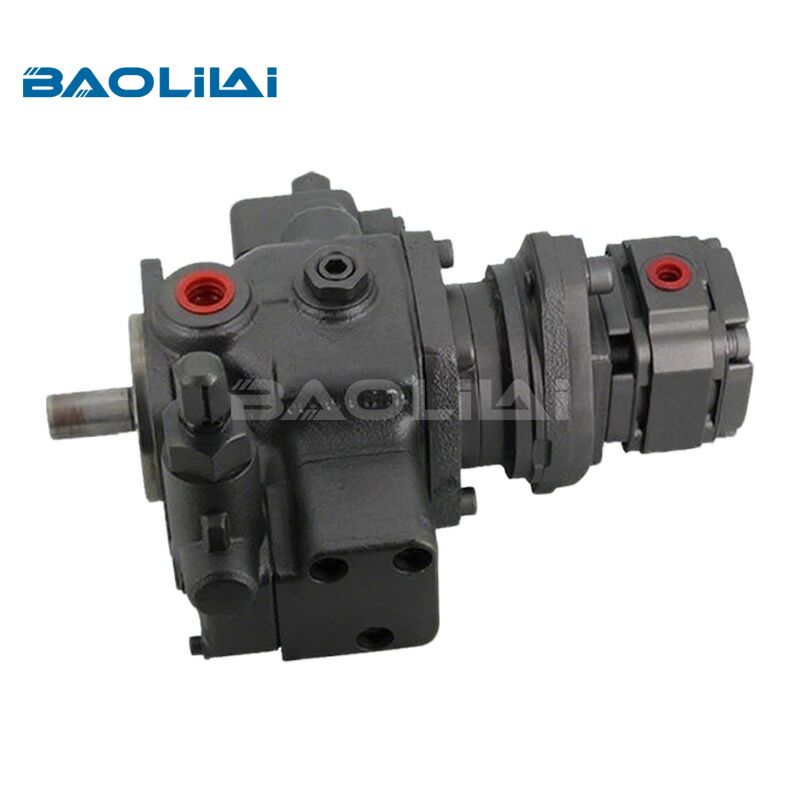
In these combination units, one or more vane pump elements are stacked on a shared drive shaft and through-drive coupling. A common configuration pairs a pilot-operated, pressureand flow-adjustable vane element with one or two fixed-displacement elements — letting a single motor drive multiple independent hydraulic circuits (for example, a high-pressure clamping circuit and a low-pressure filling circuit on an injection molding machine).
In a P2V7 or P3V7 combination, it's common to see:
One variable-displacement stage handling the primary, pressure-critical circuit
One or two fixed-displacement stages feeding auxiliary functions — ejector circuits, cooling, lubrication, or fast-fill functions where constant flow matters more than pressure compensation
Anatomy of a P2V7 / P3V7 Combination Pump
Housing and Mounting
Combination units are built to VDMA and ISO mounting and connection standards, so a P2V7 or P3V7 assembly can typically be swapped onto an existing motor bracket or coupling designed for the standard flange pattern — a detail that matters a lot when you're sourcing a replacement under time pressure.
Drive-Through Design
The defining feature of the "P2" and "P3" combination pumps is the through-drive shaft. The first (front) pump element mounts directly to the motor; its output shaft extension drives the second element behind it, and in a P3V7 unit, a third element behind that. Each stage draws from its own suction port and delivers to its own pressure port, so the circuits stay hydraulically independent even though they share one motor and one shaft line.
Adjustment and Control Options
Where a variable stage is included in the combination, you'll typically see ordering codes for:
Mechanical pressure adjustment (screw-set, field-adjustable)
Lockable mechanical adjustment (tamper-resistant)
Remote pressure setting (via external pilot pressure, useful for multi-pressure-mode machines)
Lockable remote setting
Fixed-displacement stages, by contrast, have no pressure or flow adjustment — displacement is set by the geometry of the rotor and stator ring and doesn't change.
Typical Applications
Rexroth PV7-family pumps, including P2V7 and P3V7 combinations, show up most often in stationary, industrial hydraulic power units rather than mobile equipment. Common examples include:
Plastics injection molding machines — a variable stage for clamp and injection pressure, a fixed stage for ejector or core-pull functions
Metal-forming presses — combining a high-pressure forming circuit with a lower-pressure return or clamping circuit
Machine tools — feeding clamping, indexing, or coolant circuits from a single drive motor
General industrial power units — anywhere a machine needs two or three independently sized flows without running two or three separate motors
For more information on the P2V7/P3V7 vane pump, please visit https://www.baolilaihydraulic.com/product/.
Selection Table
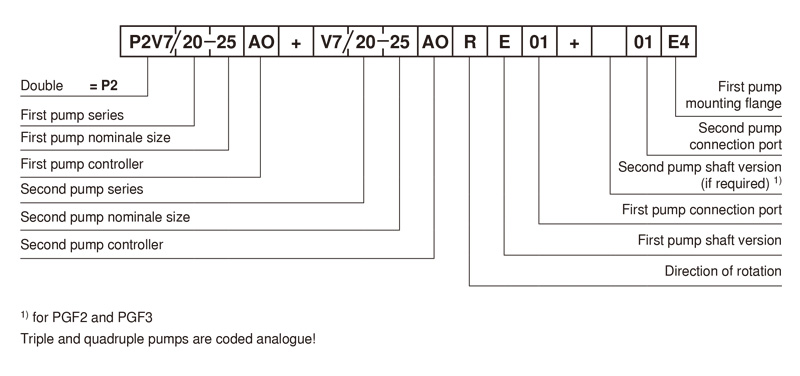
| P2V7 P3V7 vane pump | |
| Model No. | Model Code |
| R900247241 | P2V7/10-20C5+V7/10-20C5RE01+01E4 |
| R901100085 | P2V7/16-20C0+AZPF/005RE01+R20E4 |
| R900247810 | P2V7/16-20C3+R4/10,00-500RE01+A01E4 |
| R901003201 | P2V7/16-30C0+GF2/013RE01+J20E4 |
| R901080030 | P2V7/16-30C0+GF2/022RE01+J20E4 |
| R900900204 | P2V7/16-30C3+GF2/016RE01+J20E4 |
| R900900196 | P2V7/25-45C0+R4/3,15-500RE01+A01E4 |
| R900247318 | P2V7/25-45D0+GF2/011RE01+J20E4 |
| R901003071 | P2V7/40-45C5V7/16-30C0RE37+01E4 |
| R900245652 | P2V7/40-71C0+GF2/013RE37+J20E4 |
| R901000248 | P2V7/63-71C7+GH2/006RE07+07E4 & |
| R901400159 | P2V7/63-71D0+GF3/040RE07+E07E4 & |
| R900245443 | P2V7/63-94C0+V7/25-45C0RE07+01E4 |
| R901150011 | P2V7/100-118C0+AZPF/004RE07+R20E4 |
| R901005042 | P2V7/100-118D0+V7/63-71D0RE07+07E4 |
| R901002059 | P3V7/16-20N0+V7/16-20N0+GF1/1,7RE01+ |
| R901003751 | P3V7/40-45C0+V7/25-30C0+GF2/008RE37+ |
| R901000981 | P3V7/40-45W0+V7/25-30W0+V7/10-20C0RE3 |
| R900247525 | P3V7/100-118C0+V7/100-118C0+GF2/019RE |
Q1: Can I replace just one stage of a P2V7 or P3V7 combination?
A1: In many cases, the individual pump elements are separable and can be serviced or replaced independently, but they must be compatible with the coupling and through-drive shaft of the specific combination. Confirm with the full material/ordering number rather than the general type designation.
Q2: Why choose a combination pump instead of two or three separate pumps and motors?
A2: A single-motor combination reduces footprint, cost, and alignment work compared to running multiple motor-pump sets, and it simplifies control wiring since one motor start/stop handles every circuit fed by the combination.
Q3: How to purchase a P2V7/P3V7 vane pump?
A3: You can visit https://www.baolilaihydraulic.com/contact/ to contact us and purchase our products through various methods.
Q4: What is the price and delivery time of the P2V7/P3V7 vane pump?
A4: The price and delivery time will be provided based on the model you specify.