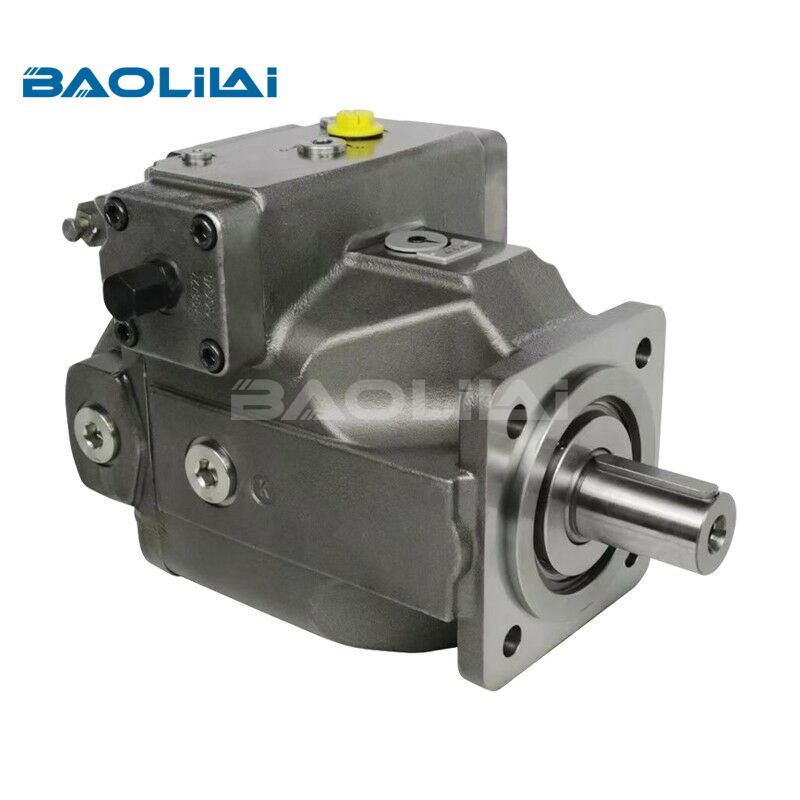
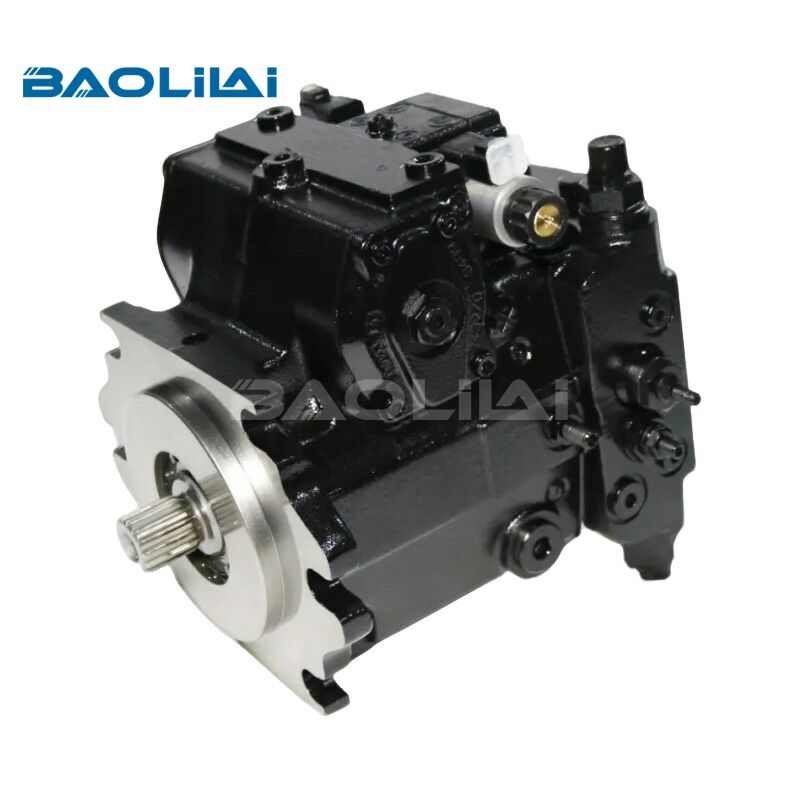
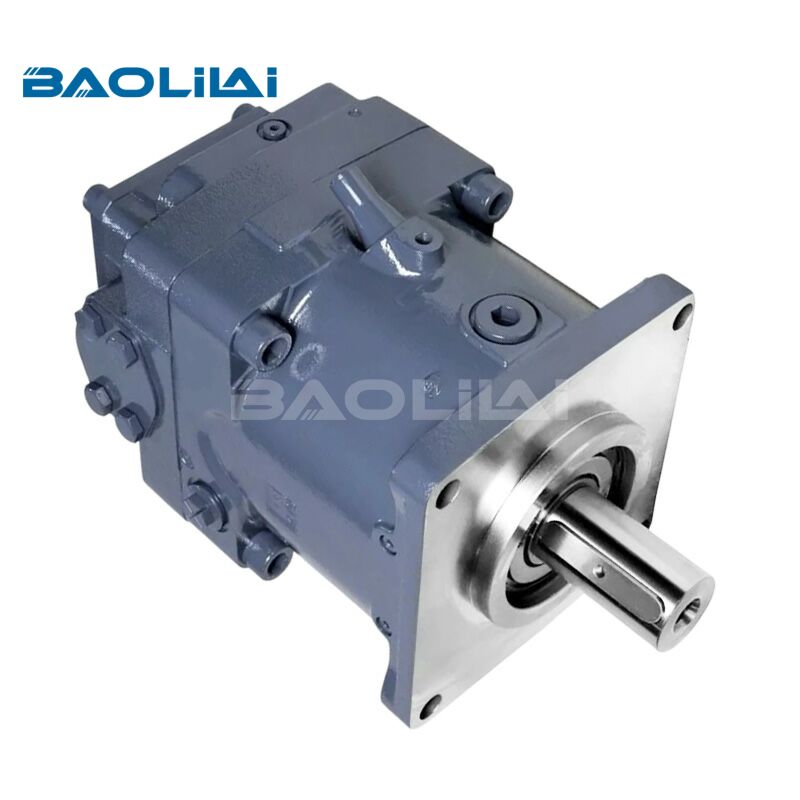
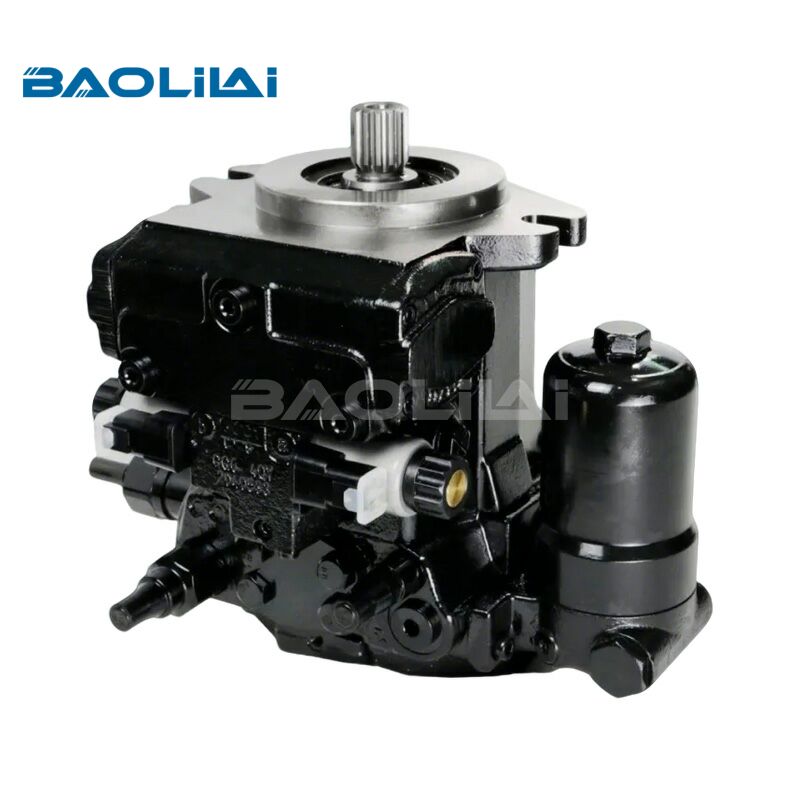
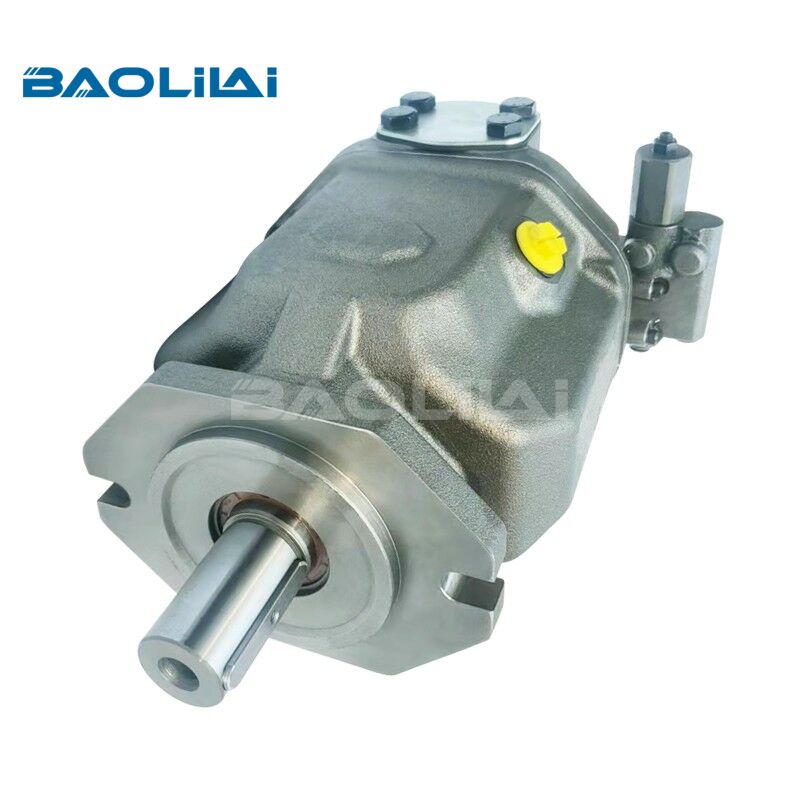
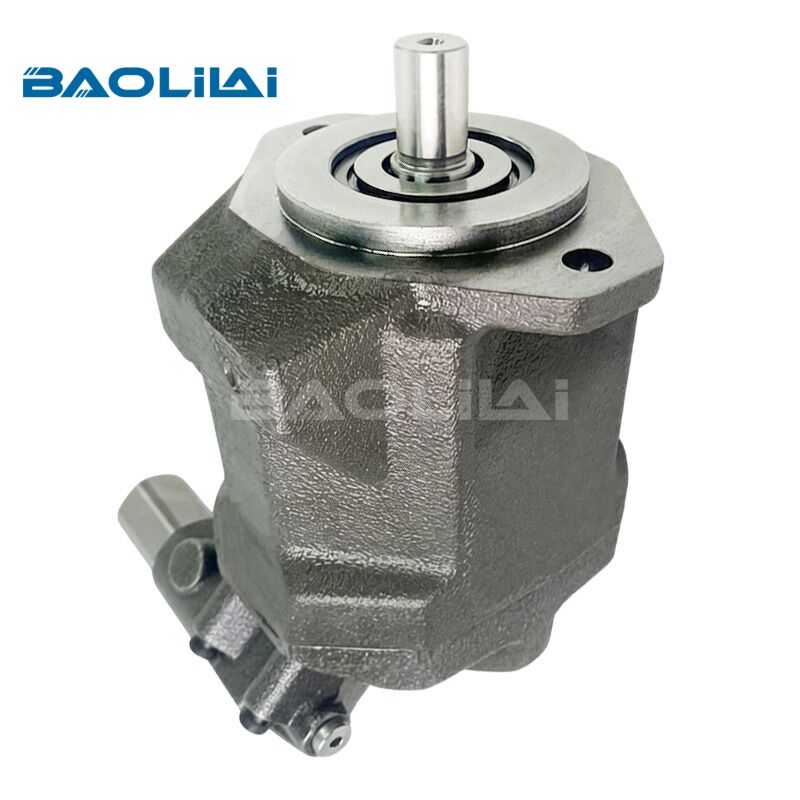
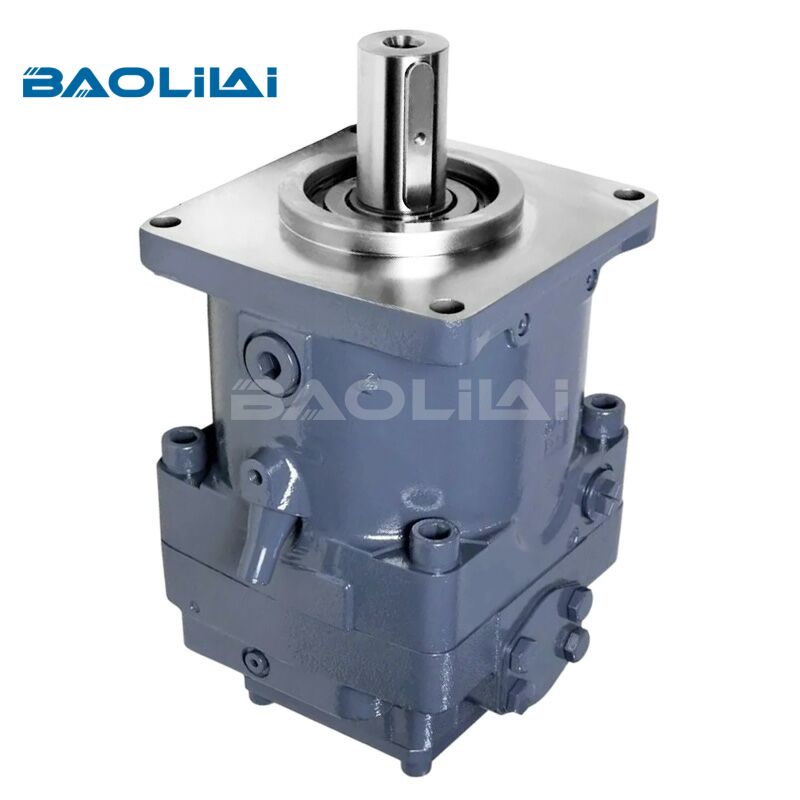
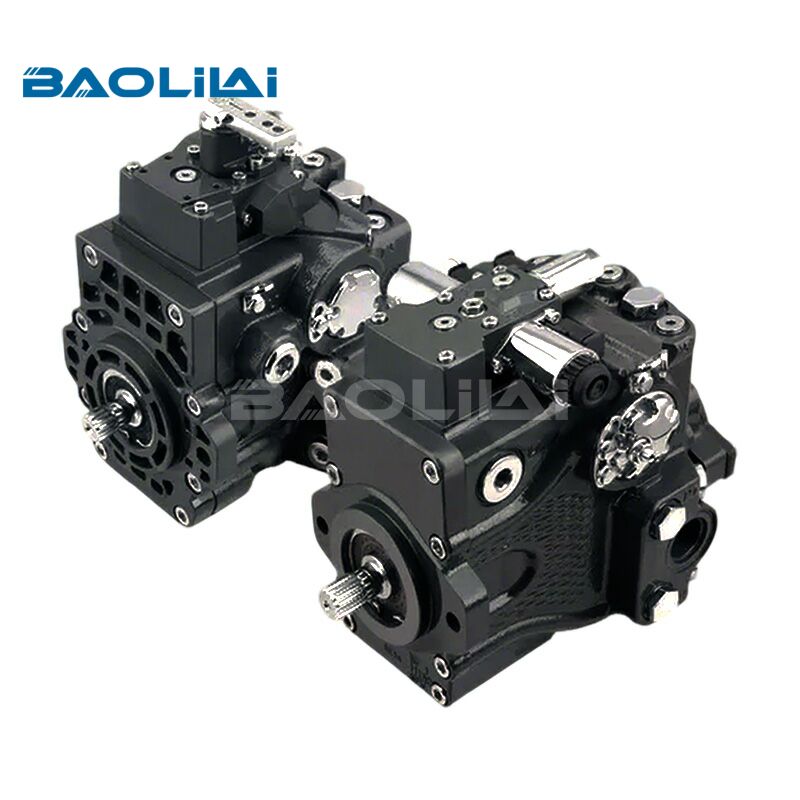
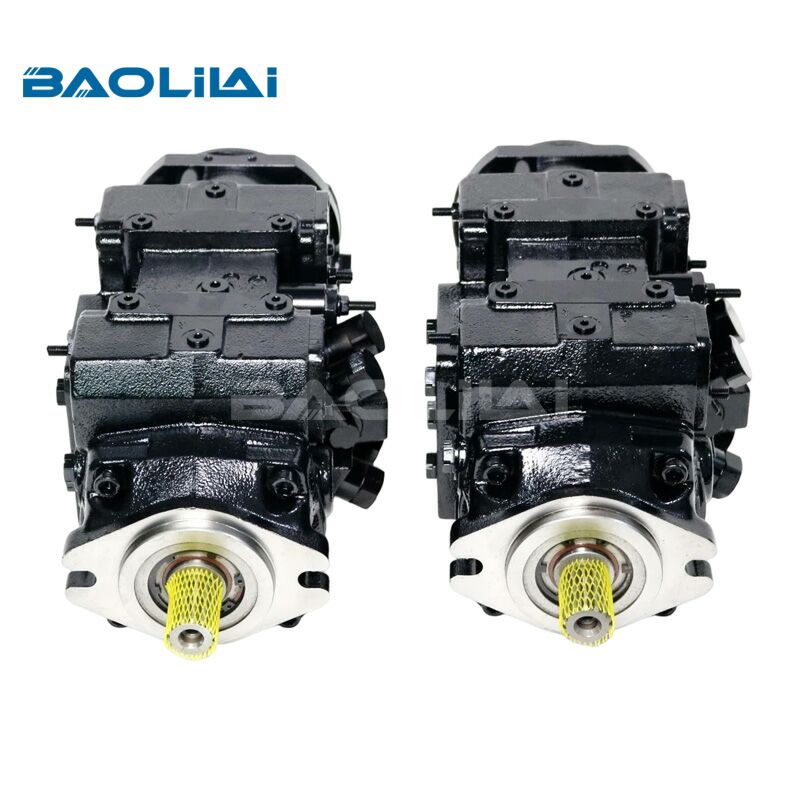
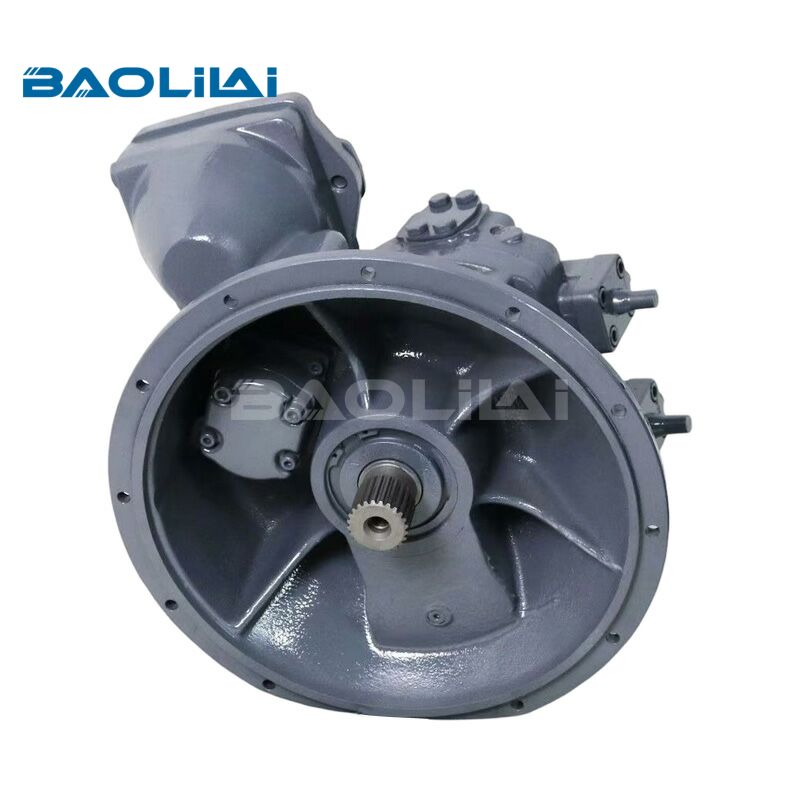
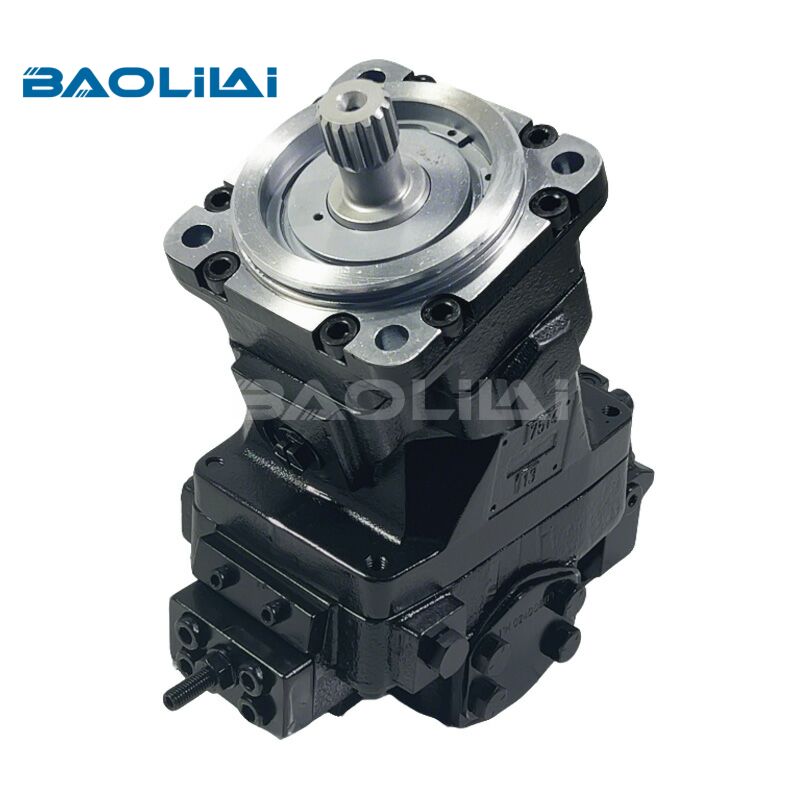
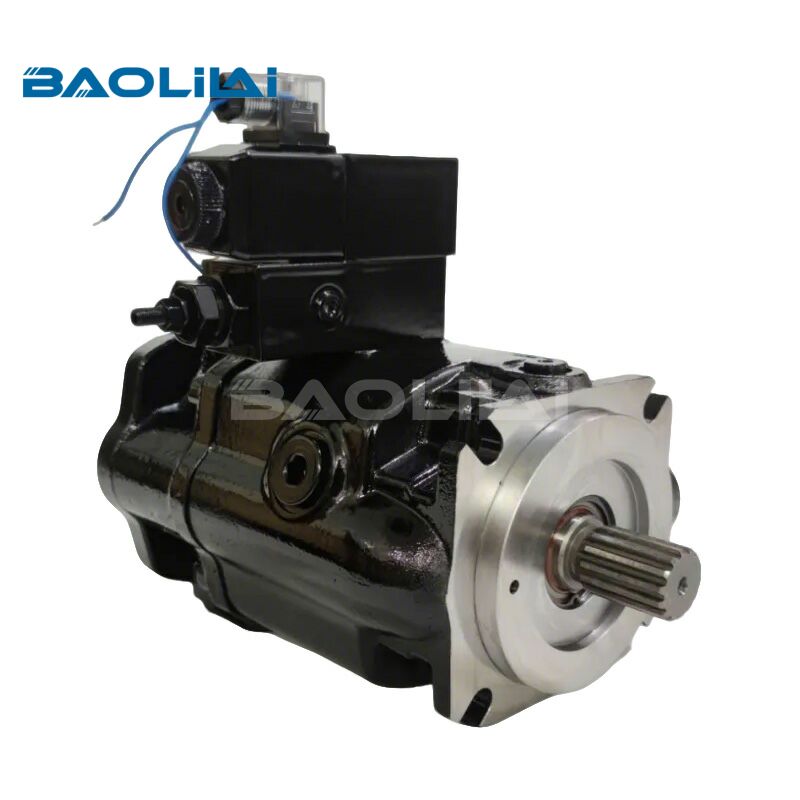
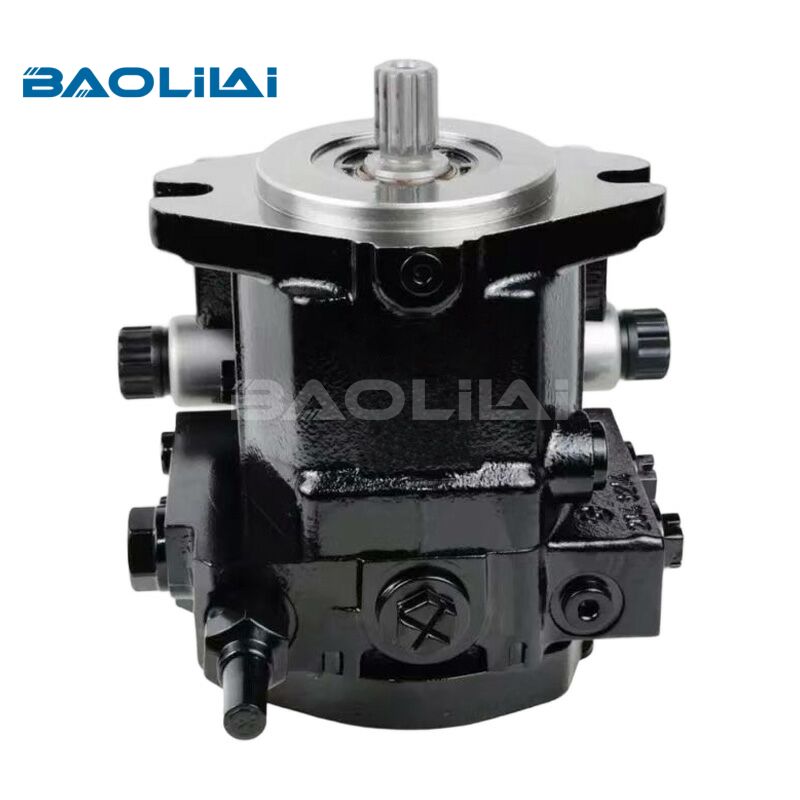
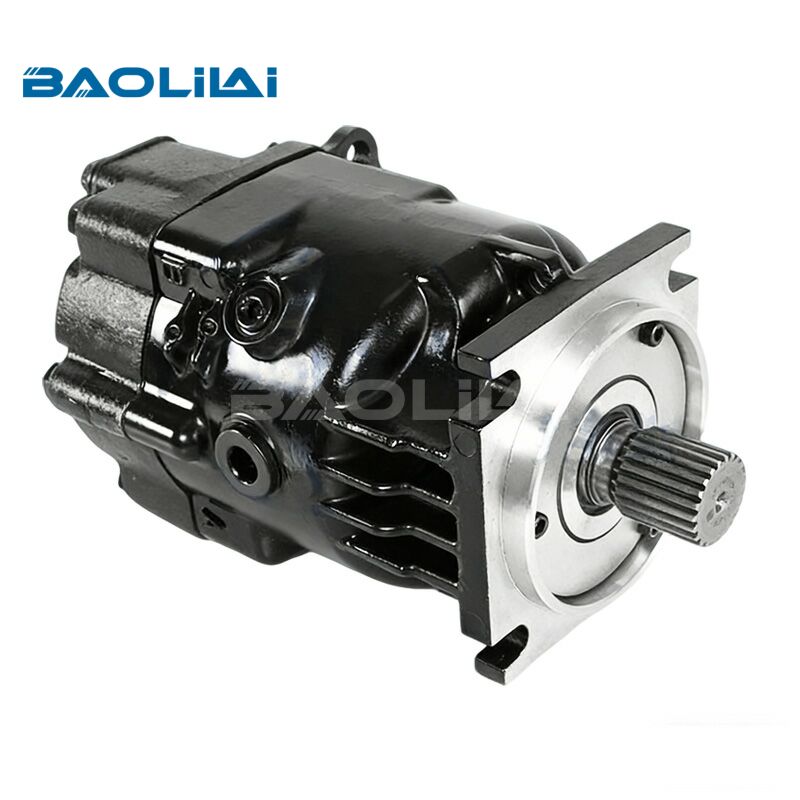
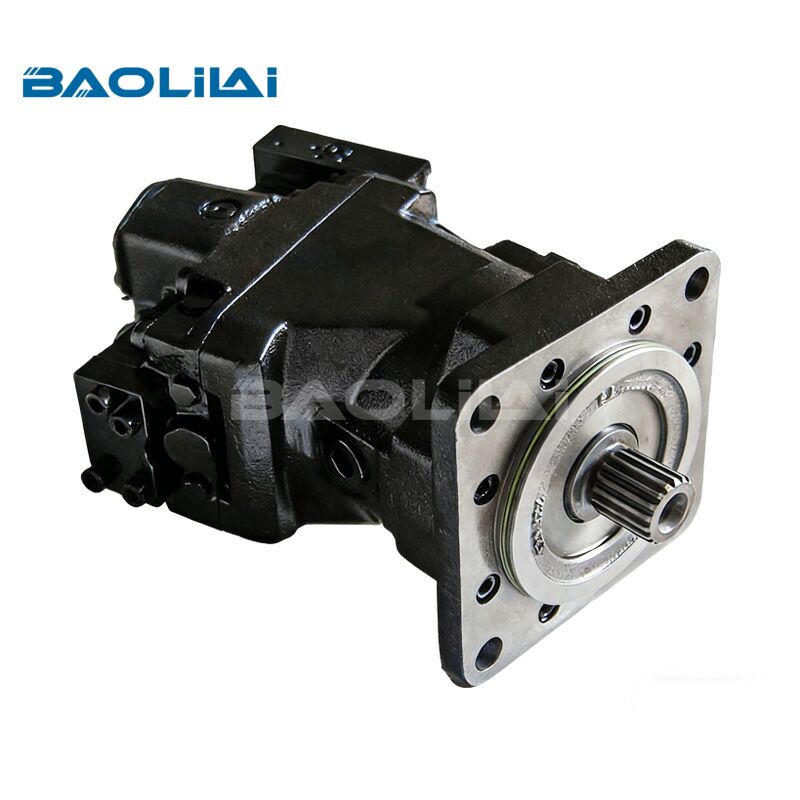
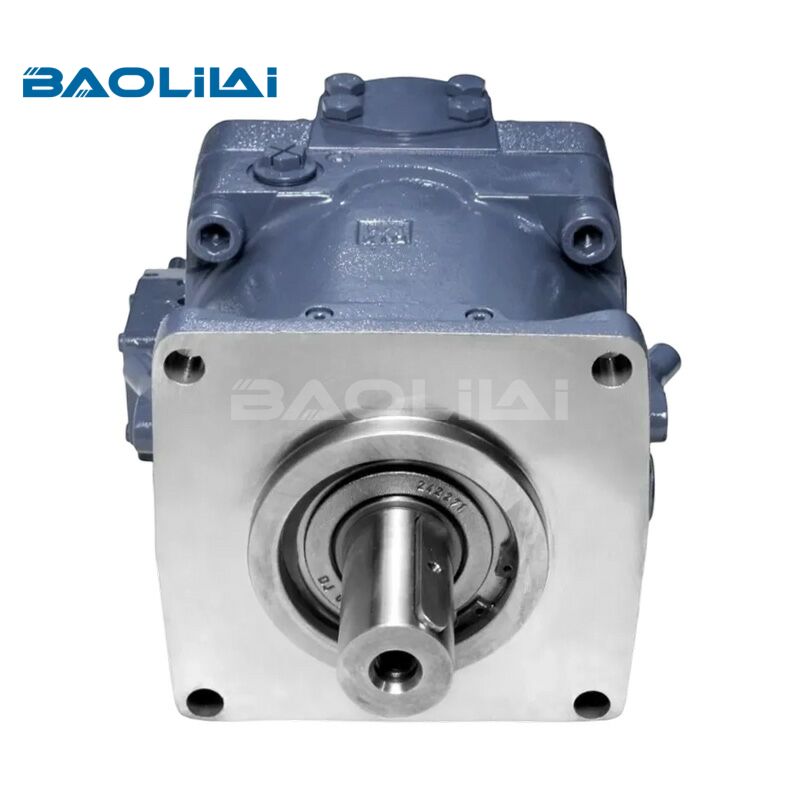
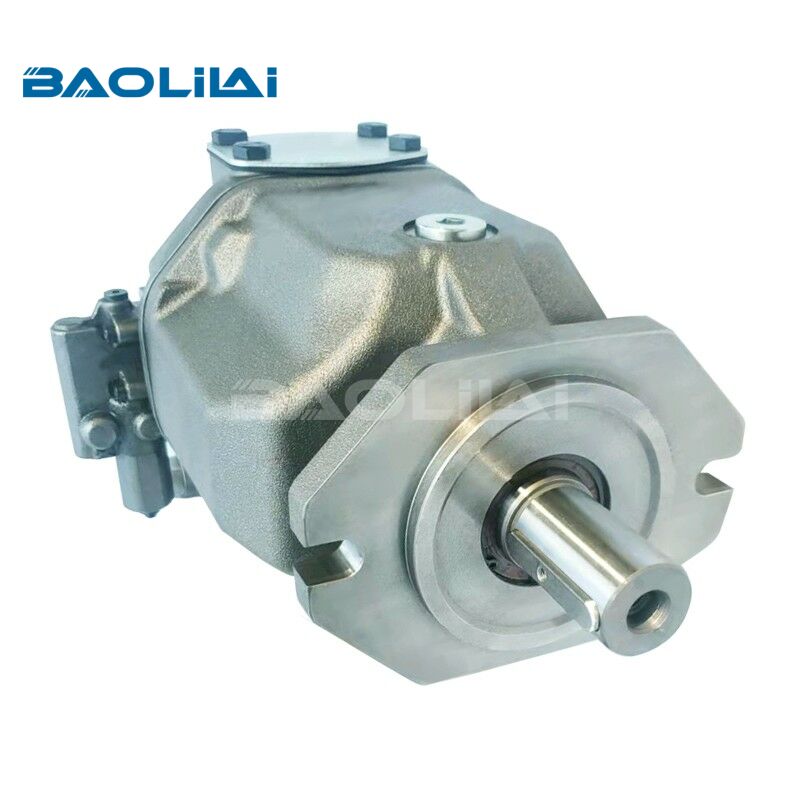
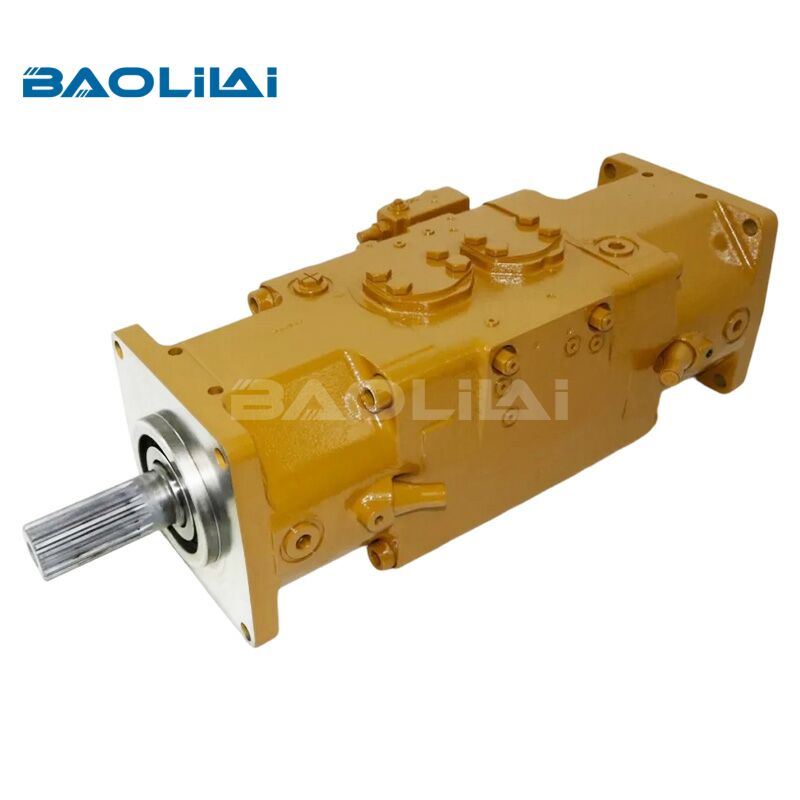
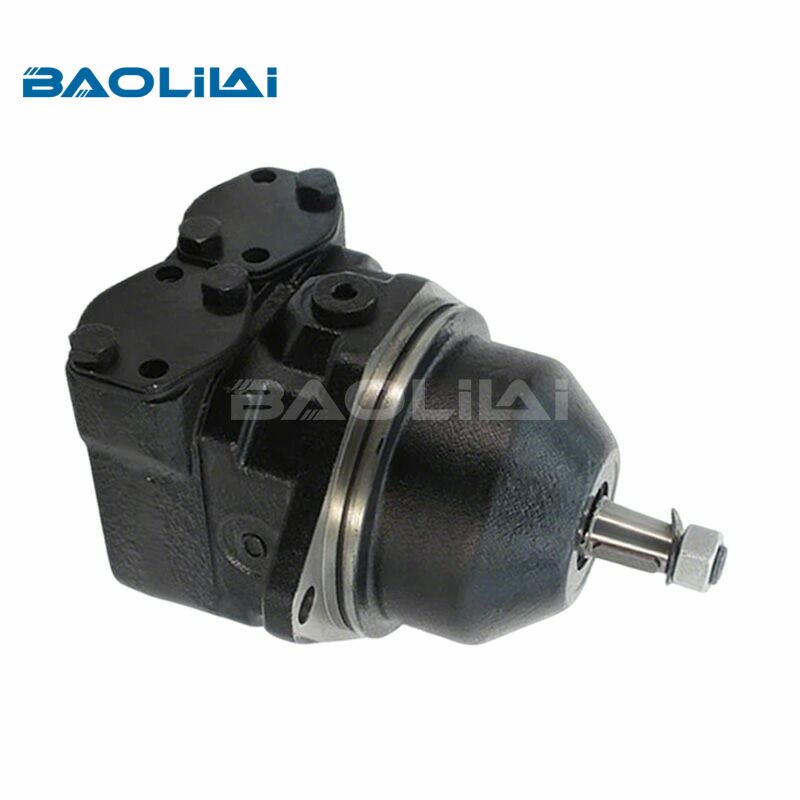
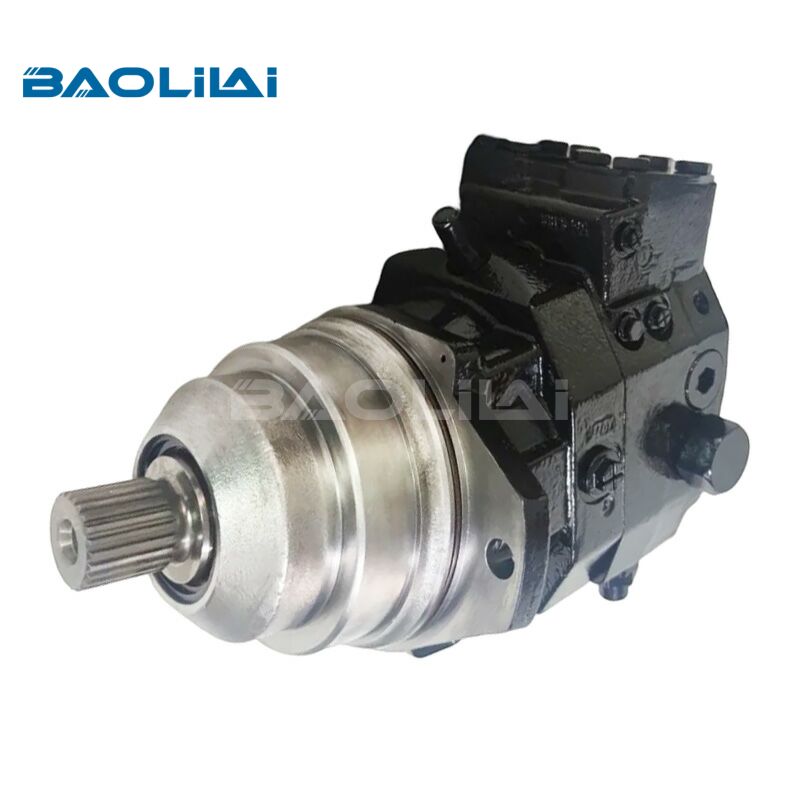
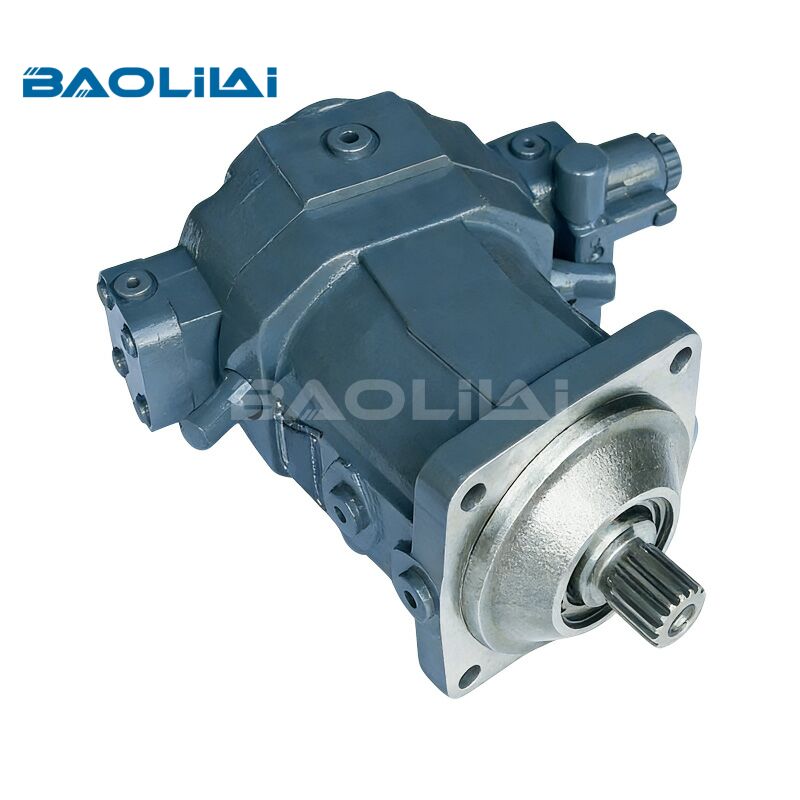
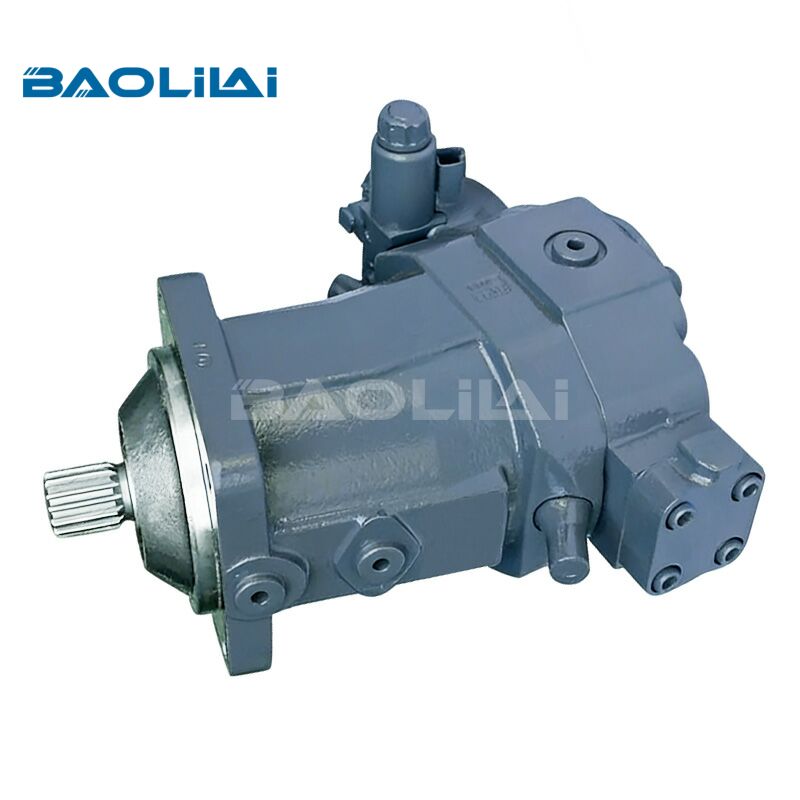
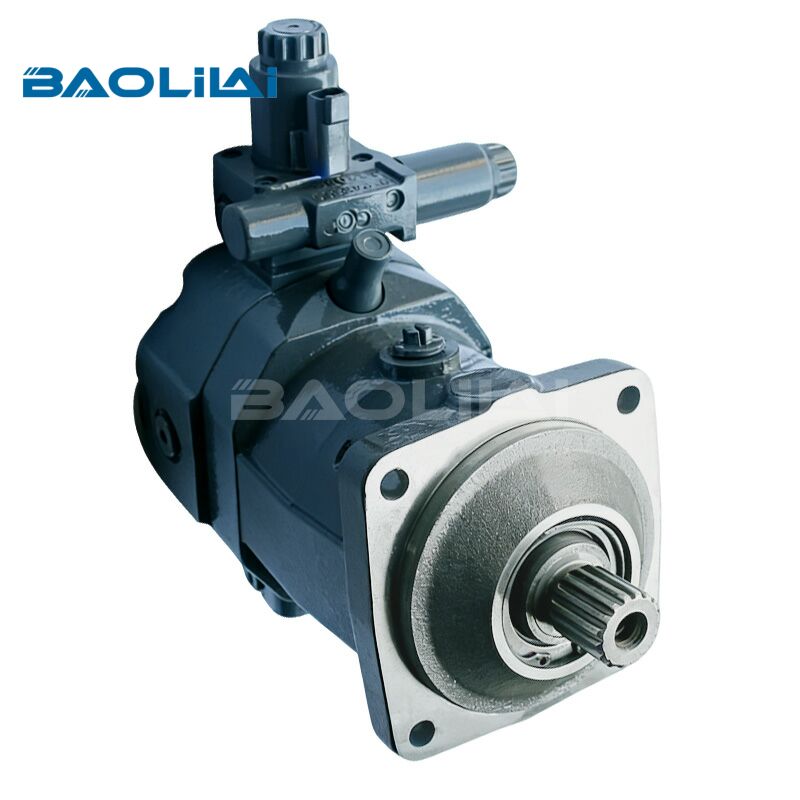
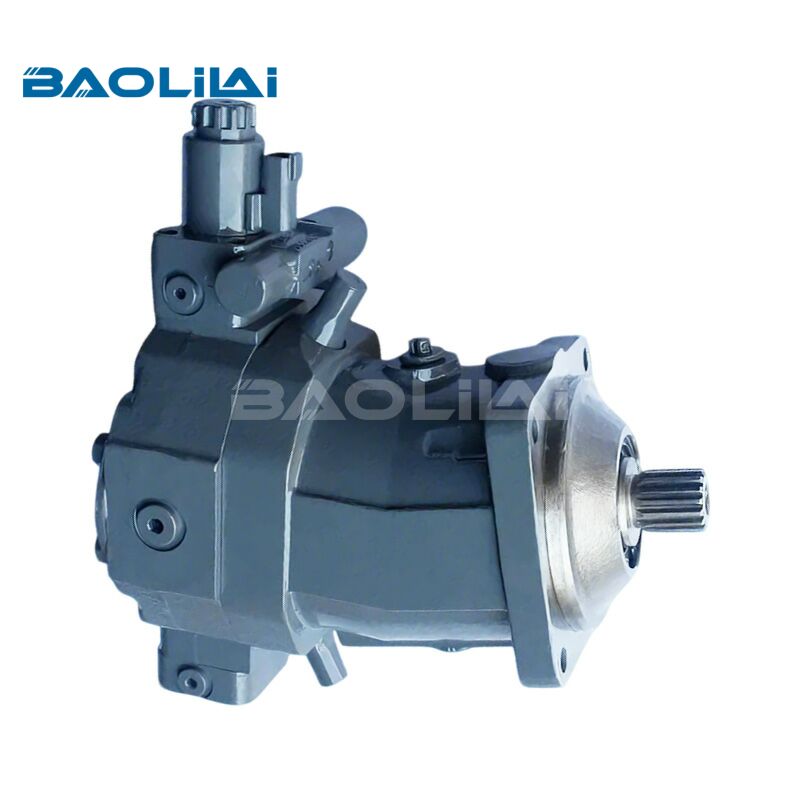
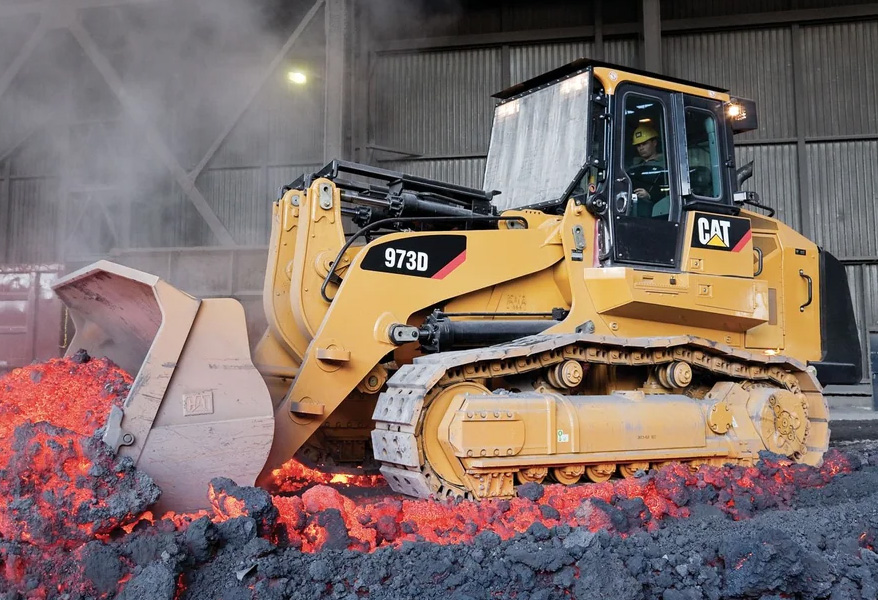
Bosch Rexroth A6VM bent axis hydrualic motor for the Caterpillar steel mill crawler 187-3454 187-3453-02 134-7307 288-5474-04 291-3711 310-9365 378-2825
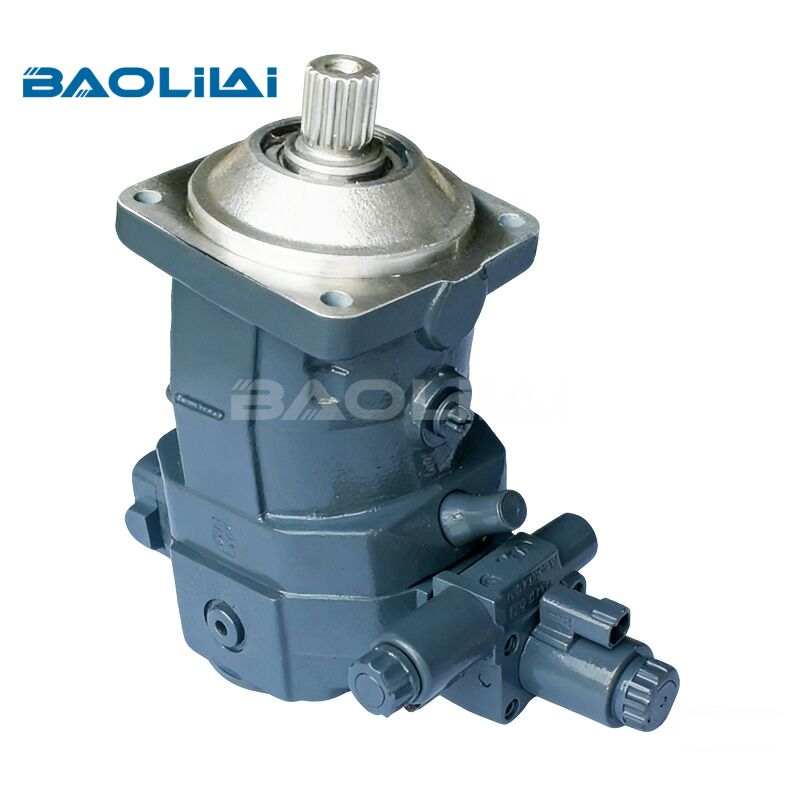

- Product Details
- Product Model
- FAQ
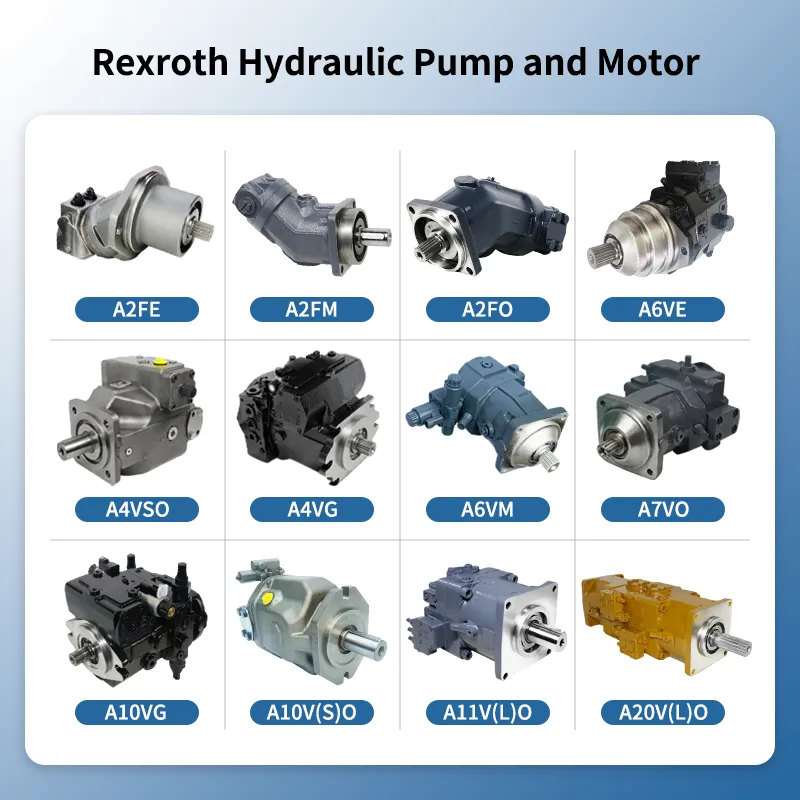
The A6VM is Rexroth's variable-displacement bent-axis motor line, purpose-built for closed-loop hydrostatic transmissions. It sits alongside the fixed-displacement A2FM line, but the variable-displacement capability is what makes it the right fit for a crawler carrier rather than a simpler fixed-speed application.
Core Design Features
Variable displacement via swiveling cylinder block — instead of changing a swash plate angle, the entire cylinder block swivels relative to the output shaft, changing displacement (and therefore output torque and speed) continuously.
Displacement range — depending on frame size, A6VM units are available from roughly 28 cc/rev up to over 1000 cc/rev, which lets Caterpillar drivetrain integrators match motor size precisely to track drive torque requirements rather than over- or under-sizing.
High-pressure capability — nominal pressures in the 350 bar range with peak ratings up to roughly 450 bar, which matters directly for shock-loaded crawler applications where instantaneous pressure spikes are common.
Integrated control options — Rexroth offers several control variants (DA, DR, HD1, EP, and others) that determine how the motor's displacement responds to load and pressure, which is critical for how a crawler behaves under partial track load versus full stall torque.
Displacement Control: The Part That Actually Determines Drivability
For a steel mill crawler, the control type isn't a minor spec — it's the difference between a machine that creeps predictably through a load-out bay and one that lurches. Two common configurations show up in this application:
DA (automotive) control — displacement is a function of both pilot pressure and system pressure, which lets the motor automatically shift toward higher displacement (more torque, less speed) as load increases, and toward lower displacement (more speed, less torque) as load drops. This is the closest hydraulic analog to an automatic transmission and is common on crawler carriers that need smooth torque transitions while maneuvering around ladles and pot stands.
HD1/EP electric proportional control — displacement is commanded electronically, which gives the machine's control system direct authority over torque/speed balance. This is increasingly common on newer Caterpillar-integrated crawler platforms where the OEM wants software-level control over creep speed during precision spotting moves.
Why the A6VM Fits Caterpillar Steel Mill Crawler Duty Specifically
Caterpillar-based crawler carriers used in steel mill service (slag pot carriers, torpedo ladle transporters, scrap handling crawlers) share a duty profile that's unusual even by heavy-equipment standards, and it maps closely onto what the A6VM is built for.
Extreme Thermal and Contamination Exposure
Steel mill floors run hot. Radiant heat near ladles and slag pots can push ambient temperatures well above what a typical construction site sees, and airborne scale and dust are a constant contamination threat to hydraulic systems. The A6VM's shaft seals, case drain arrangement, and bearing design are specified with this kind of severe-duty environment in mind, and Rexroth's engineering documentation for the line explicitly addresses high case pressure tolerance — important because a crawler's case drain line is one of the first places contamination-driven wear shows up.
Continuous, Low-Speed, High-Torque Duty
Unlike an excavator or a wheel loader that cycles between transport speed and dig-mode torque, a steel mill crawler often spends long stretches creeping at very low speed under very high torque — for example, easing a full slag pot into position. That's precisely the duty cycle bent axis motors are optimized for. A swash-plate motor asked to do the same job would see accelerated wear at the piston/shoe interface; the A6VM's flange-drive geometry tolerates it far better.
Maintenance and Reliability Considerations
Common Failure Modes in Mill Service
Case drain contamination — abrasive scale ingress accelerates barrel/piston wear; case drain filtration and flow monitoring are non-negotiable in this environment.
Seal degradation from heat — shaft seals rated for standard duty can harden and leak prematurely under sustained radiant heat exposure; mill-spec applications often call for upgraded high-temperature seal kits.
Servo/control valve sludging — DA and HD1 control spools are sensitive to varnish buildup in systems where oil cleanliness and thermal management aren't tightly controlled.
Practical Maintenance Steps
1. Monitor case drain flow and temperature as a leading indicator of internal wear, not just an afterthought metric.
2. Keep hydraulic fluid cleanliness at or above ISO 4406 18/16/13 for closed-loop A6VM circuits — mill environments make this harder to hold than it sounds, which is exactly why it matters more.
3. Inspect and, where specified, upgrade seal materials during scheduled rebuilds rather than waiting for visible leakage.
4. Verify control linkage or electronic control calibration after any rebuild, since a mis-set DA or HD1 control can mask itself as "the motor feels weak" when the real issue is a control range that's out of spec.
For more brands and equipment models, please visit https://www.baolilaihydraulic.com/brand/
| Application equipment brands | Application equipment No. |
| Caterpillar | 100-1514 |
| Caterpillar | 123-5260-02 CS531C |
| Caterpillar | 134-7307 |
| Caterpillar | 168-1837 |
| Caterpillar | 180-9886-05 R22 |
| Caterpillar | 187-3453-02 TRACK TYPE LOADER 963C |
| Caterpillar | 187-3454 973C steel mill crawler |
| Caterpillar | 196-4703 |
| Caterpillar | 198-6041 DUMP TRUCK:793D;793F |
| Caterpillar | 203-4142-00 |
| Caterpillar | 225-8180-02 |
| Caterpillar | 231-0471 |
| Caterpillar | 236-7878-02 |
| Caterpillar | 243-6639-06 |
| Caterpillar | 243-6640-06 |
| Caterpillar | 243-6645-07 |
| Caterpillar | 245-2310 RH340A travel motor |
| Caterpillar | 270-7935 |
| Caterpillar | 271-2886-04 |
| Caterpillar | 288-5474-04 973D |
| Caterpillar | 291-3711 excavator:M315D,M316D;M318D;M322D |
| Caterpillar | 295-0799-00 |
| Caterpillar | 295-0800-00 |
| Caterpillar | 303-5861-05 795F |
| Caterpillar | 310-9365 steel mill crawler 973D |
| Caterpillar | 370-1089 RH400( Caterpillar 6090) |
| Caterpillar | 378-2820 |
| Caterpillar | 378-2825 |
| Caterpillar | 4380124 MOBILKRANA TC20 |
| Caterpillar | R902124486 |
| Caterpillar | R902124492 |
Q1: What's the practical difference between the A6VM and a swash-plate motor for this application?
A1: Lower piston side-loading, better tolerance of pressure spikes, and generally longer service life under continuous high-torque, low-speed duty — all of which matter more in mill service than in lighter transport-cycle equipment.
Q2: How do I know if displacement control (DA vs. HD1/EP) is right for a given crawler retrofit?
A2: It depends on whether the machine's existing control architecture is hydraulic-pilot based or already has an electronic control system in place. DA is simpler to retrofit into a purely hydraulic circuit; HD1/EP is the better fit when the crawler already has an electronic controller that can manage displacement commands directly.
Q3:What is the price and delivery time of the Rexroth A6VM motor for the Caterpillar steel mill crawler?
A3: The specific price and delivery time will depend on the equipment model or specific product model you provide.
Q4: How to purchase a Rexroth A6VM motor for the Caterpillar steel mill crawler?
A4:You can visit https://www.baolilaihydraulic.com/contact/ to contact us and purchase our products through various methods.