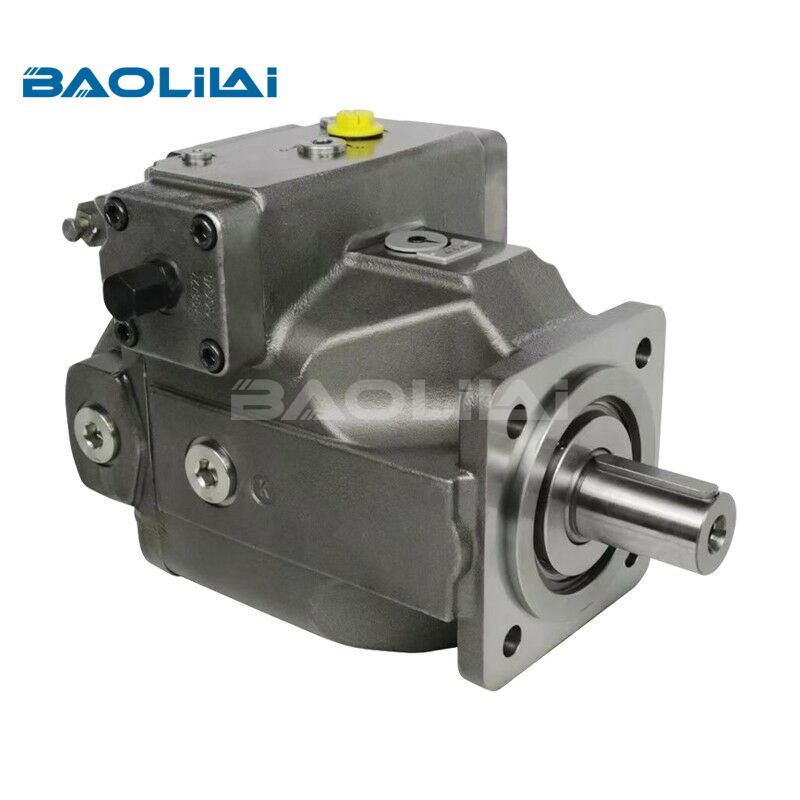
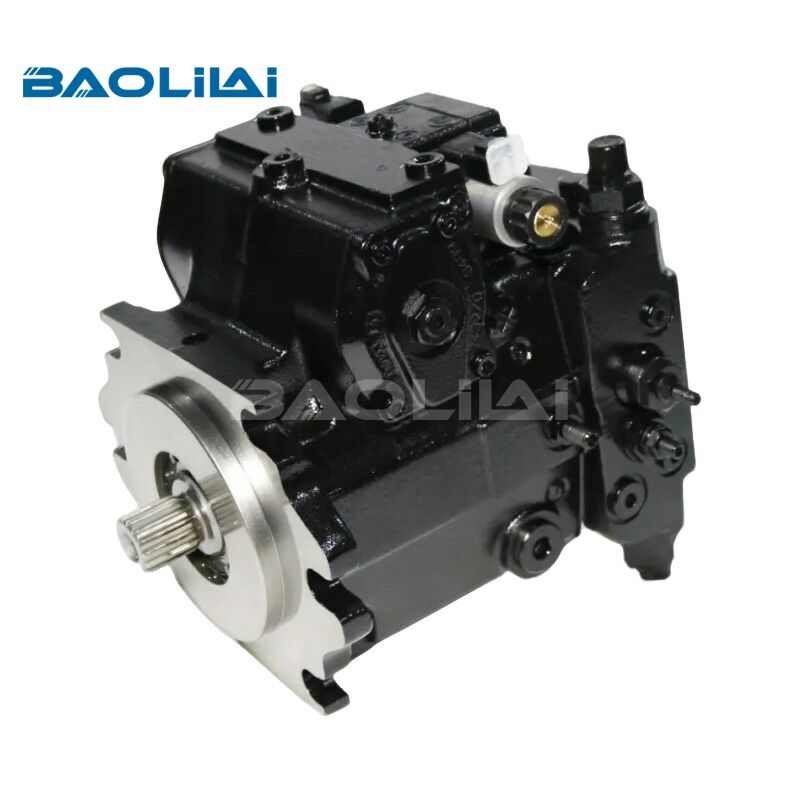
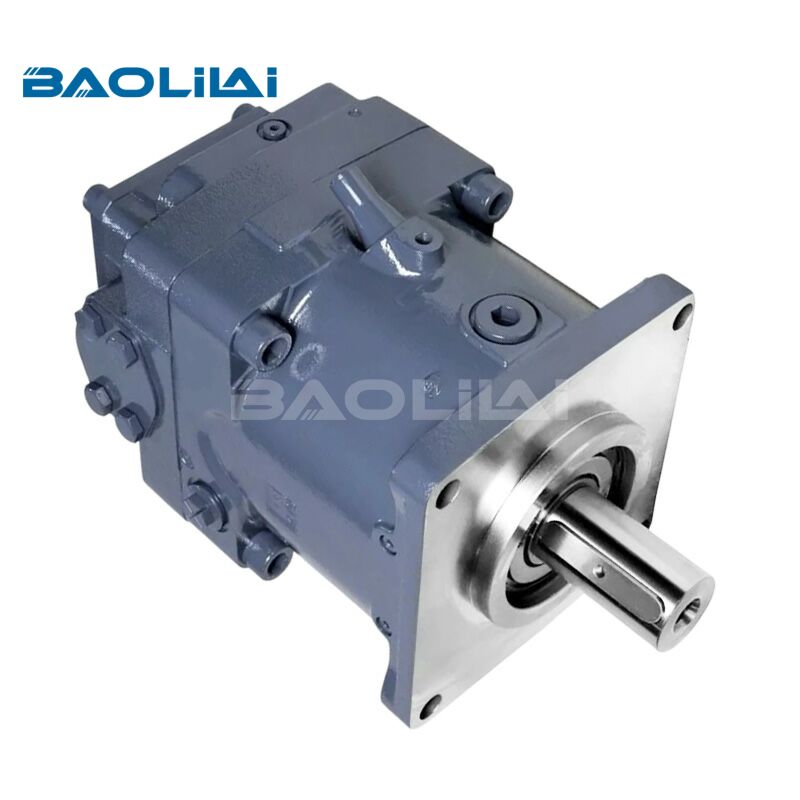
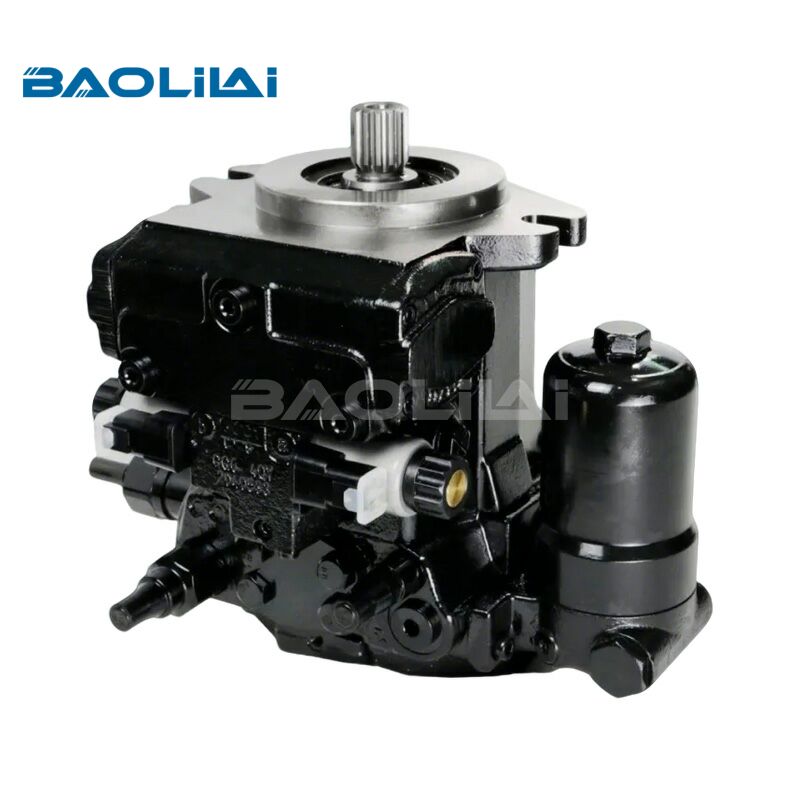
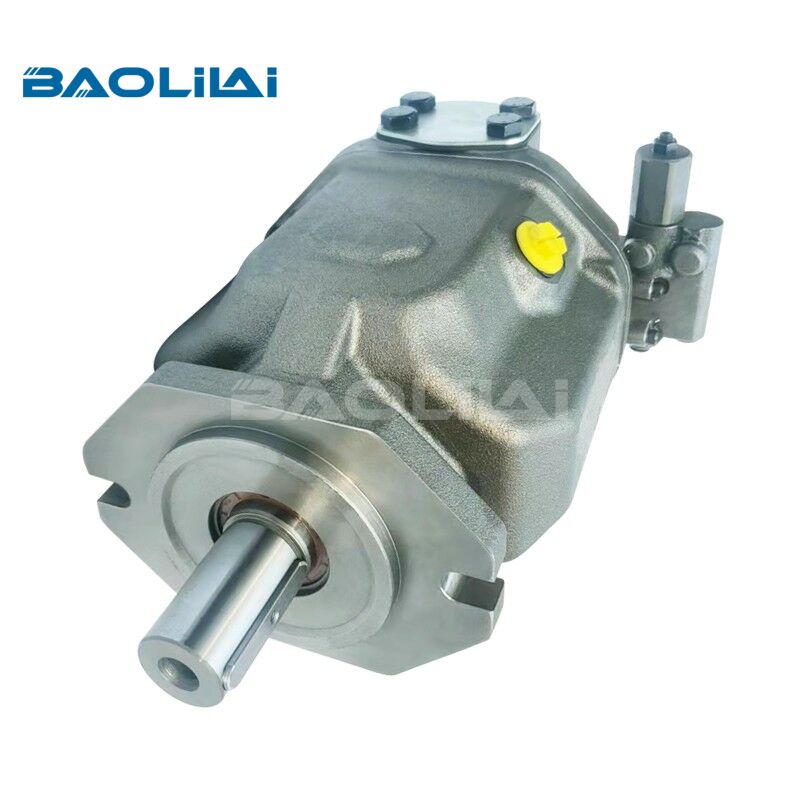
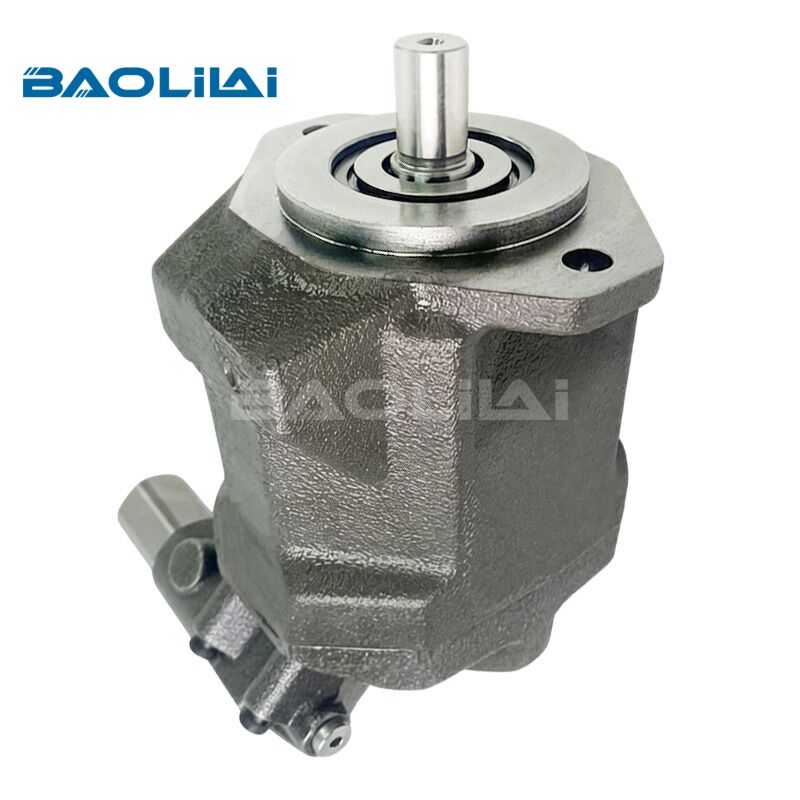
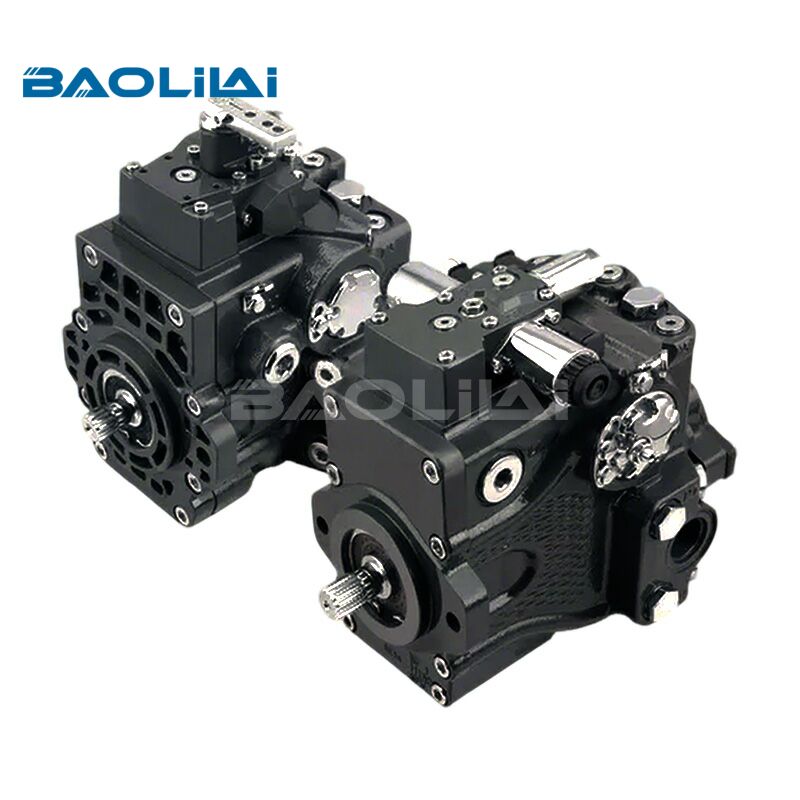
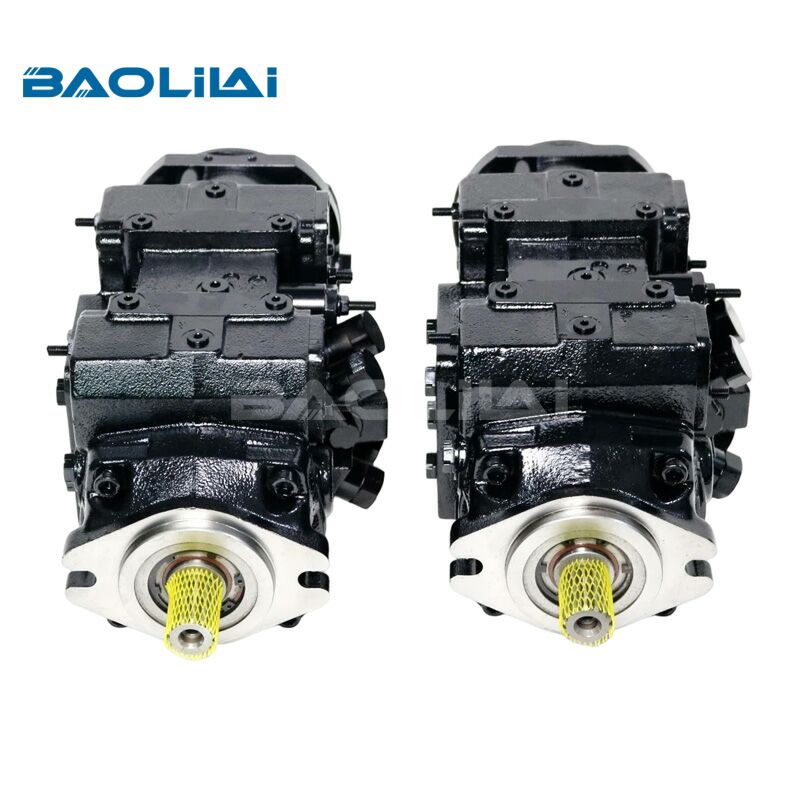
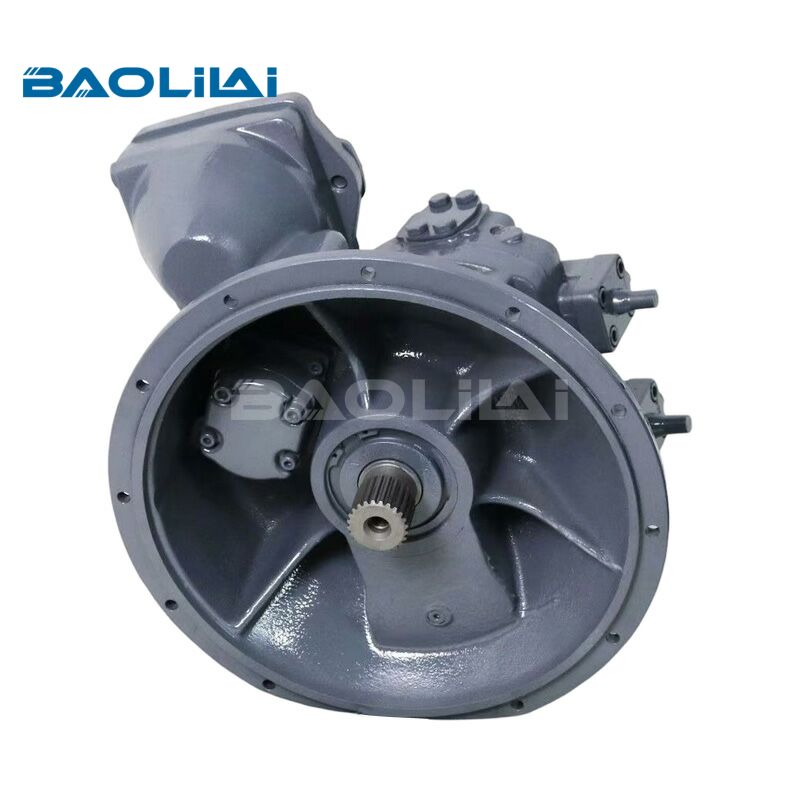
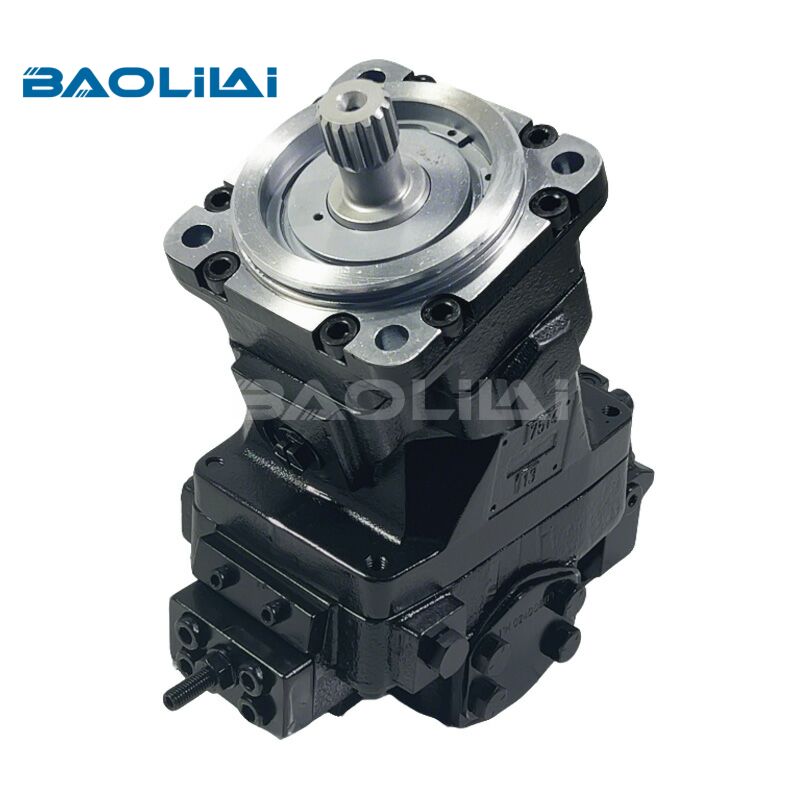
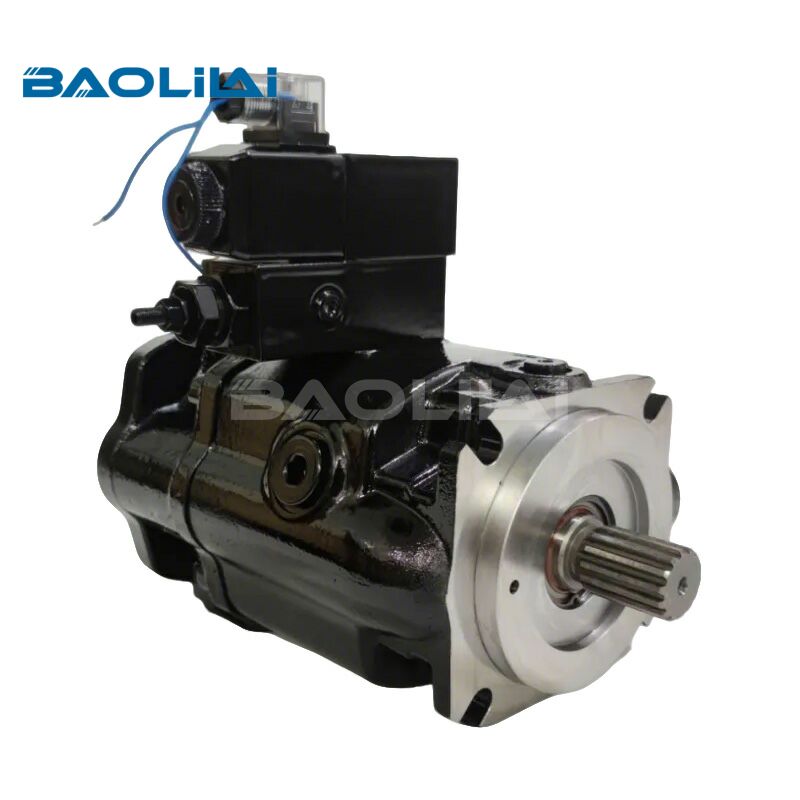
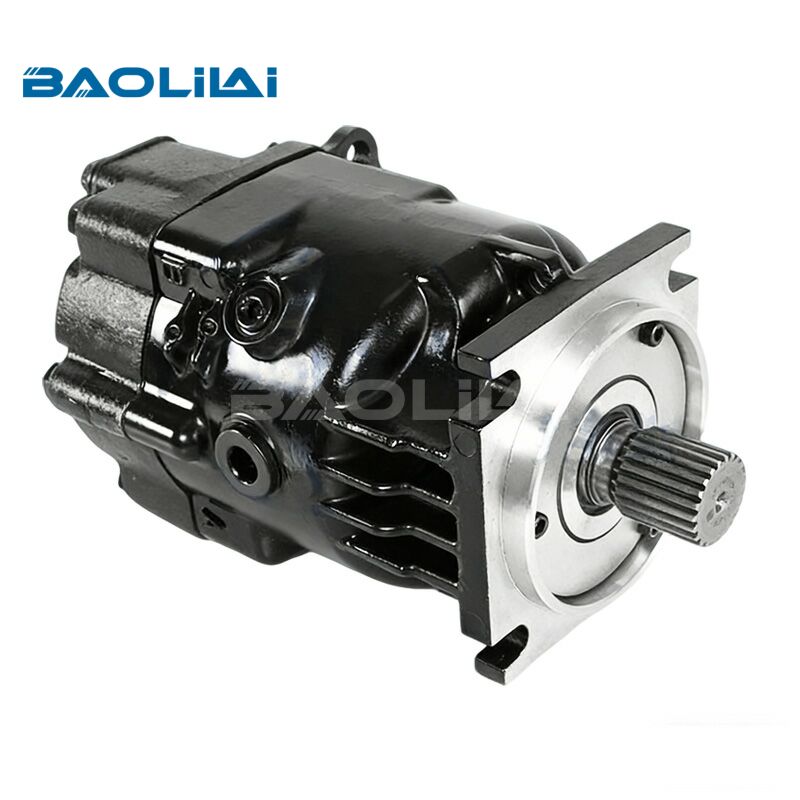
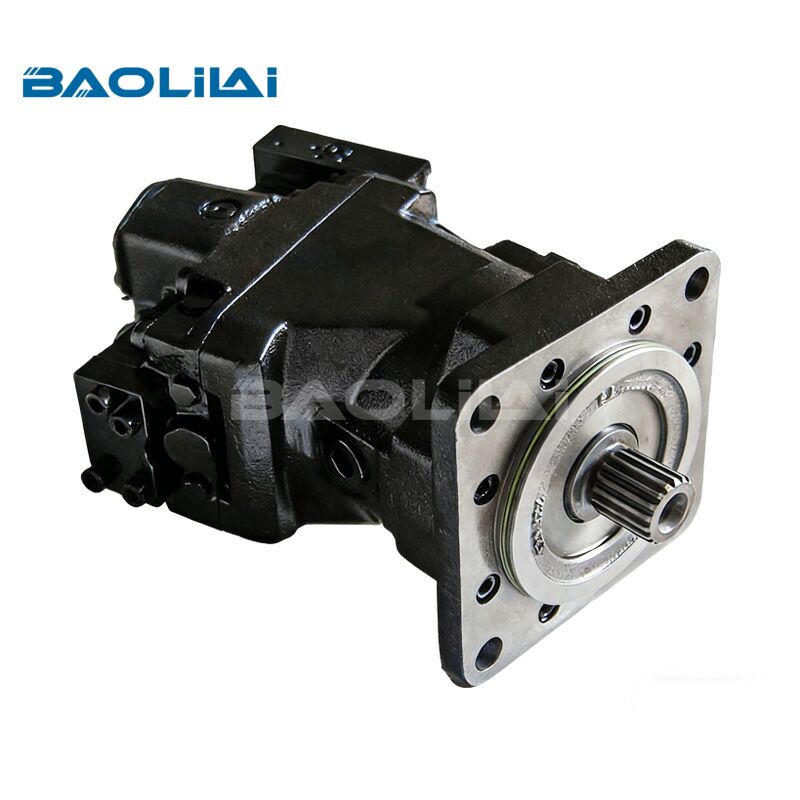
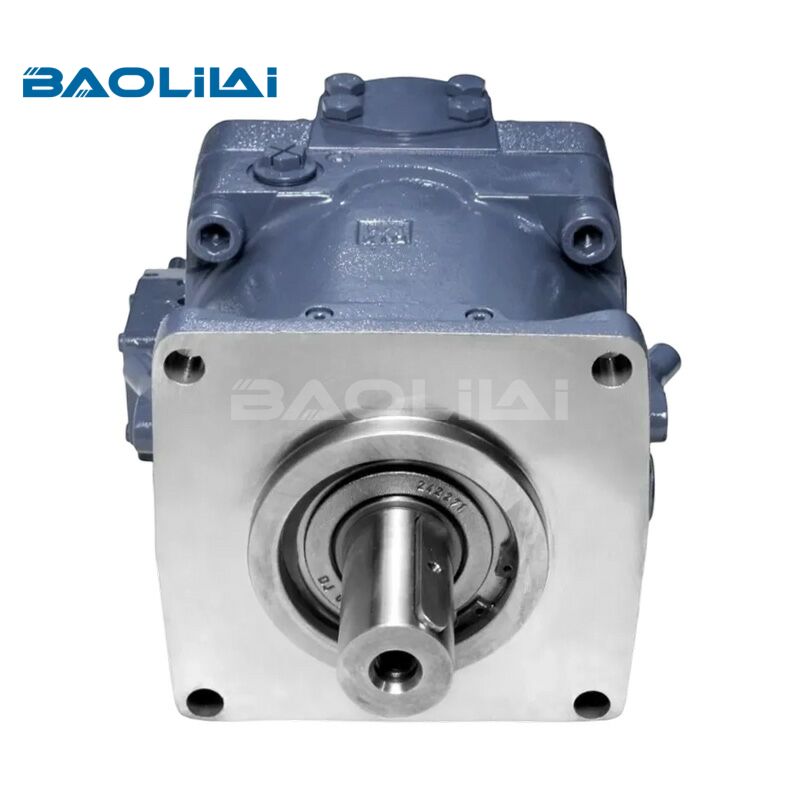
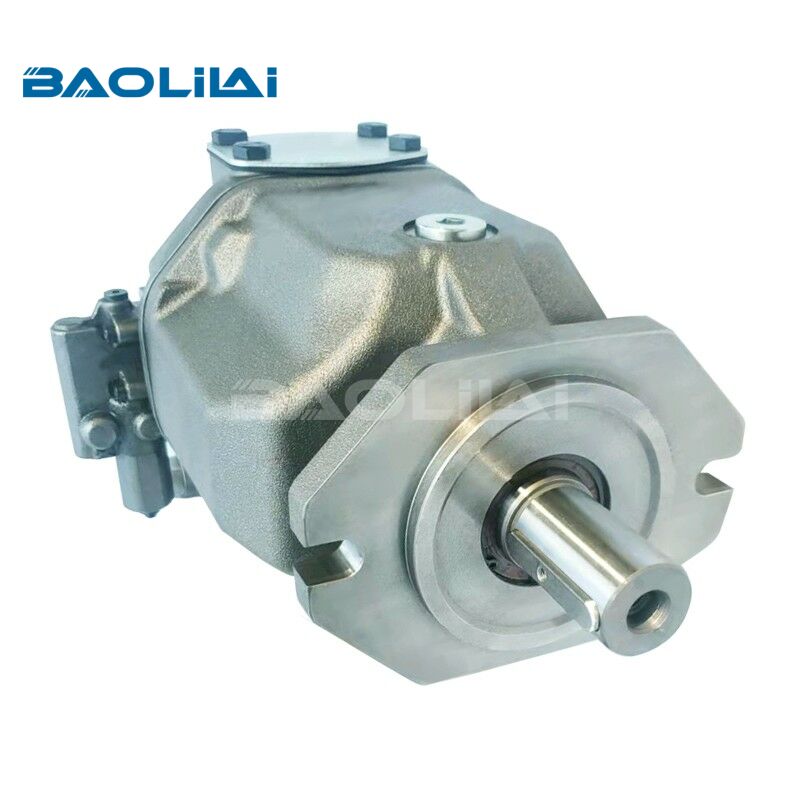
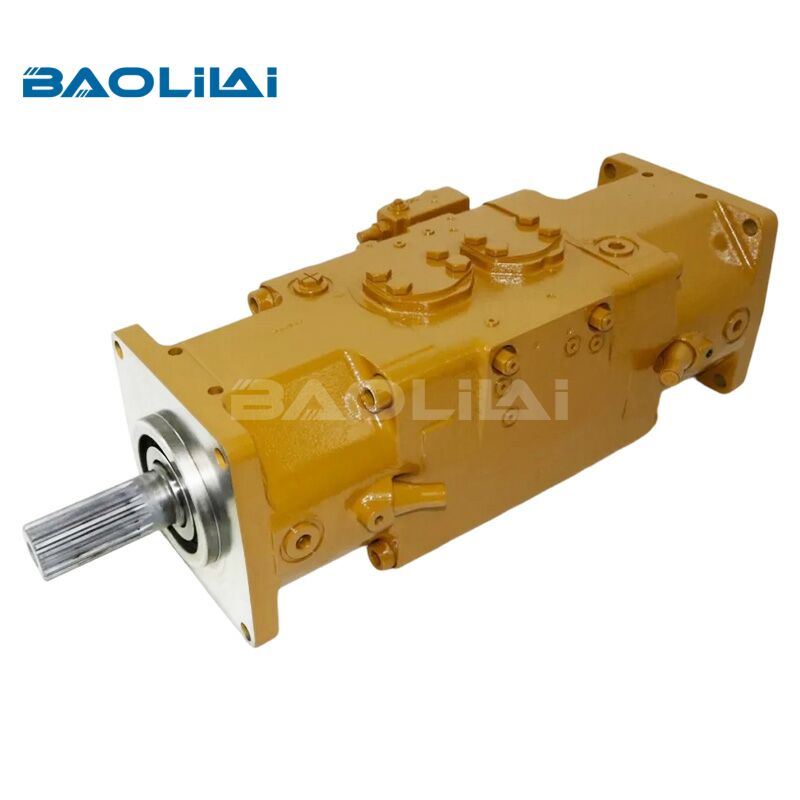
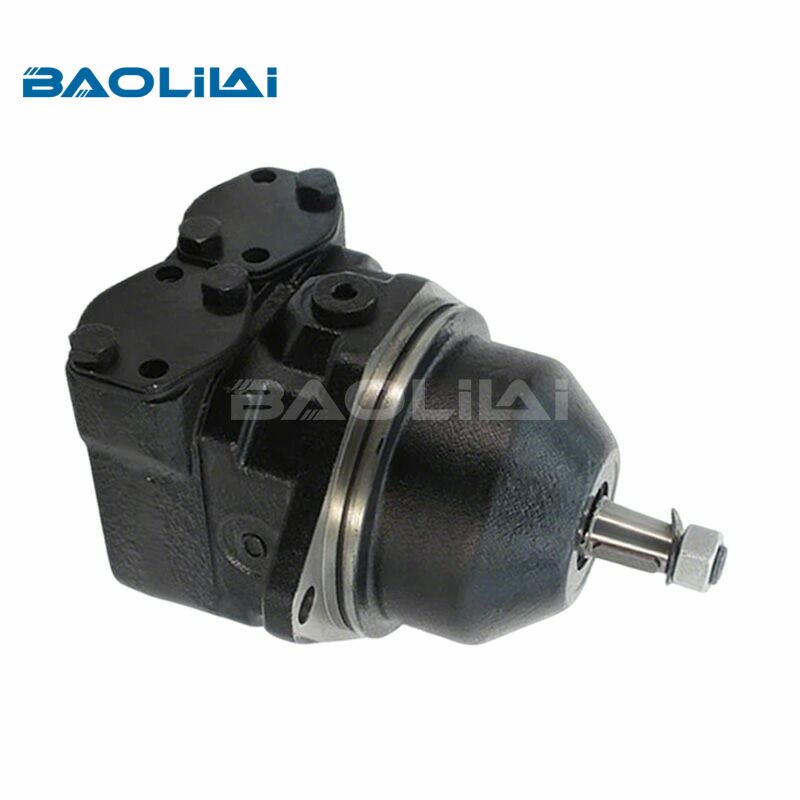
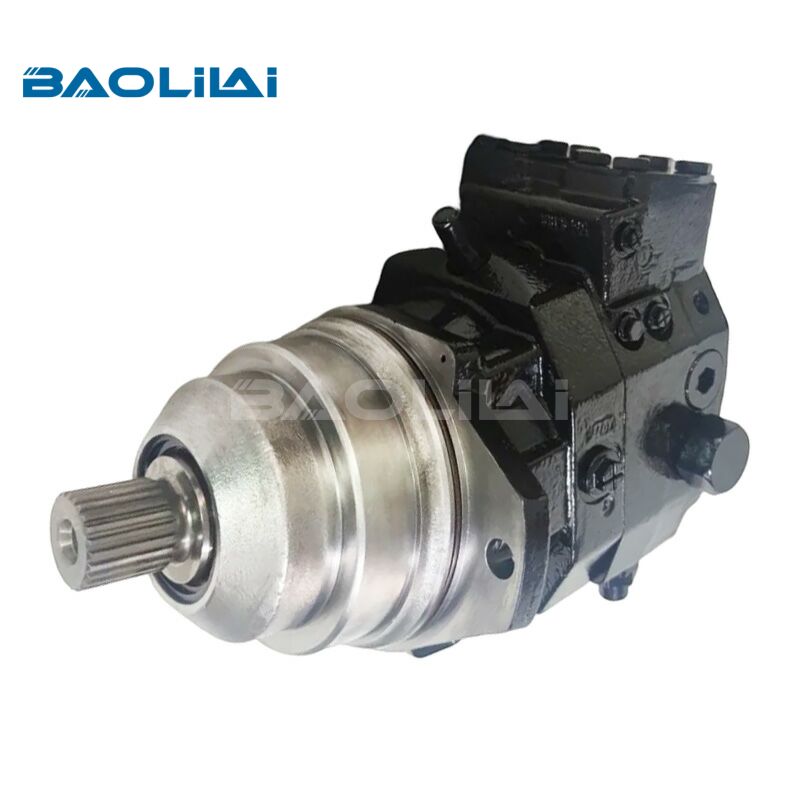
Bosch Rexroth variable hydraulc pump for C Argotec Container stacker crane 2896000801 780075019 923141.0042 923141.0052 923141.0060 N0301334H N0301340H
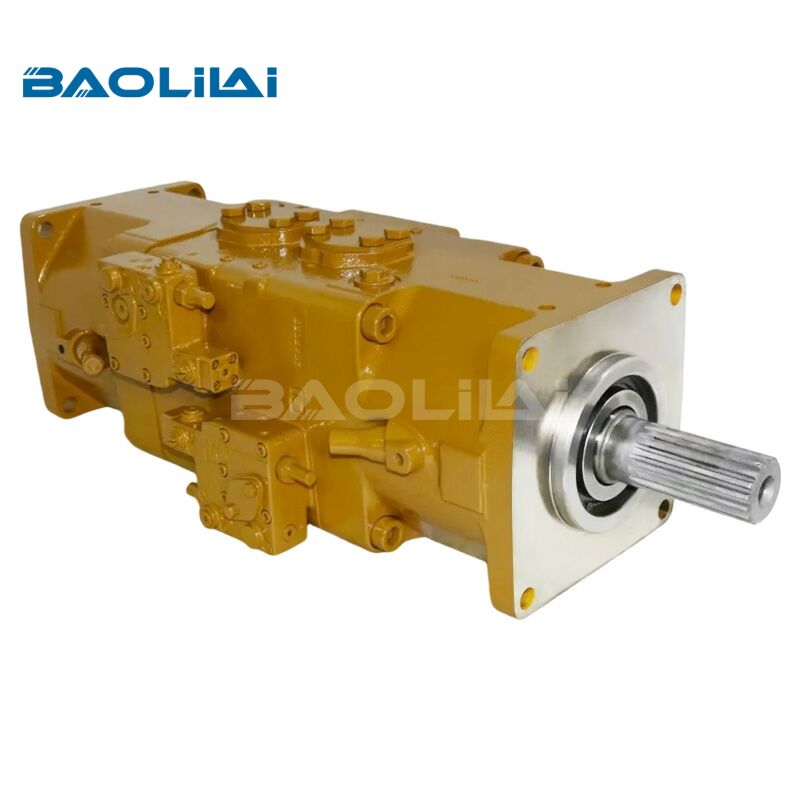
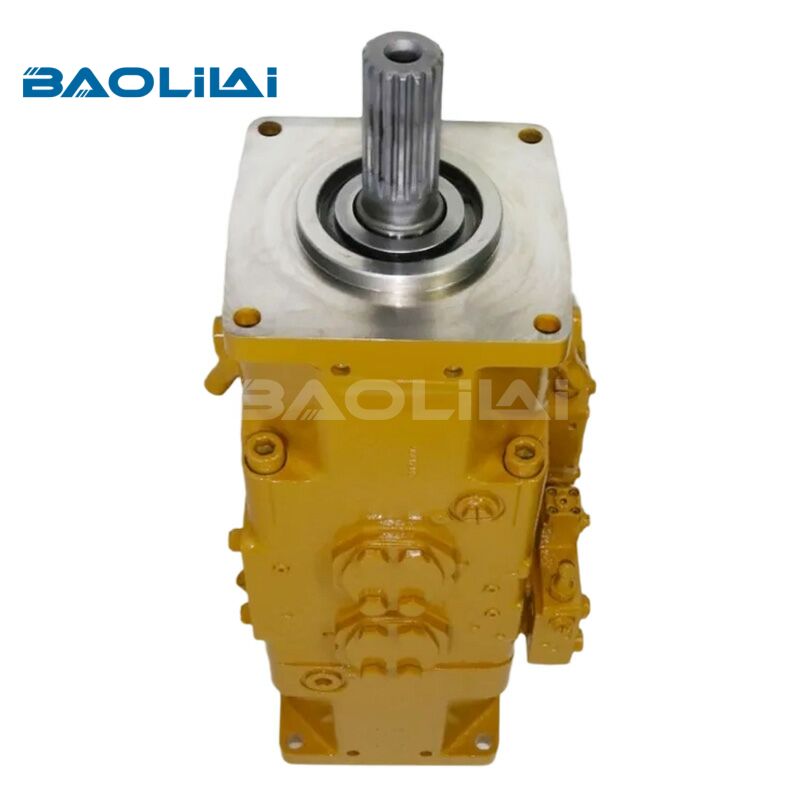
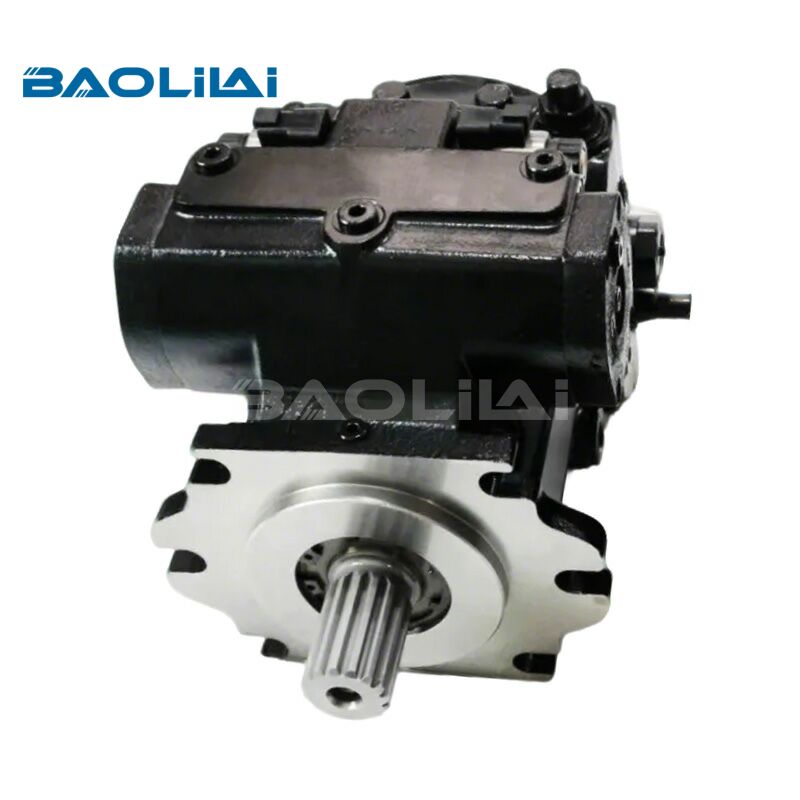
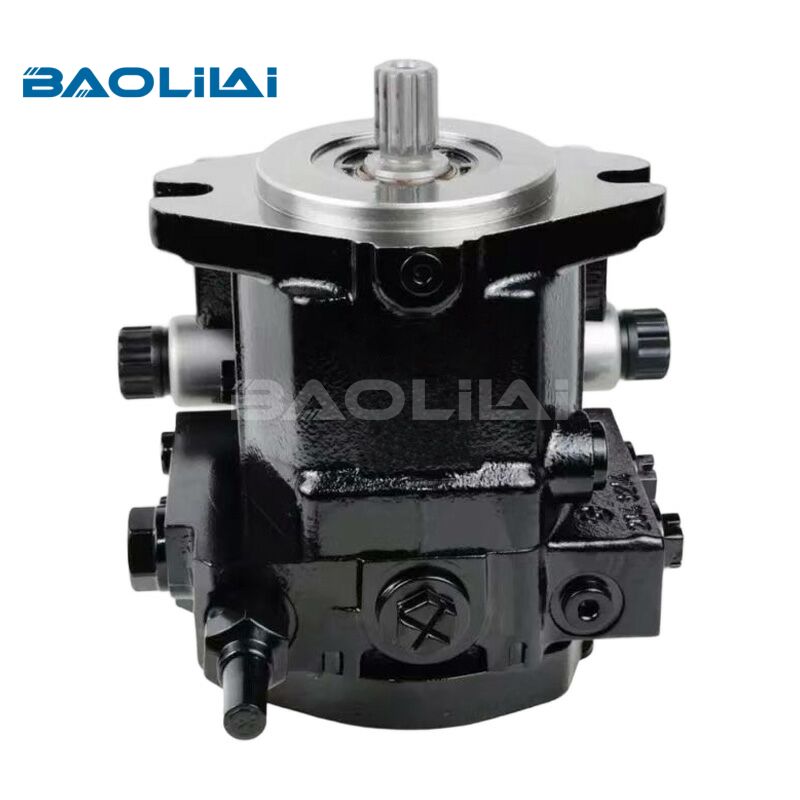
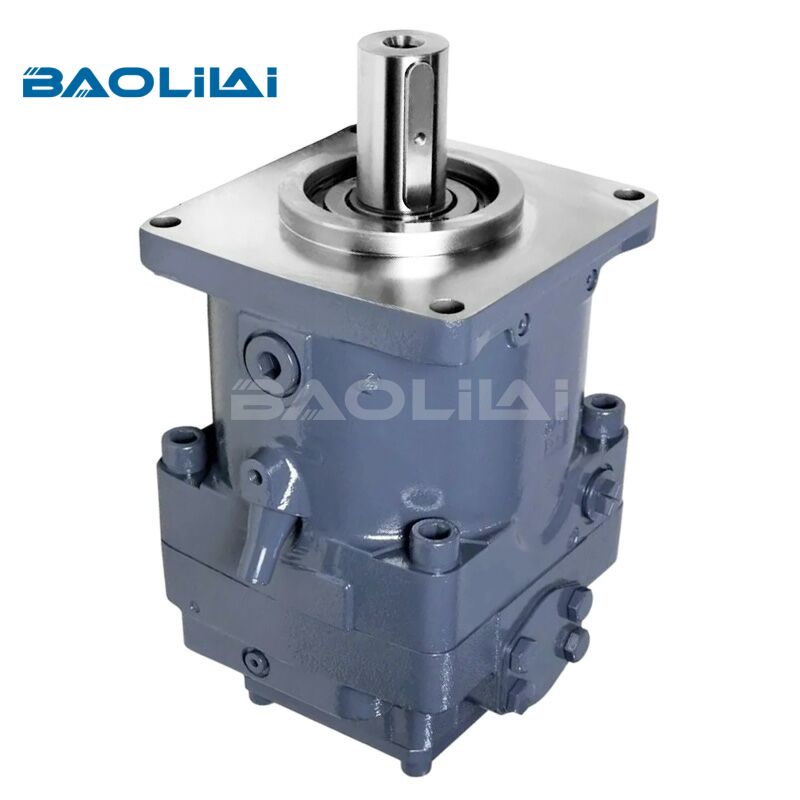

- Product Details
- Product Model
- FAQ
Why Variable Displacement Pumps Matter for Stacker Cranes
A fixed displacement pump delivers a constant flow for a given shaft speed, regardless of what the crane actually needs at that instant. That's fine for simple, single-speed machinery. A stacker crane is not simple machinery.
During a single cycle, a stacker crane's hydraulic (or hydraulically-assisted) systems may need to:
Deliver high flow at low pressure during fast, unloaded trolley travel
Deliver low flow at very high pressure during a heavy container lift
Hold a load stationary with near-zero flow but full pressure
Reverse direction rapidly without shock-loading the structure
A variable displacement pump — typically an axial piston design in swashplate configuration — adjusts its own displacement per revolution to match these changing demands, rather than throttling excess flow across a valve and wasting it as heat. That single design choice is why variable pumps dominate modern crane, mobile, and industrial drive applications where duty cycles are irregular, and energy costs matter.
The Core Mechanism: Swashplate Axial Piston Design
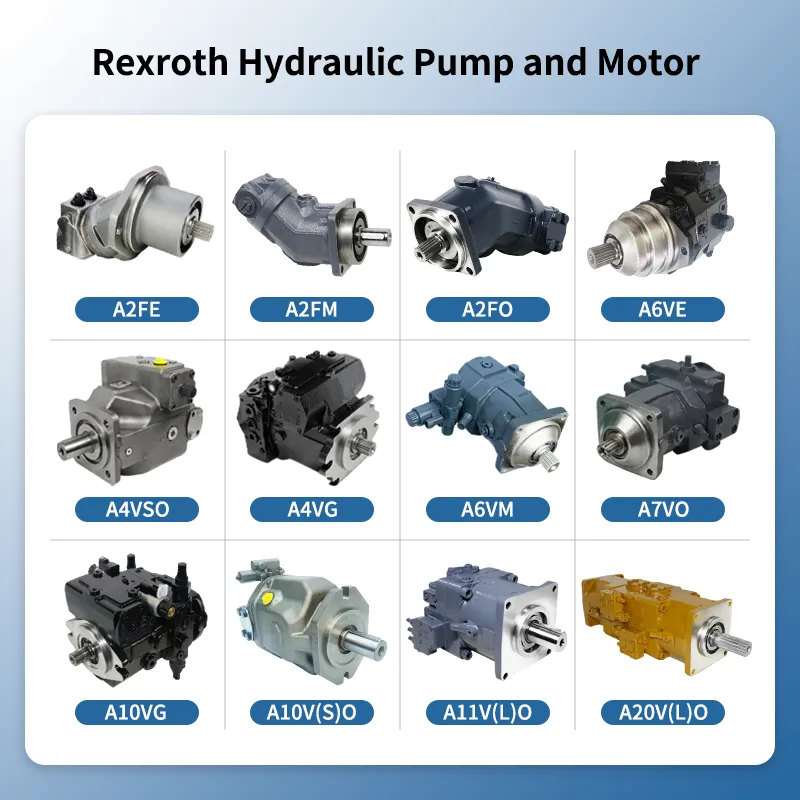
In a Rexroth axial piston pump such as the A4VG, A11VO, or A10VO families, a cylinder barrel houses several pistons arranged around a central shaft. As the barrel rotates, each piston rides against a swashplate set at an angle. Changing that angle changes the piston stroke length — and therefore the pump's displacement — without changing shaft speed. Swing the swashplate to zero, and the pump produces no net flow even while spinning at full speed, which is exactly the behavior needed when a crane operator holds a container motionless mid-hoist.
Open Circuit vs. Closed Circuit Control
Two circuit philosophies show up across Rexroth's crane-relevant range:
Open circuit pumps (A10VO, A10VSO, A4VSO families) draw from and return to a common reservoir. They suit auxiliary functions — steering, spreader twist-locks, cooling fan drives — where simplicity and serviceability matter more than ultimate efficiency.
Closed circuit pumps (A4VG, A6VE motor pairings, A11VO) connect directly to a hydraulic motor in a loop, recirculating fluid without returning fully to tank each cycle. This is the more common architecture for primary travel and hoist drives on cranes, because it allows smoother reversing, regenerative braking of descending loads, and tighter speed control.
How These Pumps Integrate Into a Stacker Crane's Drivetrain
A container stacker crane — whether it's a rubber-tyred gantry (RTG), rail-mounted gantry (RMG), or a purpose-built automated stacking crane (ASC) platform — typically separates its motion into three or four independent drive functions, each of which can be served by its own variable pump or by pumps ganged on a common power unit.
Hoist Drive
The hoist is the most demanding circuit on the machine. It must lift a loaded 20- or 40-foot container smoothly from a standstill, accelerate to lifting speed, decelerate precisely for stacking tolerances measured in centimeters, and lower an empty spreader quickly to minimize cycle time. Rexroth's electrohydraulic displacement controls (the HW, HD, or DA control families layered onto A4VG/A11VO pump bodies) let a PLC or crane control system command displacement directly, which is what makes sub-second load positioning achievable.
Trolley and Gantry Travel
Horizontal travel systems favor speed and energy recovery over ultra-fine positioning. Closed-circuit variable pumps paired with variable motors (a hydrostatic transmission, in effect) allow stepless speed control across the full travel range and let the system absorb braking energy hydraulically rather than burning it off in friction brakes alone.
Auxiliary and Leveling Functions
Spreader twist-lock actuation, container flipper mechanisms, and leveling jacks are usually lower-flow, lower-duty-cycle functions served by smaller open-circuit variable or fixed pumps, often mounted on the same power unit but controlled independently.
Maintenance and Reliability Considerations
Fluid cleanliness is non-negotiable. Axial piston pumps operate with tight internal clearances; ISO 4406 cleanliness targets (commonly 18/16/13 or tighter for high-pressure crane circuits) should be verified with regular particle counts, not assumed from filter specifications alone.
Monitor case drain flow and temperature. A rising case drain flow rate, even without an obvious external leak, is often the earliest indicator of internal wear in the piston-to-barrel or shoe-to-swashplate interfaces.
Respect duty cycle ratings. Continuous high-pressure standby (holding a suspended load) generates more heat than the same average pressure applied intermittently; crane hydraulic power units typically need heat exchanger capacity sized for actual duty cycle, not just peak flow.
Track control response drift. A slow but steady change in how quickly the pump responds to a displacement command usually points to control spool wear or contamination before it points to electrical faults.
For more brand and equipment models, please visit https://www.baolilaihydraulic.com/brand/
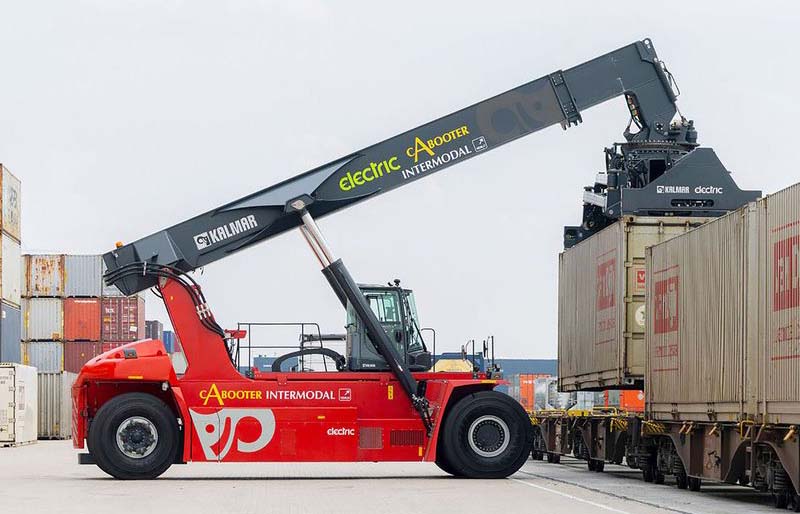
| Application equipment brands | Application equipment No. |
| C Argotec (McGregor) | 289 6000 801 |
| C Argotec | 780075019 |
| C Argotec | 923141.0042 |
| C Argotec | 923141.0052 |
| C Argotec | 923141.0060 |
| C Argotec | N0301334H Sisu Container stapler |
| C Argotec | N0301340H ESC1/SC Container stapler |
Q1: How often should a stacker crane's hydraulic pump be serviced?
A1: This depends heavily on duty cycle and environment, but most terminal operators schedule case drain flow checks and fluid analysis every month, with a full pump inspection or rebuild interval set by hours of operation (commonly in the 15,000–20,000 hour range for well-maintained units) rather than calendar time alone.
Q2: What causes premature failure in stacker crane hydraulic pumps?
A2: The leading causes are fluid contamination (from inadequate filtration or a missed flush after a component replacement), operating outside the rated duty cycle (sustained high-pressure standby beyond design limits), and cavitation from undersized or clogged suction lines.
Q3:What is the price and delivery time of the A20VLO/A4VG/A10VG/A11VO hydraulic pump for the C Argotec Container stacker crane?
A3: The specific price and delivery time will depend on the equipment model or specific product model you provide.
Q4:How to purchase an A20VLO/A4VG/A10VG/A11VO hydraulic pump for the C Argotec Container stacker crane?
A4:You can visit https://www.baolilaihydraulic.com/contact/ to contact us and purchase our products through various methods.