Rexroth A10VSO vs. A4VG Series: Which Hydraulic Pump Is Right for You?
The A10VSO is an open-circuit pump. It draws oil from a reservoir, sends it to actuators through directional valves, and the oil returns to the tank. The A4VG is a closed-circuit pump built for hydrostatic transmissions. Oil loops continuously between the pump and a motor, with only a small charge flow topping off losses.
| A10VSO | A4VG | |
| Circuit type | Open | Closed (hydrostatic) |
| Primary role | Working hydraulics, industrial power units | Propel/drive transmissions |
| Typical displacement range | 18–180 cm³/rev | 28–250 cm³/rev |
| Nominal pressure | ~280 bar (peak ~350 bar) | ~400 bar (peak ~450 bar) |
| Flow direction | One direction | Reversible, over-center |
| Integrated charge pump | No | Yes |
| Reservoir requirement | Large | Small |
| Speed/direction control | Via valves | Via pump swashplate angle |
Understanding the Rexroth A10VSO Series
Design and Displacement
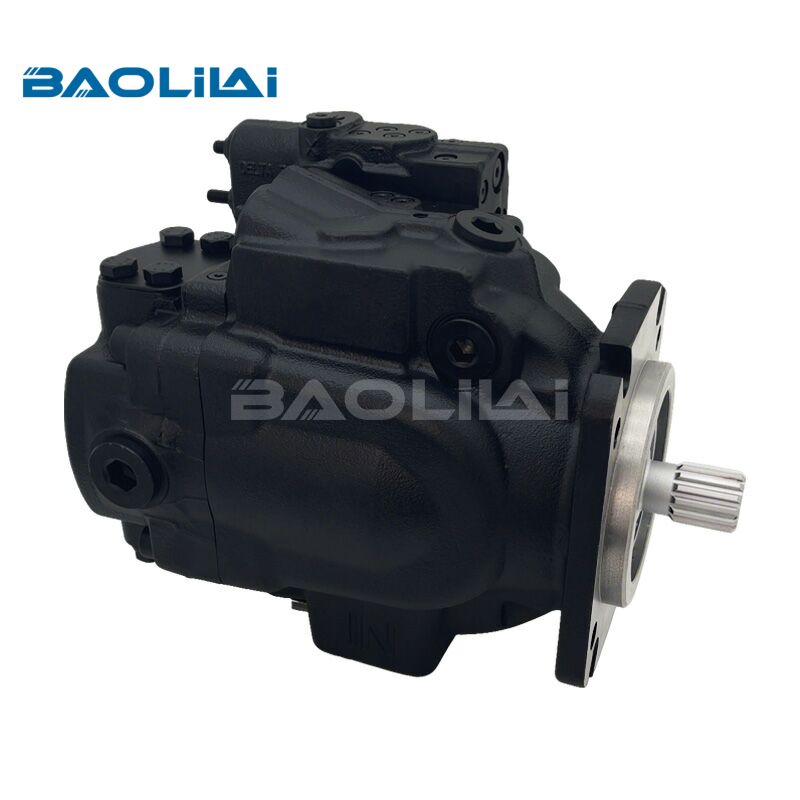
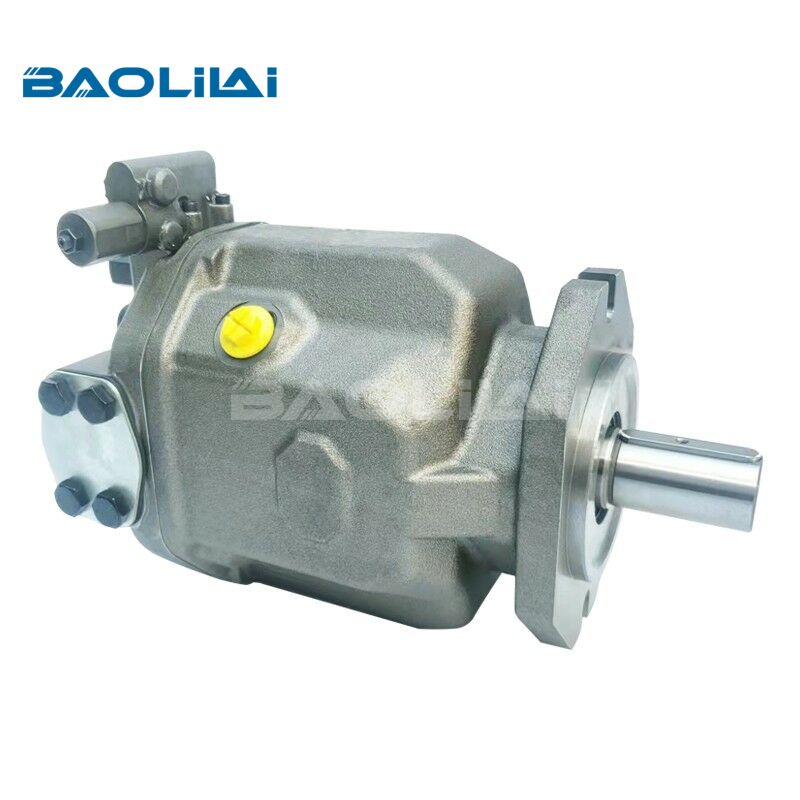
The A10VSO is a variable displacement axial piston pump of swashplate design for open circuits. Rotating the swashplate changes piston stroke, which changes displacement, which changes flow. Displacement runs from roughly 18 to 180 cm³/rev across the range, with Series 31 and the newer Series 32 both widely installed. Series 32 brought higher permissible speeds and improved noise behavior in several frame sizes.
Mounting follows SAE J744 or metric flange patterns, and most sizes offer through-drive capability so you can stack a second pump — an A10VSO, a gear pump, or a vane pump — on the same shaft line from one prime mover.
Control Options That Define the Pump
More than the displacement, the control is what makes an A10VSO suitable for a given machine. The common variants:
DR — pressure control (compensator). The pump destrokes when system pressure hits the setpoint. The workhorse for presses and clamping.
DFR / DFR1 — pressure and flow control, the classic load-sensing arrangement. The pump delivers only the flow the valve spool demands, at margin pressure above load.
DFLR — load sensing with power limitation, so the pump never pulls more torque than the engine or motor can supply.
DG — direct manual or hydraulic control of swashplate angle.
ED / EP — electrohydraulic and electro-proportional control, for systems where a PLC or machine controller sets displacement directly.
Where the A10VSO Earns Its Keep
Injection molding. A 220-ton press with a DFR1-controlled A10VSO holds clamp pressure while drawing almost no flow, which means very little heat generated during the hold phase. Swap in a fixed gear pump and that same hold phase dumps full flow over a relief valve as pure heat.
Machine tool and test rig power units. The combination of stable control, low noise, and easy through-drive stacking makes the A10VSO the default choice for industrial HPUs. A single 75 kW unit might run an A10VSO 71 for the main circuit with a smaller A10VSO 28 through-driven for pilot and cooling loops.
Mobile working hydraulics. On an excavator or crane, the boom, stick, and outriggers are open-circuit functions. That's A10VSO or A11VO territory, not A4VG.
Understanding the Rexroth A4VG Series
Built Around the Closed Loop
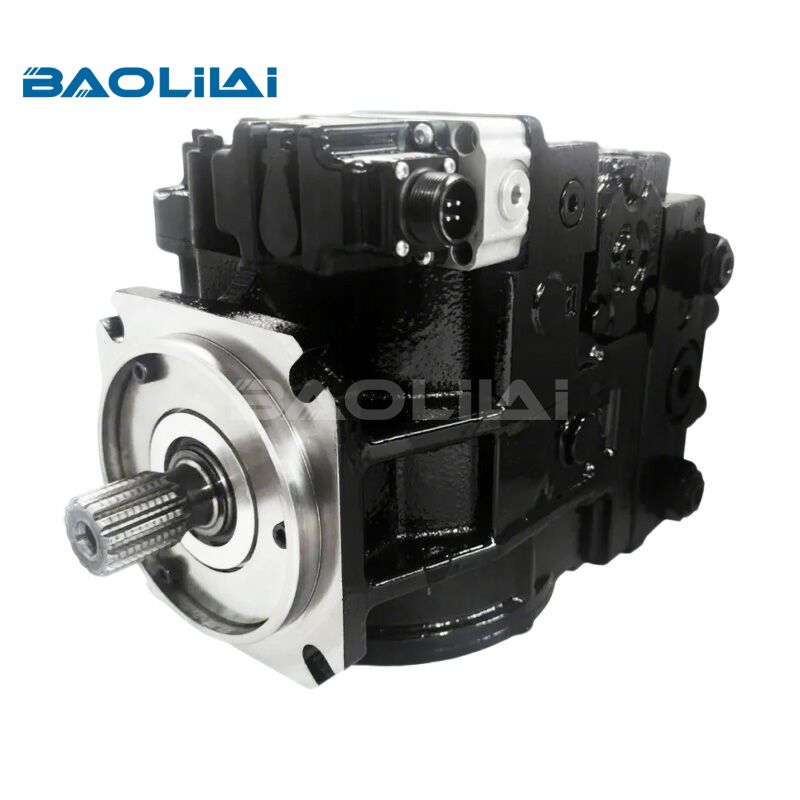
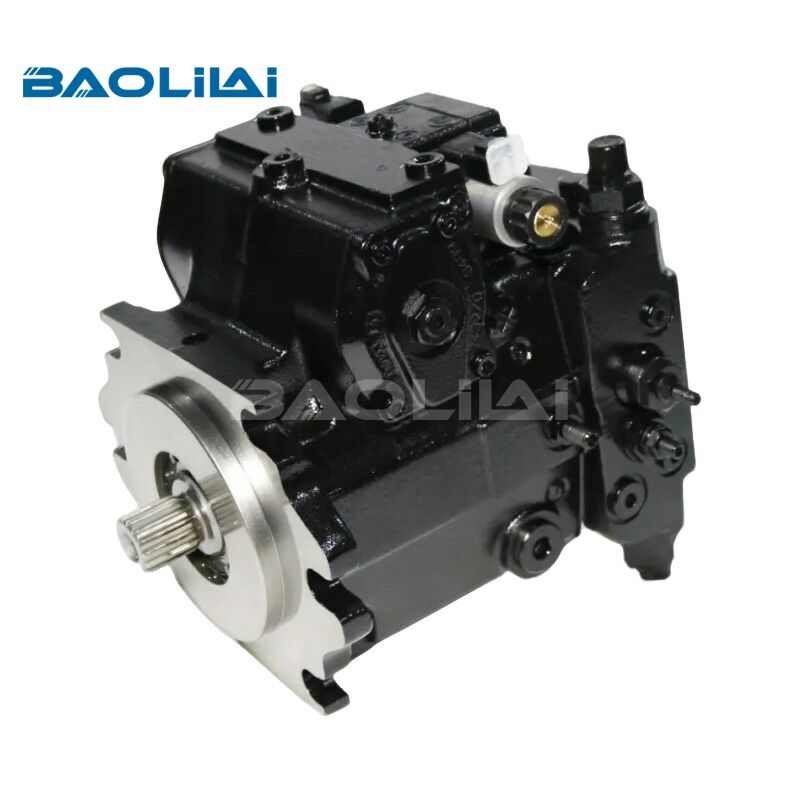
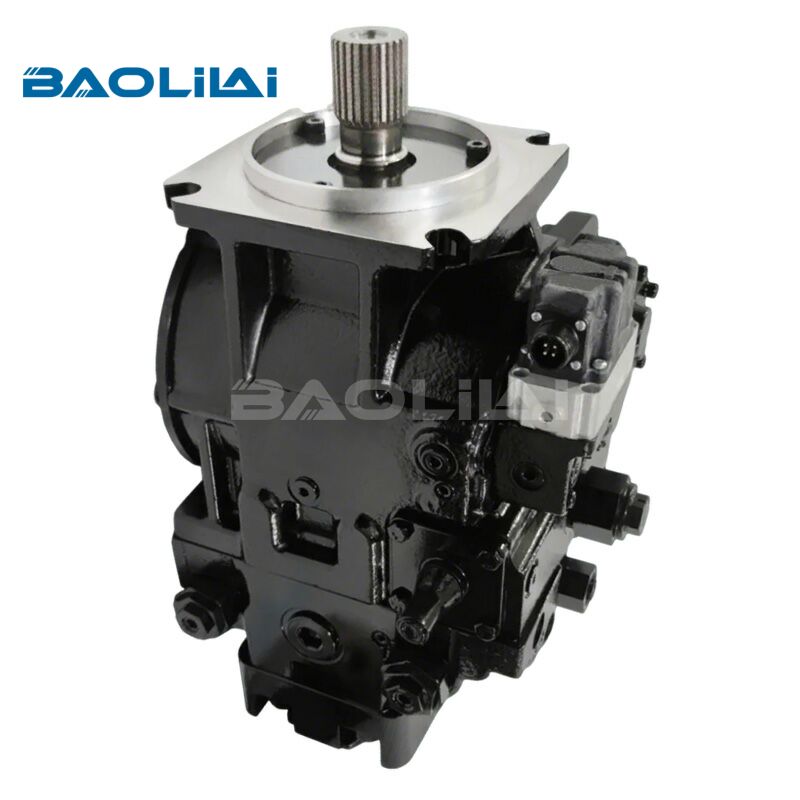
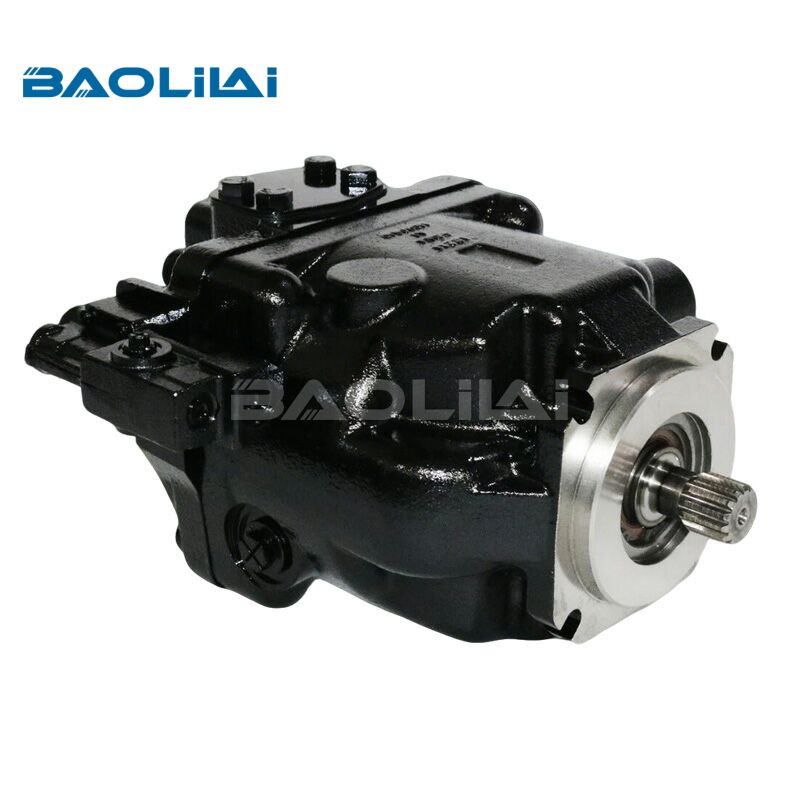
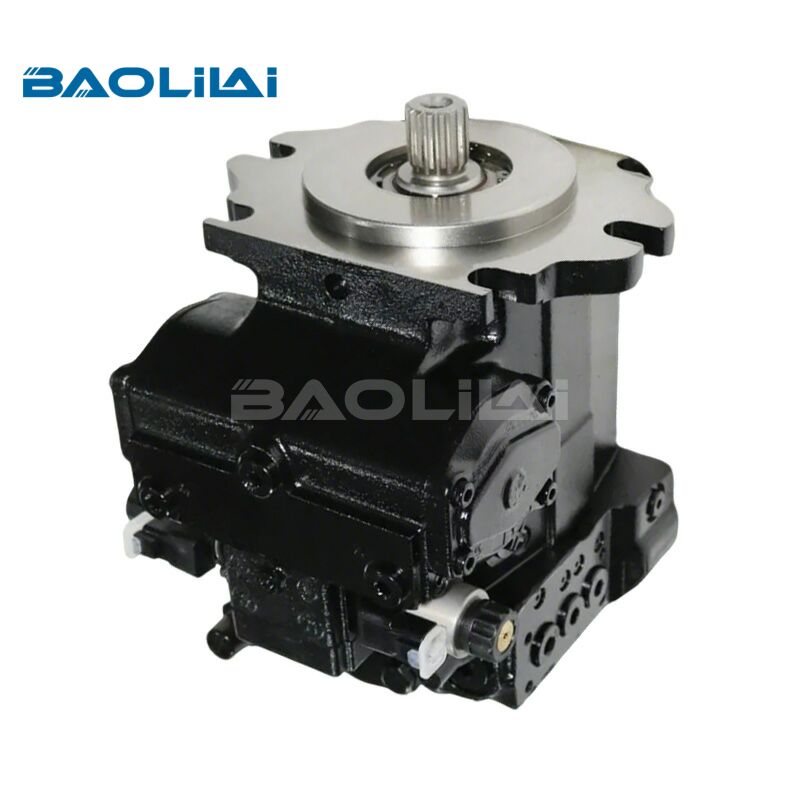
The A4VG is a variable displacement pump for closed-loop hydrostatic drives, and effectively everything about it follows from that. Displacement is adjustable over center — swing the swashplate past neutral and flow reverses, which reverses the motor and therefore the machine. There is no directional control valve in the drive line. The pump is the directional control, the speed control, and part of the braking system.
Sizes run from roughly 28 to 250 cm³/rev, with nominal pressure around 400 bar and peaks near 450 bar. Those numbers aren't marketing headroom. A wheel loader ramming a pile puts near-relief pressure into the drive loop dozens of times an hour.
What's Integrated Inside
An A4VG is closer to a subsystem than a bare pump. Typically built in:
Charge (boost) pump — an internal gear pump that replenishes leakage, feeds the control system, and keeps the low-pressure side above cavitation threshold.
High-pressure relief valves with integrated boost check valves — protecting both loop sides and allowing makeup flow.
Pressure cut-off — destrokes the pump before the relief valves have to dump full flow.
Flushing/exchange valve — bleeding hot oil out of the loop for cooling.
Control Variants
HW — hydraulic control, proportional to a pilot pressure or manual lever.
HD — hydraulic control via a remote pilot signal.
EP — electro-proportional, driven by machine controller current.
DA — speed-related ("automotive") control, where displacement tracks engine speed. A DA-controlled A4VG paired with an A6VM variable motor gives a paver or roller genuinely car-like drivability without a transmission.
MA — mechanical servo control.
Typical Applications
Wheel loaders, compact excavators (propel), asphalt pavers, soil and asphalt compactors, telehandlers, combine harvesters, forestry machines, road milling machines, and sweepers. If the machine drives itself under load and there's no gearbox and torque converter, there's a good chance an A4VG or its relatives sit behind the engine, feeding A6VM or A6VE motors.
How to Choose: A Practical Decision Path
Work through these in order.
1. Does the actuator need to reverse continuously under load, with the pump controlling speed and direction? If yes — propel drives, winches, drum drives, fan drives that must reverse — you want a closed circuit. A4VG.
2. Are you feeding multiple functions through a directional valve bank? Cylinders, multiple motors, accessory circuits, anything with a spool valve between pump and actuator. A10VSO.
3. What's your continuous operating pressure? Sustained above roughly 300 bar in an open circuit means you should look past the A10VSO to an A11VO or A4VSO, rather than stretching the A10VSO's duty envelope.
4. Is this an industrial power unit or mobile working hydraulics? Industrial HPUs, presses, test benches, and machine tools point to the A10VSO nearly every time, particularly when through-drive stacking is useful.
5. Are you retrofitting or replacing? Match the existing architecture. There is no version of this decision where you drop an A4VG into an open circuit or an A10VSO into a hydrostat.
Frequently Asked Questions
Q1: What's the difference between A10VSO and A10VO?
A1: The A10VSO is the industrial/standard version; the A10VO is oriented toward mobile applications with different mounting, port, and control options. The rotary group concept is shared.
Q2: How do A6VM and A6VE motors relate to the A4VG?
A2: They're the standard closed-circuit companions. The A4VG supplies the loop; the A6VM (variable, mobile) or A6VE (variable, compact, often wheel-mounted) converts it back to rotation. Pairing a DA-controlled A4VG with an A6VM gives automatic ratio change across the speed range.
Q3: How do I read the type code?
A3: The code encodes series, size, control type, rotation, port arrangement, seal material, through-drive, and setting ranges, in that general order. A partial code is not enough to order from. Pull the full nameplate designation and cross-reference against the current data sheet.
Q4: How to purchase these two hydraulic pumps
A4: Visit https://www.baolilaihydraulic.com/contact/ and send us the specific model numbers; we will promptly provide a price quote and estimated delivery time.